Strawberry matcha, often called a strawberry matcha latte when prepared with milk, brings together the earthy taste of Japanese green tea powder and the familiar sweetness of strawberries. Its appeal lies partly in the contrast between the green matcha and the red fruit, but the combination has more to offer than its distinctive appearance. Depending on the strawberries you use, the drink can taste light and fruity or richer and closer to a strawberry dessert.
The tricky part is that fresh strawberries are not always the better choice, and frozen ones are not automatically more flavorful. When the fruit meets matcha and milk, its ripeness, water content, and natural sweetness can change the entire balance of the drink.
Preparation Time at a Glance
| Preparation stage | Estimated time |
| Preparing the strawberries | 5–10 minutes |
| Preparing the matcha | 3–5 minutes |
| Assembling the drink | 2–3 minutes |
| Total time | 10–18 minutes |
These times are estimates for a simple strawberry matcha latte. Your actual preparation time may vary depending on the condition of the strawberries, the equipment you use, and how you prefer to prepare the fruit.
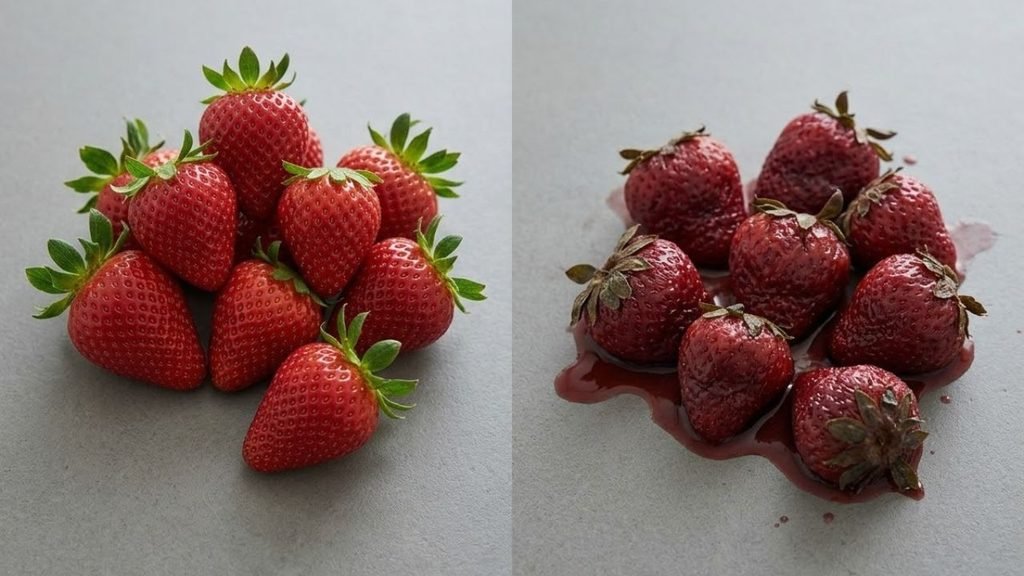
Ingredients for a Balanced Strawberry Matcha
This quantity makes one glass. You can adjust the proportions according to the sweetness of your fruit and the intensity of your matcha.
- ½ cup fresh or frozen strawberries
- 1 teaspoon matcha powder, approximately 2 g
- 60 ml warm water
- 180 ml milk of your choice
- 1–2 teaspoons sugar, honey, or another sweetener, optional
- Ice cubes, as needed
Simple Substitutions That Work
| Ingredient | Possible replacement | What changes |
| Fresh strawberries | Unsweetened frozen strawberries | The fruit tends to become softer and release more juice after thawing. |
| Dairy milk | Oat milk or almond milk | Oat milk may taste naturally sweeter, while almond milk can have a lighter body. |
| Sugar | Honey or maple syrup | Each adds its own flavor, so the finished drink may taste slightly different. |
| Matcha powder | No direct replacement | Ordinary green tea leaves do not provide the same concentrated flavor or texture as matcha. |
Directions
The aim is to preserve the strawberry flavor without letting excess sweetness overpower the tea. Keep the fruit and matcha balanced, and allow the drink to cool before adding ice.
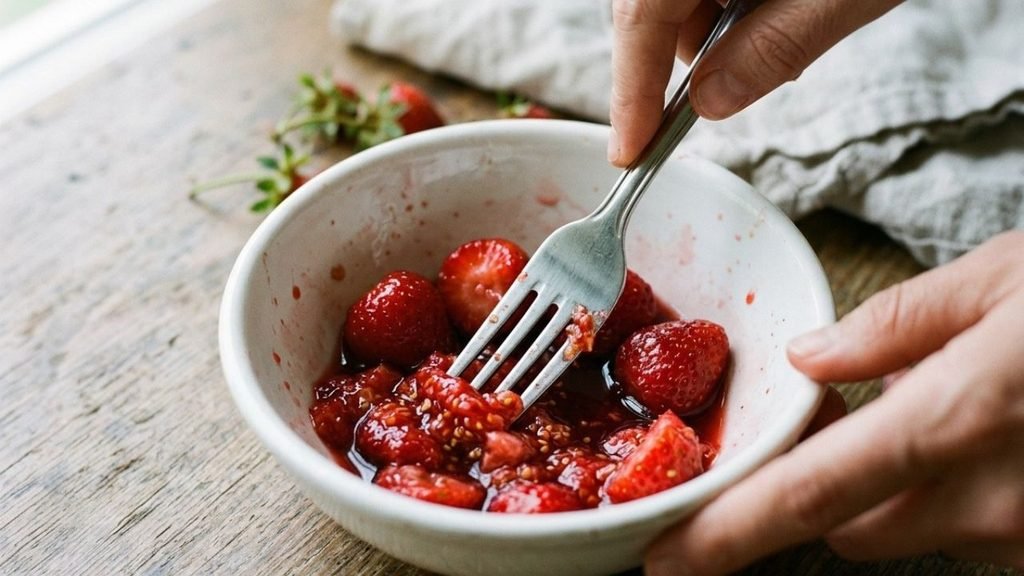
- Prepare the strawberries. Wash and hull fresh strawberries before mashing or blending them. If using frozen strawberries, thaw them first or soften them until they can be blended easily.
- Adjust the fruit. Mash or blend the strawberries into a consistency you like. Taste the mixture before adding sweetener, since ripe berries may already provide enough sweetness.
- Prepare the matcha. Sift the matcha powder into a small bowl, add the warm water, and whisk until smooth. Avoid boiling water, which can make the tea taste harsher.
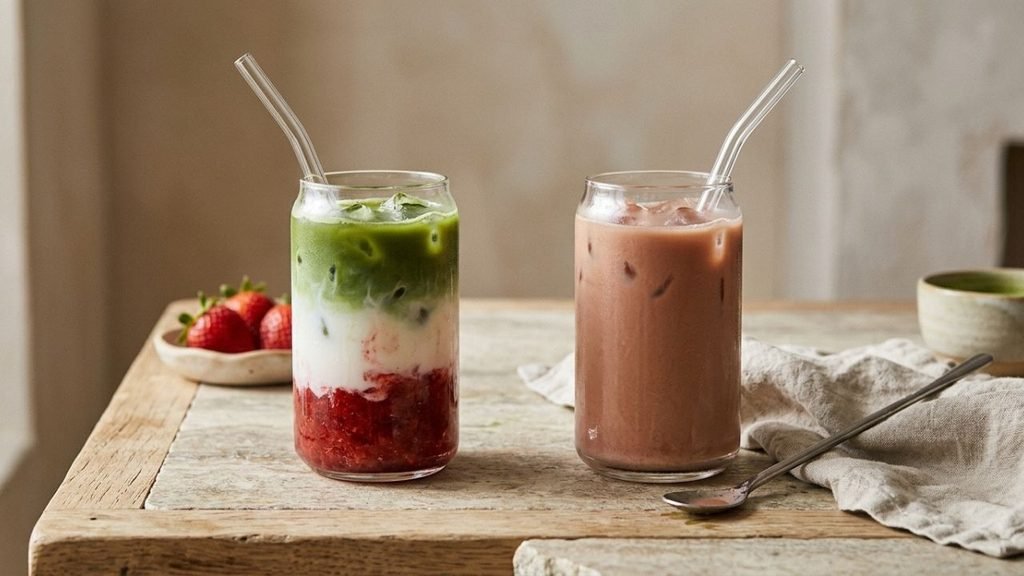
- Assemble the latte. Add the strawberry mixture to a glass, followed by ice and milk. Slowly pour the prepared matcha over the top.
- Taste and adjust. Stir the drink before drinking if you prefer an even flavor throughout. Add more strawberry or matcha only if the balance needs it.
Serving the Drink Your Way
A strawberry matcha latte can be served in layers or mixed together. The layered version highlights the contrast between red fruit, white milk, and green tea, making it a natural choice when presentation matters. Stirring brings the ingredients together and makes the flavor more consistent with every sip.
Fresh strawberries are particularly appealing as a small garnish when they are ripe and fragrant. A thin slice on the rim or a few pieces placed on top add texture without requiring additional sweetener.
For a less dessert-like drink, keep the fruit base relatively unsweetened and use a milk that does not add much extra sweetness. If you prefer a richer strawberry flavor, a more concentrated fruit purée may suit you better.
Fresh or Frozen Choosing the Right Strawberry
Fresh strawberries work best when they are ripe, fragrant, and naturally sweet. They offer a brighter fruit character, especially when lightly crushed rather than heavily processed. However, fresh berries can vary significantly in flavor, even within the same punnet.
Frozen strawberries are useful when fresh fruit is out of season or lacks flavor. Freezing softens the fruit’s structure, so thawed berries are generally easier to blend into a smooth base. They can also be a practical option when you want to make the drink regularly without worrying about fresh strawberries spoiling quickly.
Neither option guarantees a better result. A ripe fresh strawberry can produce a more fragrant drink, while a good-quality frozen strawberry can provide a more consistent fruit base. The best choice depends on the quality of the fruit available and the texture you prefer.
Common Mistakes That Change the Flavor
Adding too much sweetener. Strawberries and milk can both contribute sweetness. Taste the fruit before adding sugar, then adjust the finished drink gradually.
Using watery strawberries. Excess juice can dilute the fruit flavor, particularly when combined with milk and ice. If the strawberry mixture tastes weak, use a more concentrated purée or reduce the amount of liquid in the glass.
Choosing matcha that is too bitter for the fruit. A strongly vegetal matcha can dominate a delicate strawberry base. Adjust the proportions rather than assuming that adding more matcha will improve the drink.
Add ice before the ingredients are ready. Ice gradually dilutes the latte. Prepare the fruit and matcha first, then assemble the drink when you are ready to serve it.
Assuming frozen fruit always tastes better. Freezing is convenient, but the quality of the original strawberries still matters. The National Center for Home Food Preservation’s guide to selecting and preparing strawberries for freezing offers useful guidance on preserving fruit quality. Poor-quality frozen fruit will not necessarily produce a flavorful latte.
FAQ’s
1. Are fresh or frozen strawberries better for strawberry matcha?
Fresh strawberries are a good choice when they are ripe and fragrant. Frozen strawberries are convenient, easy to blend, and useful when fresh fruit is out of season. Both can work well.
2. Do frozen strawberries make strawberry matcha watery?
They can release considerable juice as they thaw. This may dilute the fruit flavor if the liquid is not accounted for. The result depends on the berries and how much liquid you add.
3. Can strawberry matcha be made without added sugar?
Yes. Ripe strawberries may provide sufficient sweetness, particularly when paired with milk that has a naturally sweet flavor. Taste the drink before deciding whether it needs additional sweetener.
4. Which milk works best with strawberry matcha?
Dairy milk provides a creamy texture, while oat milk can contribute extra sweetness and body. Almond milk offers another option with a lighter character. The best choice depends on your preferred texture and flavor.
5. Why does my strawberry matcha taste bitter?
The matcha may be too strong for the amount of fruit and milk, or the water used to prepare it may have been too hot. Try adjusting the matcha quantity and using warm rather than boiling water.
6. Can I use strawberry jam instead of fresh or frozen strawberries?
Yes, although the result will be sweeter and more concentrated. Start with a small amount because commercial jams often contain added sugar and may overwhelm the matcha.
7. Can I prepare strawberry matcha in advance?
It is generally best assembled shortly before serving, particularly when using ice. You can prepare the fruit base separately in advance, but the finished drink may lose its distinct layers and become diluted if left standing.
A Better Match Comes Down to the Fruit
Fresh and frozen strawberries each have a place in strawberry matcha. Fresh fruit offers its greatest advantage when its aroma and ripeness are worth preserving, while frozen fruit makes a dependable alternative when convenience and availability matter more. Rather than automatically choosing one over the other, pay attention to the flavor of the strawberries you have and the balance you want in your drink.
A good strawberry matcha does not need elaborate preparation or excessive sweetness. It simply needs the fruit and tea to complement each other, allowing both flavors to remain recognizable in the same glass.