oven baked salmon for its naturally rich flavor, tender flesh, and pink-orange color. Often sold as fillets or skin-on portions, it appears in everything from simple weeknight dinners to restaurant dishes. Oven baking is a popular way to prepare it because it requires relatively little attention, while the fish’s own flavor leaves plenty of room for different herbs, spices, and seasonings.
The difficulty is choosing the right combination. Too little seasoning can leave salmon tasting flat, while too many strong flavors can hide what makes the fish enjoyable in the first place. The best seasonings for oven-baked salmon bring balance, adding character without making every bite taste like the spice mixture rather than the fish.
A quick look at preparation time
| Preparation detail | Estimated time |
| Preparation | 5–10 minutes |
| Baking | 12–18 minutes |
| Total time | 17–28 minutes |
| Servings | 4 |
| Oven temperature | 200°C (400°F) |
These times are estimates for typical individual salmon fillets. The time you need may vary depending on the thickness of the fish, your oven, and how you prefer your salmon cooked. Allow extra time for preparation if you need to remove pin bones or prepare additional sides.
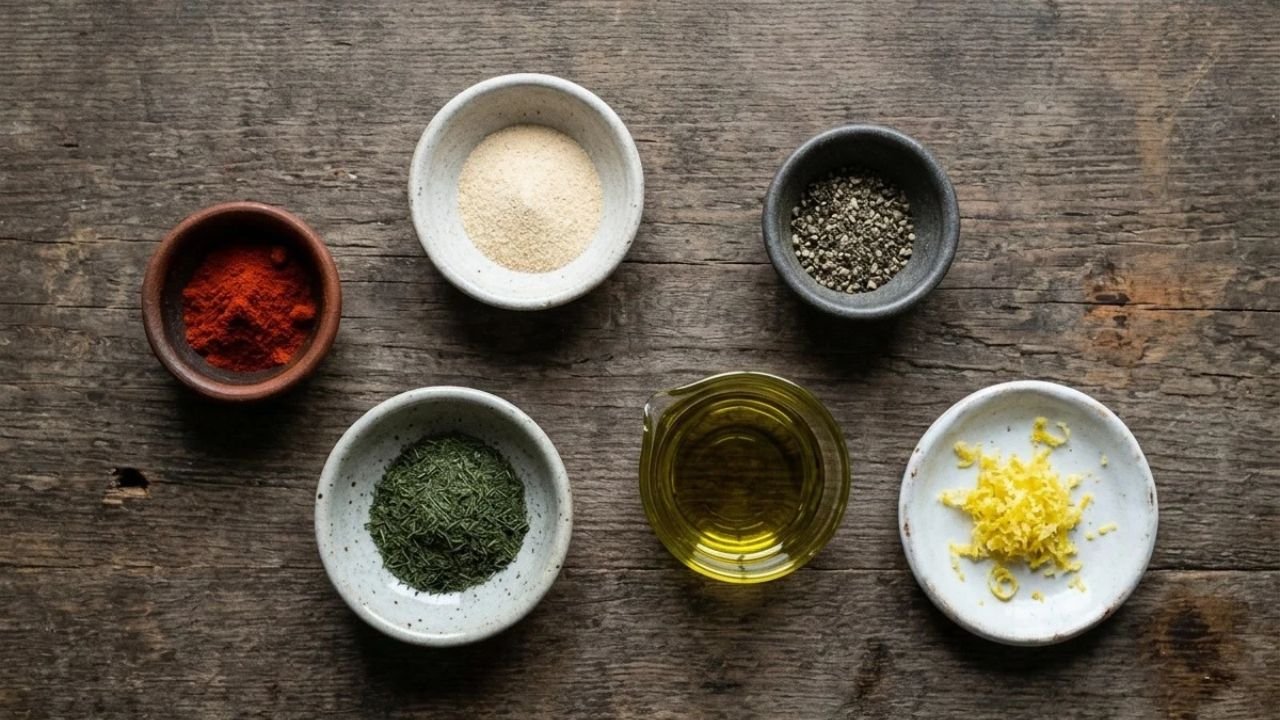
Ingredients that give salmon its character
- 4 salmon fillets, approximately 150–180 g each
- 1 tablespoon olive oil
- ½ teaspoon fine salt, adjusted to taste
- ½ teaspoon garlic powder
- ½ teaspoon paprika
- ¼ teaspoon ground black pepper
- ½ teaspoon dried dill or 1 tablespoon fresh dill, chopped
- Zest of 1 lemon
- 1–2 teaspoons lemon juice, to taste
Simple substitutions for a flexible seasoning blend
You do not need every ingredient exactly as listed. Some alternatives produce a slightly different flavor, but they can still work well with salmon.
| Original ingredient | Possible replacement | Difference in flavor |
| Olive oil | Avocado oil | A neutral alternative that lets the seasonings stand out |
| Garlic powder | Finely minced fresh garlic | Sharper, more pronounced garlic flavor |
| Paprika | Smoked paprika | Adds a deeper, smoky character |
| Dried dill | Dried parsley or thyme | Less distinctive than dill, with a different herbal note |
| Lemon zest | A little extra lemon juice at serving | Adds acidity without the same fragrant citrus oils |
| Black pepper | White pepper | A subtler, slightly different peppery finish |
If you use fresh garlic, keep an eye on it during baking because small pieces can brown more quickly than garlic powder. Also, if your replacement seasoning contains salt, reduce the added salt to suit.
Directions
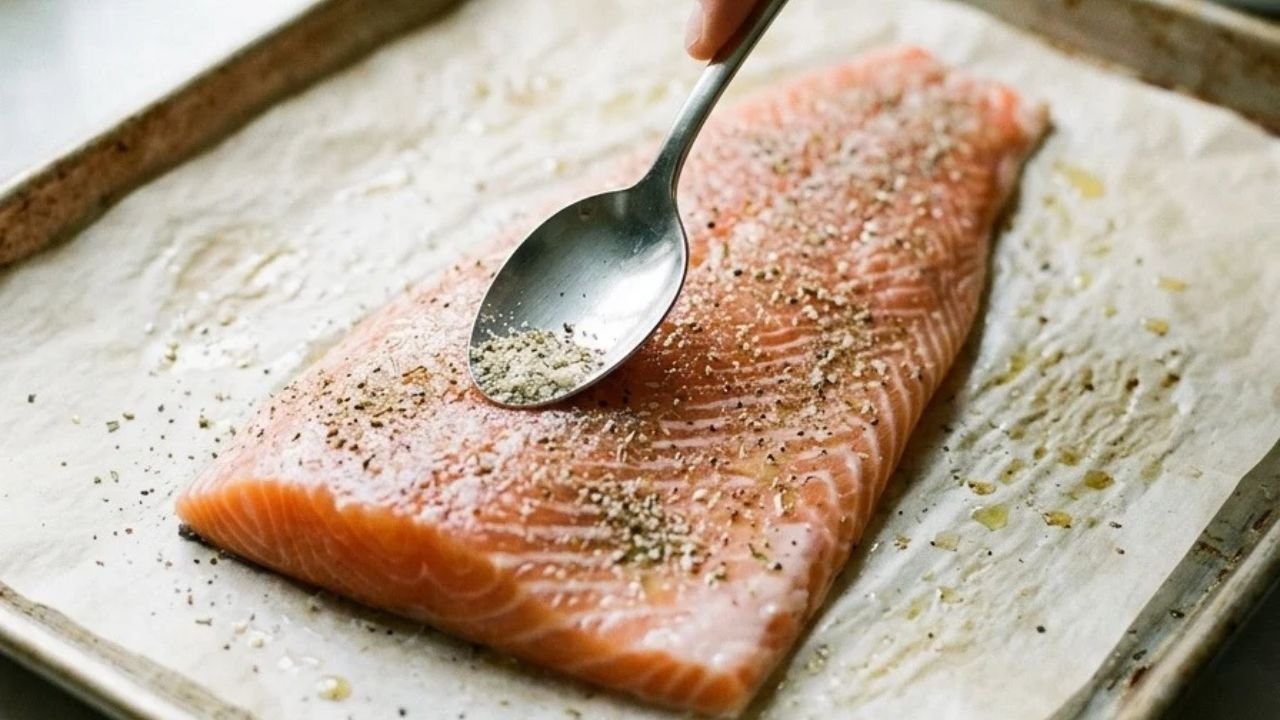
Heat the oven to 200°C (400°F), prepare a lined baking tray, and pat the salmon dry. Combine the oil, salt, garlic powder, paprika, black pepper, dill, and lemon zest, then spread the mixture evenly over the fish.
Arrange the fillets skin-side down and bake for approximately 12–18 minutes, checking the thickest part rather than relying entirely on the clock. Fish is considered safely cooked at an internal temperature of 63°C (145°F); thinner pieces may finish sooner than thicker ones.
Method
- Prepare the salmon. Remove any remaining pin bones and pat the surface dry with paper towels. This helps the seasoning adhere more evenly.
- Mix the seasonings. Combine the olive oil, salt, garlic powder, paprika, black pepper, dill, and lemon zest in a small bowl.
- Coat the fillets. Spread the seasoning mixture over the top and sides of each piece. Avoid leaving large clumps of garlic powder or paprika in one area.
- Arrange on the tray. Place the salmon skin-side down, leaving a little space between the fillets so they cook evenly.
- Bake until done. Start checking around the 12-minute mark. The actual cooking time depends on thickness, starting temperature, and oven performance.
- Finish with lemon. Add a little lemon juice after baking and scatter over fresh dill if desired. Taste before adding extra salt.
The finishing touches that make the plate work
Salmon with lemon, dill, and black pepper pairs well with roasted potatoes, steamed green beans, or a crisp cucumber salad. These sides provide contrast without competing with the fish.
For a more robust paprika-and-garlic variation, serve the salmon with rice, roasted carrots, or sautéed vegetables. If you prefer a little heat, chilli flakes can be added to the seasoning, with yoghurt sauce or a cucumber-based side providing a cooling contrast.
Keep the final plate balanced. If the fish is already strongly seasoned, simpler sides are often the better choice.
Common seasoning mistakes worth avoiding
Using too many spices at once. Cumin, rosemary, paprika, dill, and garlic each have a distinct character. Combining all of them can make the final flavor muddled. Choose one main flavor direction and build around it.
Adding too much lemon juice before baking. Lemon zest offers citrus aroma without adding much moisture. Excess juice can make the surface wetter, so reserve some for finishing.
Applying seasoning unevenly. A thick layer in one spot and bare fish elsewhere creates inconsistent flavor. Spread the mixture across the fillet rather than concentrating it in the center.
Using too much salt. Soy sauce, prepared spice blends, and seasoned salts may already contribute sodium. Taste the finished dish before adding more.
Overcooking the fish. Strong seasoning cannot compensate for dry salmon. Check the thickest section as it cooks, particularly when fillets vary in size.
Leaving delicate herbs in the oven too long. Fresh dill and parsley are often more noticeable when added after cooking. Dried herbs can be used before baking, but their flavor is more concentrated, so start with a smaller quantity.
FAQ’s
1. What is the best overall seasoning for oven-baked salmon?
Garlic powder, paprika, black pepper, salt, and lemon zest make a versatile starting point. Add dill if you want a fresher herbal flavor.
2. Can salmon be seasoned without lemon?
Yes. Black pepper, garlic, paprika, thyme, and olive oil can provide plenty of flavor. Lemon is optional rather than essential.
3. Is fresh garlic better than garlic powder?
Neither is always better. Fresh garlic has a sharper flavor, while garlic powder distributes evenly and is convenient for quick preparation. Fresh garlic also needs closer attention because it can brown during baking.
4. Should seasoning go on salmon before or after baking?
Most dry spices and sturdy herbs can be applied before baking. Fresh herbs and a final squeeze of lemon often work well afterward, preserving their brighter flavors.
5. Can frozen salmon be seasoned?
Yes, but thawing it safely in the refrigerator and patting it dry before seasoning generally makes preparation easier. If cooking from frozen, expect a different cooking time and check the thickest part carefully.
6. How can salmon taste more flavorful without becoming spicy?
Use garlic, lemon zest, dill, parsley, thyme, or sweet paprika. These add aroma and depth without requiring chilli or strong heat.
7. How can leftover baked salmon be stored?
If you plan to keep leftovers, refrigerate them promptly in a covered container and use them within 3–4 days as a general food-safety guideline. The USDA’s guidance on storing leftovers safely explains recommended refrigeration periods and safe handling practices. Refrigerate cooked salmon within two hours, or within one hour when temperatures exceed 32°C (90°F). Reheat leftovers to 74°C (165°F), or enjoy properly refrigerated oven baked salmon cold in a salad. Discard food that has been left out beyond the recommended limit.
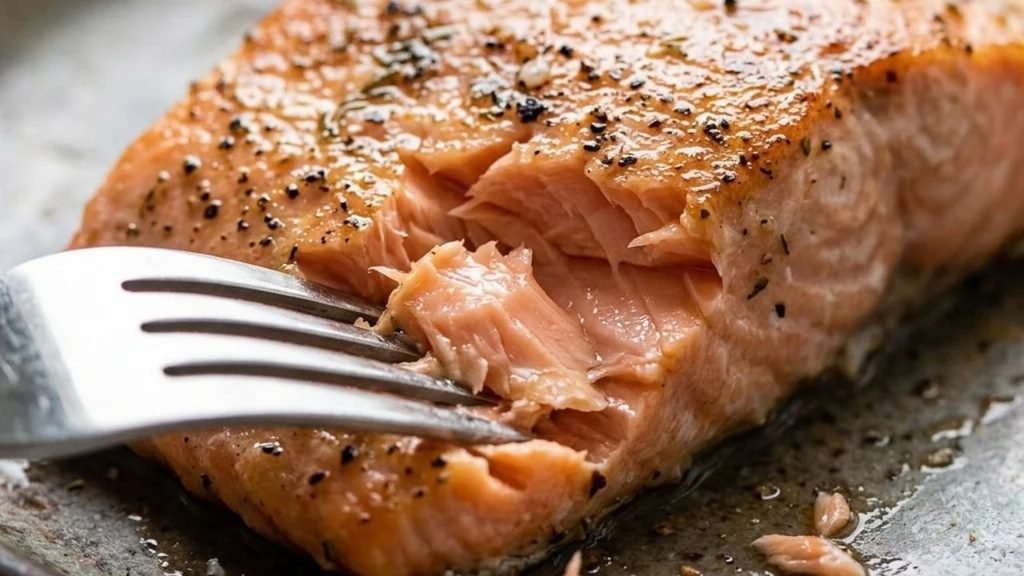
A better balance starts with fewer ingredients
Good seasoning does not mean adding more ingredients. It means understanding what each one contributes and giving the salmon enough room to retain its own character. Garlic and paprika provide warmth, dill and lemon offer freshness, and black pepper adds a little bite.
Start with a simple combination, adjust the balance to your taste, and change only one or two elements the next time you prepare it. That makes it easier to discover which flavors genuinely improve your oven-baked salmon, rather than simply adding more seasoning to the plate.