Navy beans are a familiar pantry staple that often goes unnoticed until there is a place for them on the table. Also called pea beans or Boston beans, these small white beans have long been linked with U.S. Navy meals. Today, they remain popular in soups, stews and everyday cooking because their mild flavour works with almost anything.
Getting navy beans tender without overcooking them can be tricky, especially when the cooking time changes from one batch to another. This guide explains what to expect.
The timing table worth keeping nearby
Cooking time depends on the condition of the beans and the method being used. The following times are useful starting points rather than promises.
| Navy beans | Approximate time |
| Soaked, stovetop | 90–120 minutes |
| Unsoaked, stovetop | 1½–2½ hours or longer |
| Pressure cooked, soaked | Around 5–10 minutes at pressure* |
| Pressure cooked, unsoaked | Around 20–30 minutes at pressure* |
| Canned navy beans | Already cooked; usually only need heating |
Pressure-cooking time varies by appliance, bean age and the manufacturer’s instructions.
These times are there to help with planning, not to tell you exactly when the beans will be ready. Two batches bought at different times can behave differently, so the final decision is really about texture. If the centre is still hard or chalky, the beans need more time. If they are tender enough for the dish, there is little benefit in continuing simply because a particular number of minutes has not been reached.
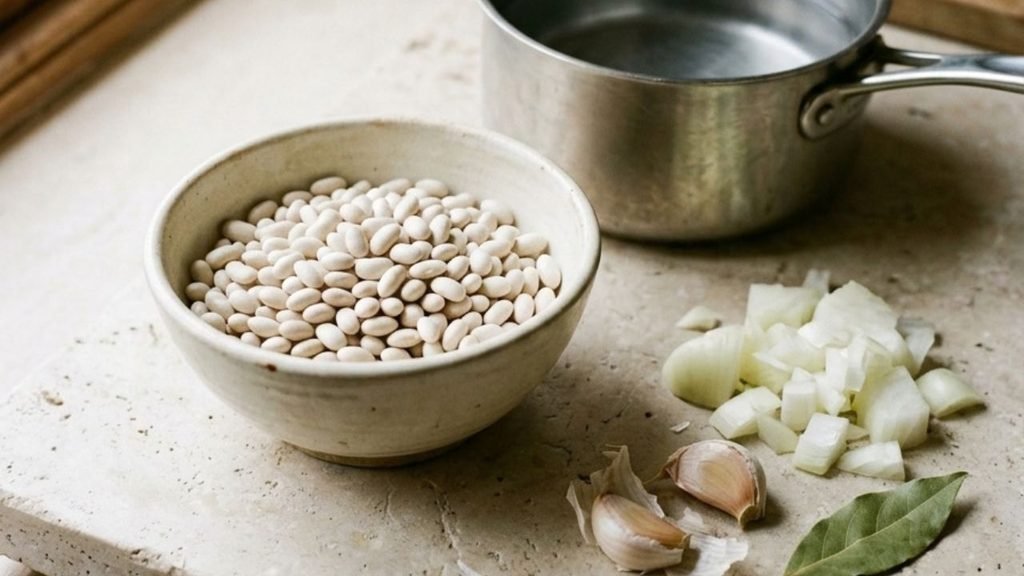
A simple navy bean pot
For a straightforward batch that can later be used in soups, bowls, salads or other meals, the ingredient list can stay quite short.
Ingredients
- 1 cup dried navy beans
- 4 cups water, plus extra for soaking
- 1 small onion, roughly chopped
- 2 garlic cloves, lightly crushed
- 1 bay leaf
- 1 teaspoon salt
- 1 tablespoon olive oil
- Black pepper, to taste
Easy swaps when the pantry is missing something
| Ingredient | Possible replacement |
| Navy beans | Cannellini beans, great northern beans or small white beans |
| Fresh onion | 1–2 teaspoons onion powder |
| Fresh garlic | ½ teaspoon garlic powder |
| Bay leaf | A small amount of dried thyme |
| Olive oil | Another mild cooking oil |
| Dried beans | Canned navy beans for a faster version |
The replacements will not produce exactly the same flavour or texture, but they can work when the purpose is a simple everyday bean dish rather than a very specific recipe.
Directions
If using dried beans, sort through them first and remove any damaged beans or small pieces of debris. Rinse them well before cooking.
For a more predictable cooking time, soak the beans in plenty of water before cooking. Drain and rinse them afterward, then place them in a pot with fresh water.
Add the onion, garlic and bay leaf. Bring the pot to a gentle boil, then reduce the heat so the beans cook at a steady simmer. Keep enough water in the pot to cover the beans comfortably.
Begin checking them around the 90-minute mark if they were soaked. Older beans may need considerably longer. Add salt according to preference and continue cooking until the centres are completely tender.
If using tomatoes, vinegar, lemon juice or another strongly acidic ingredient, it is generally easier to add it after the beans have softened. Acidic ingredients can make beans take longer to become tender.
Remove the bay leaf before serving and adjust the seasoning.
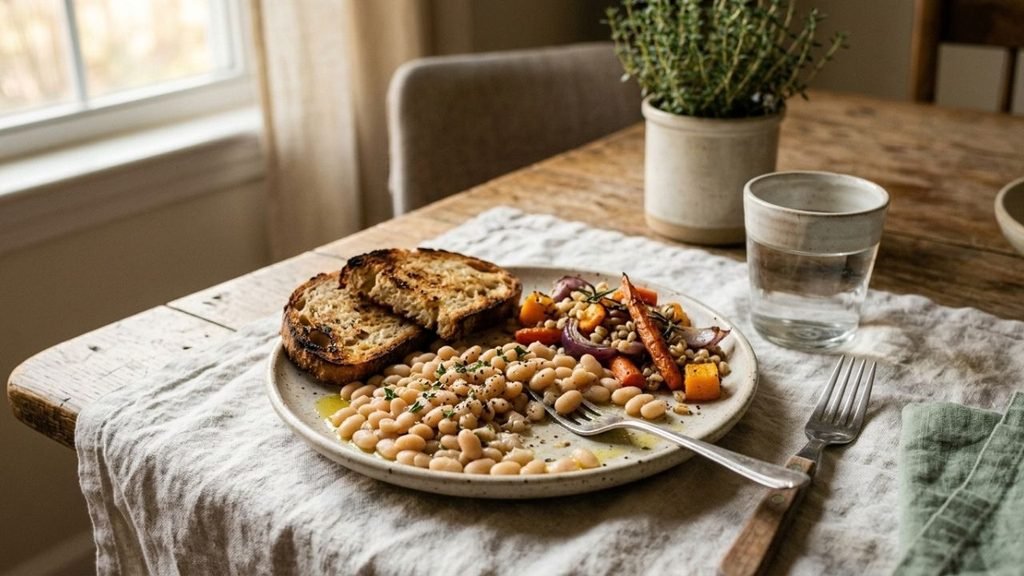
How to put them on the plate without making them boring
Navy beans do not need a complicated presentation. Their best quality is that they can take on the character of the food around them.
Serve them alongside roasted vegetables and grains for a substantial everyday meal. Spoon them into a vegetable soup when the broth needs more body. Toss cooled beans with chopped herbs, crunchy vegetables and a sharp dressing for a simple salad.
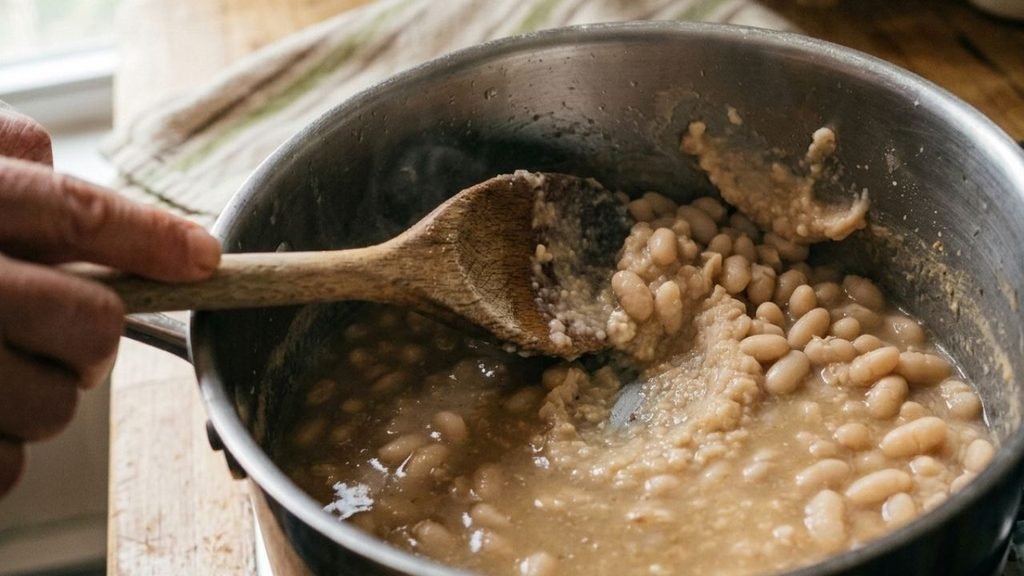
They also work particularly well when partially mashed. A few spoonfuls pressed against the side of the pan can thicken a soup naturally while leaving the remaining beans whole.
For a quieter meal, warm them with olive oil, black pepper and herbs and serve them with toasted bread. The bean does not have to imitate meat or become something else. It is already useful on its own.
Storage is where planning starts to matter
Cooked navy beans can be kept in the refrigerator in a clean, covered container. Around 3–4 days is a practical guideline for refrigerated leftovers; for more detailed storage guidance, see FoodSafety.gov’s Cold Food Storage Chart. The actual condition of the beans still depends on how they were handled, cooled and stored.
For longer storage, cooked beans can also be frozen in portions. This is particularly useful when cooking a large batch because the extra beans can be separated before they become another forgotten container in the refrigerator.
When reheating, warm only the amount needed if possible. A splash of water or broth can loosen beans that have thickened in the refrigerator.
The exact number of days is not something to treat as a guarantee. Storage conditions vary, so smell, appearance and texture still matter, and anything that seems questionable is better discarded.
Small mistakes that make beans harder than they need to be
Starting with old beans and expecting a fixed cooking time.
Older dried beans can take much longer to soften. If a batch remains firm well beyond the expected time, the age and storage of the beans may be part of the reason.
Adding acidic ingredients too early.
Tomatoes, vinegar and citrus can interfere with softening. Add them later if tender beans are the priority.
Cooking at an aggressive boil.
A hard boil can split the skins and leave you with beans that are falling apart on the outside while you are still trying to judge the centre.
Not checking the water level.
Beans need enough liquid to cook evenly. If the pot becomes dry, add more hot water rather than allowing the beans to sit exposed.
Trusting the clock more than the bean.
The stated cooking time is a guide. Taste or press a bean before deciding that it is finished.
Treating canned and dried beans as interchangeable in timing.
Canned navy beans are already cooked. They need heating and seasoning, not hours of simmering.
FAQ’s
1. Are navy beans and white beans the same?
Navy beans are one type of white bean. “White beans” is a broader description that can include navy beans, cannellini beans, great northern beans and others.
2. Do navy beans need to be soaked?
No. They can be cooked without soaking, although soaking can make the cooking process more predictable and may shorten the cooking time.
3. Why are my navy beans still hard?
Bean age is one possibility. Cooking conditions and acidic ingredients can also affect how quickly they soften.
4. Are navy beans high in protein?
They provide a useful amount of plant protein, although the exact amount depends on whether the beans are measured dry, cooked or as part of a finished dish.
5. Can navy beans be frozen after cooking?
Yes. Cooked navy beans can be frozen in suitable portions and later reheated.
6. Are canned navy beans worth using?
Yes, particularly when time matters. They are already cooked and can be added directly to many meals after draining and rinsing when appropriate.
The quiet strength of the navy bean
Navy beans are not an ingredient that needs much explanation to become useful. Their appeal is almost the opposite: they are mild enough to adapt, filling enough to matter and simple enough to keep around without planning an entire meal around them.
The most useful thing to remember is that cooking time is a starting point, not a verdict. Watch the texture, consider the age of the beans and adjust the time to suit the batch in front of you. Once that small distinction becomes familiar, navy beans become much less of a timing problem and much more of what they have always been: a dependable pantry ingredient with plenty of room to improvise.