Bavette is one of those steak names that can cause confusion before it reaches the pan. In French butchery, bavette refers to several thin, grain-forward cuts, while in American butchery it commonly means sirloin flap or flap steak. It is also called flap steak, though names vary between butchers and countries. The cut itself has a loose, visible grain structure.
Bavette can turn chewy when the grain is overlooked or the steak is cooked too far. Knowing what causes those problems makes all the difference, and this guide breaks down the five things to get right.
1. Start by Understanding What Is on the Board
The first mistake is assuming that every steak sold as bavette is exactly the same cut. If you are buying from a butcher, ask what they mean by bavette. Sirloin flap is a common interpretation, and the Beef Checkoff’s sirloin bavette flap reference shows how the cut is classified in the U.S., but names can vary between regions. That matters because the thickness, grain and shape of the steak affect how it behaves when cooked and carved.
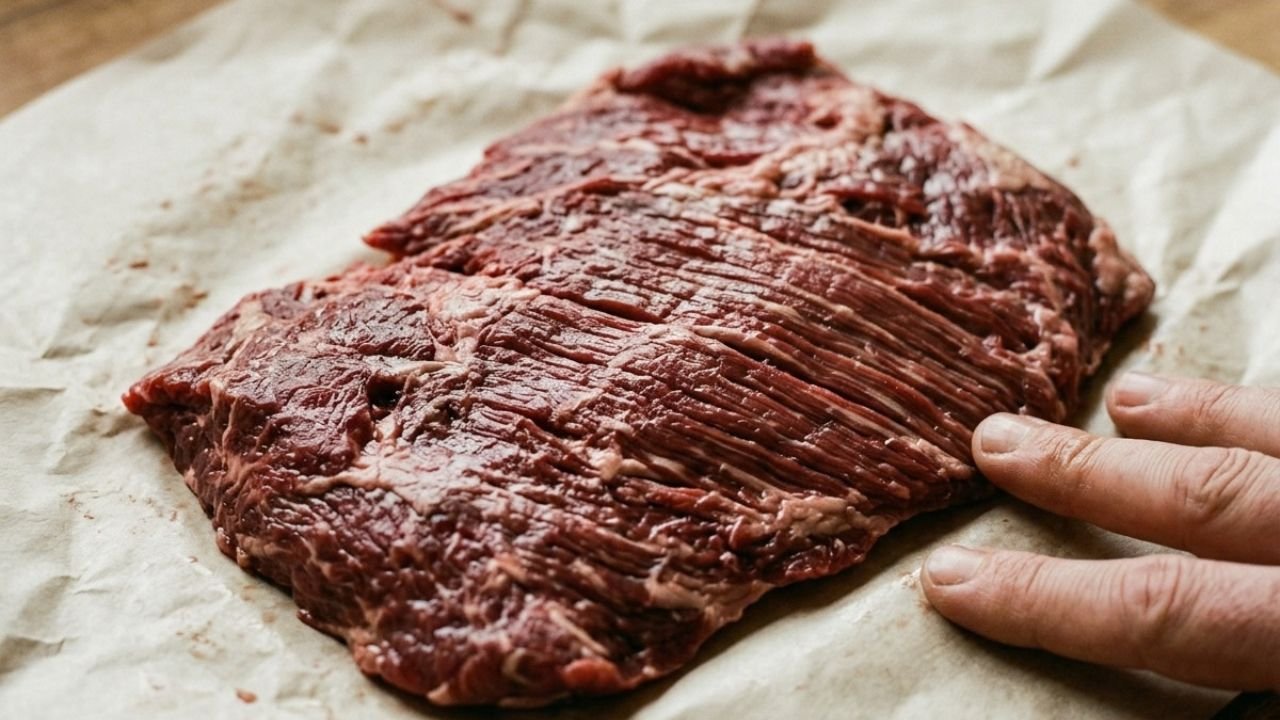
Look at the meat before doing anything else. Bavette usually has a loose, obvious grain running through it rather than the fine, compact texture associated with tenderloin. You may also notice that the fibres do not run perfectly straight from one end to the other.
That is useful information, not a flaw.
Take a moment to identify the direction of those fibres. You are essentially reading the steak before cooking it. If the grain changes direction, remember where that happens. The knife will need to account for it later.
2. The Surface Tells You More Than You Think
Bavette does not need complicated preparation to become interesting. What matters first is the condition of its surface. A damp surface makes it harder to develop the deep brown crust that gives a quickly cooked steak its contrast: crisp and intensely browned outside, softer inside. Patting the meat dry before it meets the heat is therefore a small step with a noticeable effect.
The other thing worth watching is excess surface fat or tough connective tissue. Bavette is not meant to look perfectly trimmed like a restaurant filet. Some irregularity is part of the cut. But thick, hard pieces of membrane are different from the soft fat that can contribute flavour.
The aim is not to make the steak look immaculate. It is to leave the useful parts intact while removing anything that will remain unpleasantly tough.
3. Bavette Rewards Decisive Heat
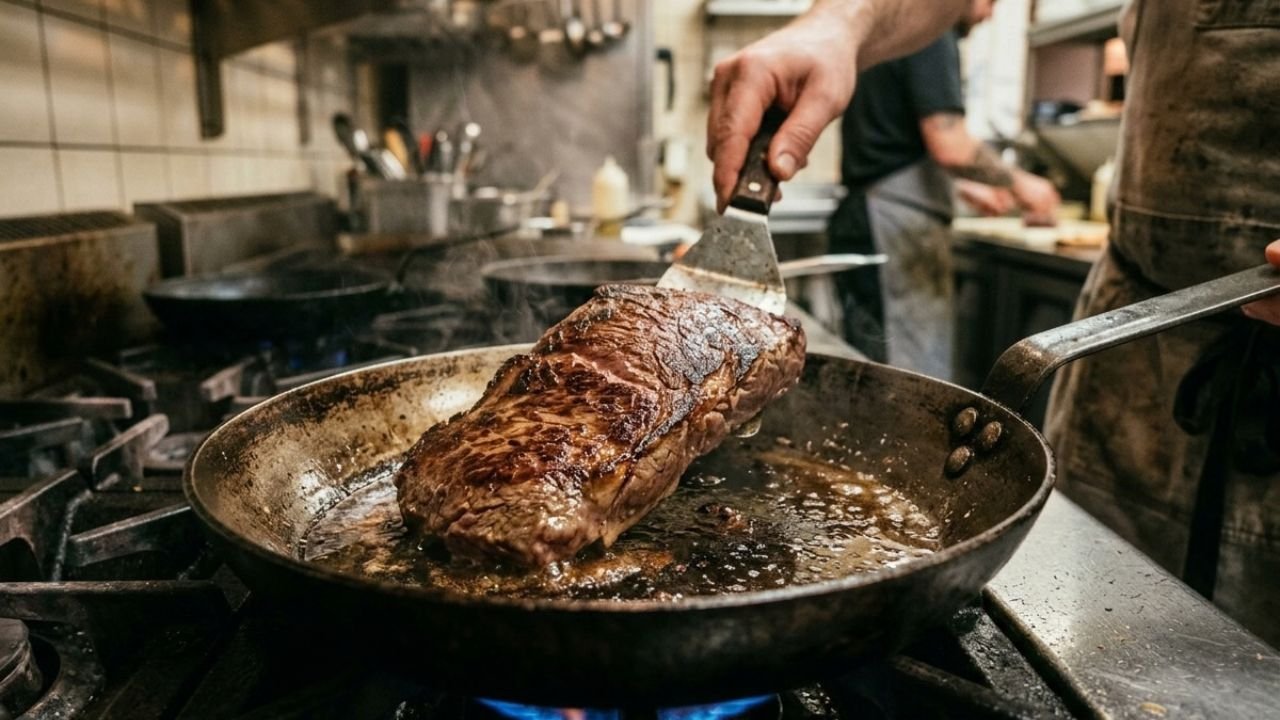
A thin steak and a timid cooking surface are not a particularly good combination. Bavette benefits from strong heat because its relatively thin profile means there is not much time to build colour before the centre moves past the doneness you want. The goal is not to keep cooking it endlessly in order to create flavour. The flavour comes quickly from the browned exterior.
This is also why thickness matters. A thicker piece gives you more room between a browned surface and an overcooked centre. A thinner one demands more attention.
Instead of memorising an exact cooking time, pay attention to what the steak is telling you. Watch the colour developing on the surface and, if possible, check the internal temperature rather than relying entirely on the clock.
That makes the technique adaptable rather than dependent on one arbitrary number.
4. Doneness Is Only Half the Texture Story
Bavette is often associated with rare or medium-rare cooking, but the more useful lesson is not a particular doneness label. It is understood that this cut has a strong grain and becomes increasingly firm as it is cooked further.
A thermometer gives you a much clearer picture than cutting into the centre repeatedly. Once you know the temperature you are aiming for, you can stop guessing based on appearance alone.
There is also a small window after the steak leaves the heat when its temperature can continue to change. Letting it settle before slicing gives the meat time to finish that process and makes the final cut cleaner.
But do not confuse resting with a magic transformation. It will not rescue a steak that has already been significantly overcooked.
The bigger point is control. Bavette gives you plenty of flavour, but it has less tolerance for careless timing than a heavily marbled steak.
5. The Knife Can Change the Steak More Than the Sauce Can
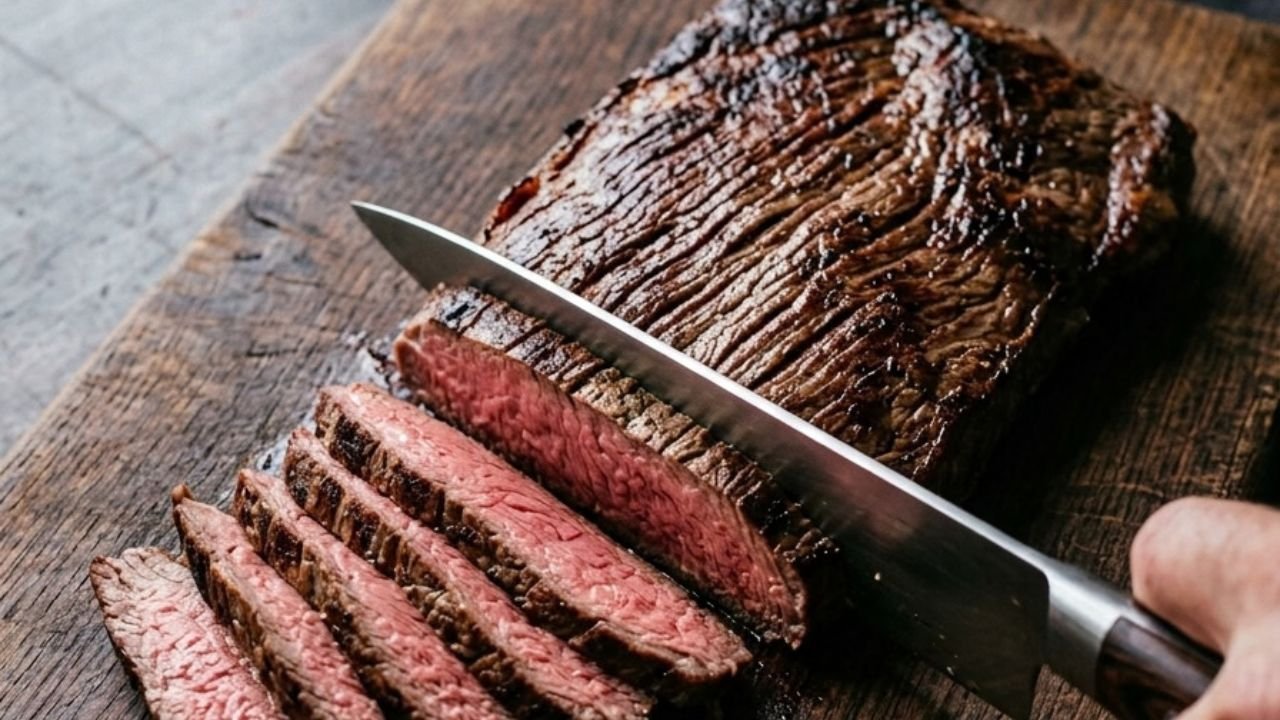
This is the part worth remembering. Bavette’s long muscle fibres are easy to see, and cutting them in the wrong direction leaves those fibres long in every bite. The result can feel much chewier than the meat actually is.
Cut across the grain instead.
The important word is across. You want the knife to shorten those long fibres rather than travelling alongside them. Thin slices usually make the effect even more noticeable.
There is one complication: the grain may change direction across the steak. If that happens, do not continue slicing in the same direction simply because you have started. Separate the sections and adjust the knife to the direction of each section.
This is why looking at the raw steak before cooking is so useful. You are not just planning how to cook it. You are planning how you will eat it.
The Small Details That Separate Good Bavette From Tough Bavette
Bavette is often treated as a steak that needs a clever trick. It really needs attention. The most useful mental model is to think about grain, heat and thickness together. The grain tells you how the meat should eventually be cut. The thickness tells you how quickly the centre will cook. The heat determines how much browning you can achieve before that centre goes too far.
Ignore one of those variables and the other two have to work harder.
This is also why two pieces of bavette can behave differently even when they come from the same butcher. Shape and thickness are not perfectly uniform. A narrow end can reach its target temperature much sooner than a thicker centre.
Rather than treating the steak as a fixed object with a fixed cooking time, pay attention to its physical structure.
That is where the cut becomes easier to understand.
FAQ’s
1. Is bavette the same as flank steak?
Not always. The names overlap in some markets, but bavette can refer to different cuts depending on the butcher and country. Ask specifically which muscle you are buying.
2. Why is bavette sometimes chewy?
The grain is the main thing to watch. Overcooking can also make the texture firmer, but slicing with the grain leaves the muscle fibres long and can make the steak seem considerably tougher.
3. Should bavette be sliced thin?
Generally, thin slicing works well because it shortens the muscle fibres into more manageable bites. The direction of the cut matters more than simply making the slices thin.
4. Does bavette need to be marinated?
No. A marinade can add flavour, but it is not what makes bavette work. The cut already has a pronounced beef character, and good handling of heat and slicing can make a significant difference without relying on a marinade.
5. Can the grain change direction?
Yes. This is one of the details that is easy to miss. Look closely before slicing and change the cutting direction when the fibres change.
6. Is bavette a tender steak?
It is better described as a flavourful, grain-forward steak than as an inherently tender cut. Its eating texture depends heavily on doneness and how it is sliced.
The Real Appeal of Bavette
Bavette does not hide much. Its fibres are visible, its shape is often irregular and its texture responds directly to how it is handled. That makes it less forgiving than some fashionable steak cuts, but also more interesting to learn.
The lesson is simple: do not try to make bavette behave like a filet. Understand the muscle you have bought, give it enough heat to develop colour without losing control of the centre, and let the grain determine how you carve it.