Frozen dinner rolls are a familiar shortcut for warm bread without starting from scratch. Usually sold as frozen yeast dough, they are also known as freezer rolls or frozen yeast rolls. Their appeal is simple. They save much of the early work while still giving home cooks a fresh, airy roll with a golden surface.
Frozen dinner rolls can brown too quickly while staying dense in the middle, or remain pale even after baking. This guide explains the small details that help fix both problems.
1. Give the Dough Time to Wake Up
Frozen yeast dough does not go directly from the freezer to its finished texture. It first needs to thaw, then expand as the yeast becomes active again.
That distinction is easy to miss. A roll may be soft enough to the touch but still not have developed enough volume. If it goes into the oven too early, the finished crumb can be tight instead of light.
The better cue is the appearance of the dough. Look for a noticeable increase in size and a soft, puffy shape rather than relying entirely on a timer.
2. Warmth Helps, But Too Much Can Work Against You
A cold kitchen can make frozen rolls seem as though nothing is happening. That does not mean they need intense heat.
Yeast dough responds best to a comfortably warm environment. Excessive heat can make the outside of the dough feel ready while the interior has not developed evenly.
A useful rule is to create a stable, mildly warm place and then leave the dough alone. Constantly moving the pan between warm and cool areas makes the timing harder to judge.
3. Watch the Rise Instead of Chasing the Clock
The instructions on a package provide a useful starting point, but rising time is not identical in every kitchen.
Room temperature, the temperature of the dough and the condition of the frozen rolls can all change how quickly they expand. A roll that is ready in one kitchen may need considerably longer somewhere cooler.
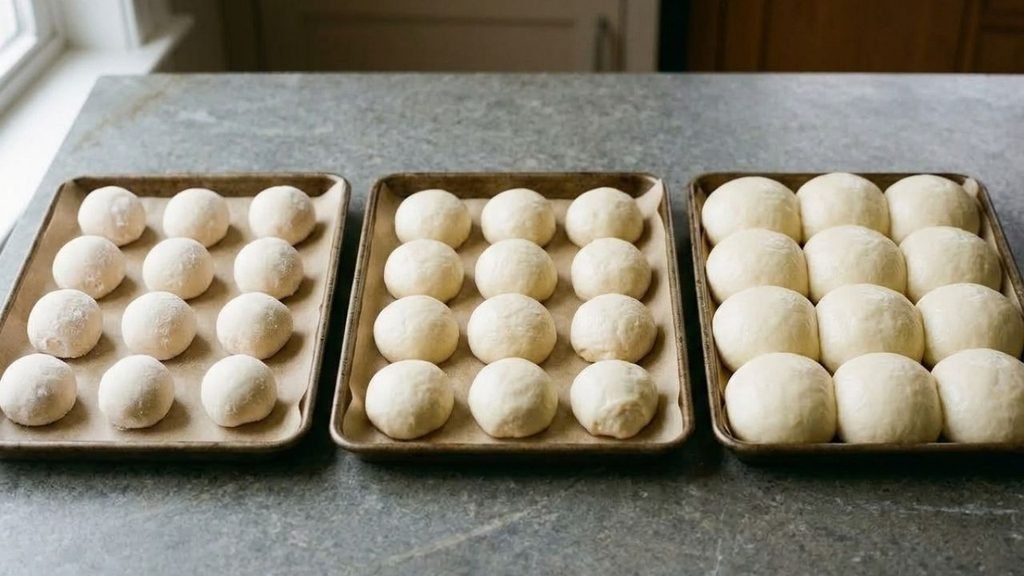
The visual difference is obvious once you start looking for it: properly risen rolls appear fuller and lighter, with much less of the dense, tightly packed appearance they had when frozen.
This is also where patience pays off. More time is not automatically better, though. Once the rolls have become properly puffy, continuing to wait simply because the clock says so can leave the dough overexpanded and less stable.
4. The Pan Quietly Changes the Texture
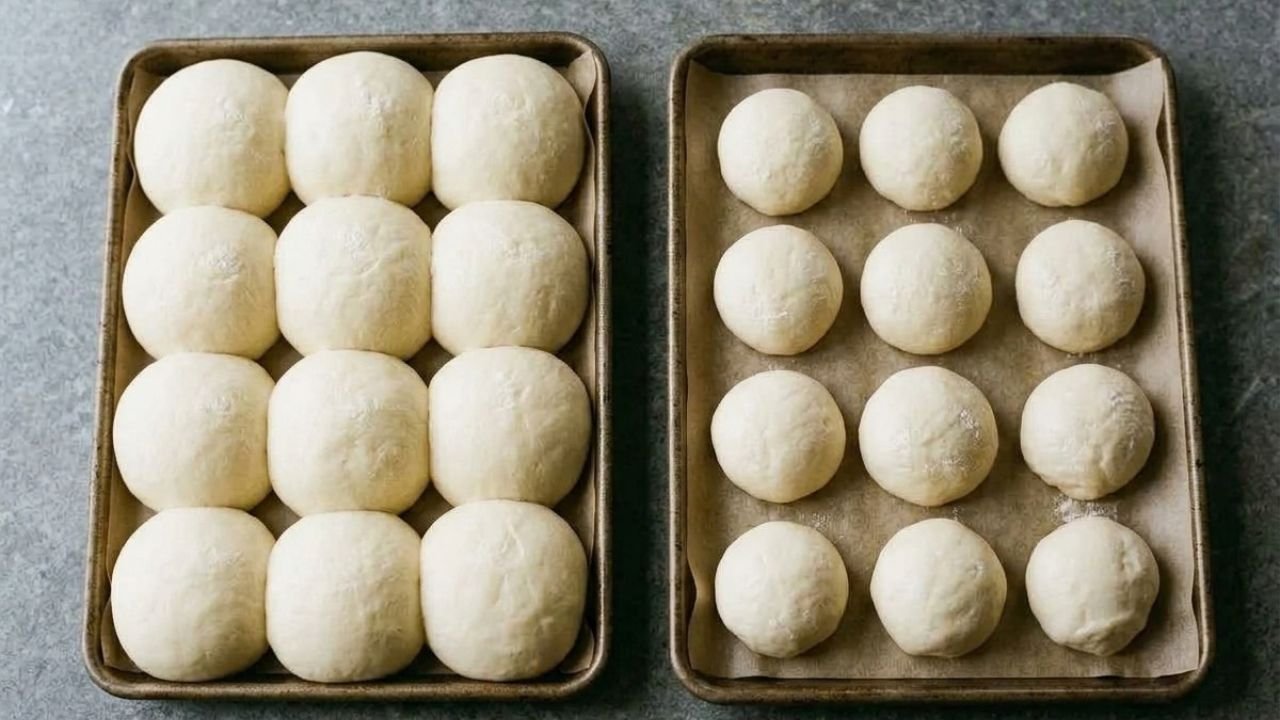
The distance between individual rolls affects how much of each roll is exposed to the heat of the oven.
When rolls are arranged close together, their sides receive less direct heat. That helps create the soft-sided, pull-apart character many people expect from dinner rolls. When they are spaced farther apart, more surface is exposed and the exterior can develop a firmer crust.
Neither arrangement is inherently wrong. It depends on the texture you want and, importantly, the instructions for the particular frozen roll.
This is one reason a baking sheet and a deeper baking pan can produce noticeably different results even when the dough itself is identical.
5. Brown Tops Need More Than a Hot Oven
A golden-brown top is one of the visual pleasures of a dinner roll, but simply increasing the heat is not the answer.
The surface can color quickly while the center is still catching up. This is especially noticeable with rolls that contain ingredients that encourage browning.
A fully preheated oven gives the dough a more predictable start. If the tops begin getting dark before the centers are ready, covering them loosely near the end of baking can protect the surface while the interior finishes.
The important distinction is simple. Color tells you what is happening on the outside, but it does not tell you everything happening inside.
6. The Soft Center Is Built Before the Crust Turns Golden
If your main goal is a soft center, pay attention to the rise before worrying about the color.
An under-risen roll has less internal structure and air than a properly risen one. Putting it into the oven may brown the outside, but it cannot completely compensate for what the dough did not develop beforehand.
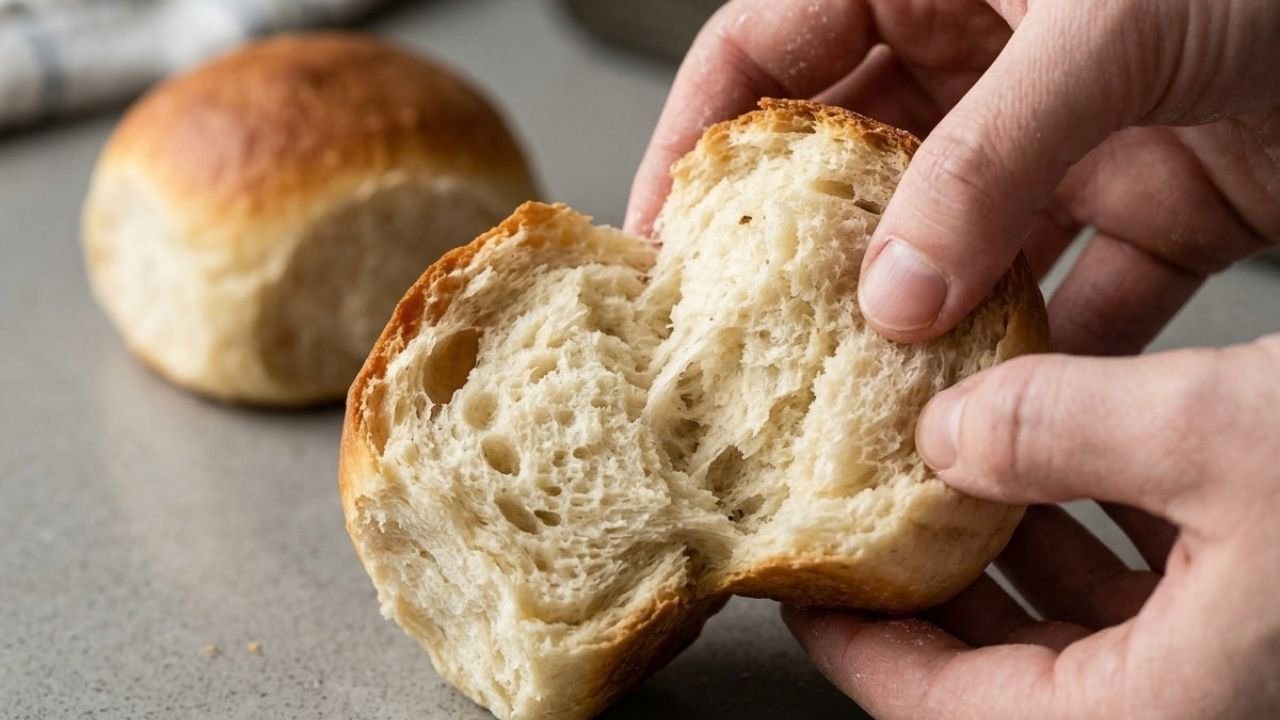
The finished crumb should look soft and reasonably open rather than compressed. It should pull apart easily instead of appearing wet, gummy or tightly packed.
For especially soft dinner rolls, the final moments after baking matter too. A light coating of butter while the rolls are warm can soften the exterior and add richness without turning the surface greasy.
7. Don’t Let a Perfectly Browned Top Fool You
This is probably the easiest mistake to make because appearance is such a strong signal.
A deeply colored top can make a roll seem finished even when the center needs more time. Conversely, a pale roll is not necessarily raw if the interior has already reached the proper baked texture.
If you frequently encounter this problem, an instant-read thermometer can remove much of the guesswork. For yeast rolls, an internal temperature around the upper 190s°F is a useful general reference, although the exact target can vary with the dough and the manufacturer’s directions.
If you do not use a thermometer, look at several clues together: the color of the top, the firmness of the roll, the appearance of the bottom and, when appropriate, the crumb inside.
The Small Storage Detail That Can Affect the Final Roll
Frozen rolls begin their story before they reach your oven. Keeping the dough consistently frozen matters because changes in freezing and thawing conditions can affect quality. For general guidance on freezer temperatures and the way freezing affects food quality, see the USDA’s Freezing and Food Safety guidance. That context helps explain why one batch can behave differently from another when its storage history has not been consistent.
A Better Way to Read Frozen Dinner Rolls
The most useful mental picture is a sequence:
cold dough → thawed dough → visibly risen dough → browned surface → fully baked center
Each stage tells you something different.
If the dough has barely expanded, the problem is probably not the oven. If the top is dark while the center is underdone, adding more heat may make the situation worse. the rolls rise unusually slowly, the temperature of the room and the condition of the frozen dough become more relevant.
Once you start reading those signals instead of treating the package’s timing as an absolute, frozen dinner rolls become much less mysterious.
FAQ’s
1. Why are my frozen dinner rolls hard inside?
The dough may not have risen enough before baking, or the rolls may have been baked in a way that set the exterior too quickly. Check the rise first rather than immediately increasing the oven temperature.
2. Why do the tops brown before the centers are done?
The surface receives heat more quickly than the middle. If the tops are getting too dark, loosely covering them toward the end can slow further browning while the center continues baking.
3. How can I make frozen dinner rolls softer?
A properly developed rise is the starting point. After baking, brushing the warm rolls lightly with butter can also soften the crust.
4. Why aren’t my frozen rolls rising?
Temperature is one possibility, particularly in a cool kitchen. Storage history can matter too, especially if the dough has partially thawed and refrozen.
5. Can I let frozen rolls rise too long?
Yes. The goal is not simply to make them as large as possible. Once the dough has become sufficiently puffy, additional rising can weaken its structure.
The Difference Is in the Details
Frozen dinner rolls are designed to make bread easier, but they have not escaped the basic behavior of bread. They still respond to temperature, time, yeast activity and heat in ways that show up in the final texture.
The trick is to stop judging them by one signal. A golden top, a certain number of minutes, or a roll that feels soft before baking can each tell only part of the story. When those details start working together, the result is much closer to what people actually want from a dinner roll: a browned surface that gives way easily, with a center that stays soft rather than turning dense or dry.