Taco toppings have always been part of what gives the food its character. The word taco covers a broad family of dishes, from familiar street-style tacos to regional versions built around different fillings. What sits on top can change the whole bite. Onion, salsa, and crunch can turn a simple taco into a balanced one.
The trouble is that a taco can look full and still taste dull, too rich, too soft, or simply unfinished. The right topping can fix that without covering up the filling.
Timing at a glance
There is no single preparation time for these toppings because it depends on how many tacos you are making and how much preparation you choose to do yourself. The table below is only a useful guide, so your actual time may be shorter or longer.
| Task | Approx. time |
| Choosing and gathering toppings | 5–10 minutes |
| Preparing fresh toppings | 10–20 minutes |
| Assembling tacos | 5–10 minutes |
| Total | About 20–40 minutes |
You do not need to prepare all 15. In fact, choosing two or three toppings that solve the particular problem with your taco will usually give you a better result.
Start with the problem, not the topping
Before choosing anything, take one bite of the taco as it is.
If it feels heavy, look for acidity or freshness. it feels bland, it may need sharper flavor, salt, or heat. everything feels soft, introduce crunch. If the filling is dry, something creamy or juicy may be more useful.
That small check makes the list below much easier to use.
15 toppings that can change the whole bite
1. Pickled red onions — the sharp reset
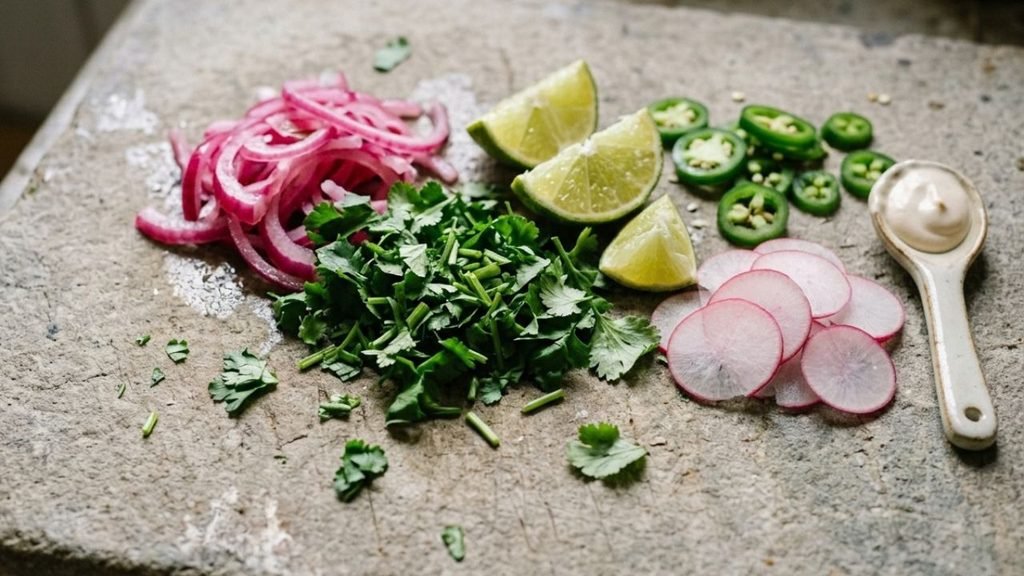
Pickled red onions are particularly useful when a taco toppings has become too rich. Their bright, acidic flavor cuts through fatty fillings and their crisp texture adds some life to an otherwise soft bite. They are a strong match for pork, beef, chicken and tacos carrying a generous amount of cheese.
2. Salsa verde — when the filling needs lifting
Salsa verde can give a quiet taco a much more noticeable personality. Its combination of freshness, acidity and chilli heat works especially well when the filling has been cooked until deeply savory. It is especially good with chicken, pork, steak, potatoes and beans.
3. White onion — simple, but deliberately sharp
Fresh white onion is easy to underestimate. Its clean, biting flavor provides a useful contrast to slow-cooked meats and smoky fillings. Use it when you want freshness without adding another sauce or creamy element.
4. Cilantro — a fresh finish
Cilantro changes the aroma of a taco almost immediately. Its herbal character can make rich meat feel lighter and gives mild fillings a fresher edge. It pairs naturally with onion, salsa and lime, but it does not need much company to do its job.
5. Lime — the small addition that wakes things up
When a taco tastes strangely dull despite being well seasoned, acidity may be what is missing. A squeeze of lime can sharpen the existing flavors without introducing another major texture or flavor profile. It is particularly useful with fatty meat, seafood, beans and avocado.
6. Radishes — the crunch many tacos need
Radishes bring crispness and a gentle peppery flavor. They are particularly effective when the tortilla and filling are both soft. Thin slices are enough. The idea is to introduce contrast, not turn the taco into a salad.
7. Pico de gallo — freshness without losing texture
Pico de gallo gives a taco several things at once: freshness, moisture, acidity and crunch. It works particularly well with chicken, beef, fish and beans, especially when the filling itself is fairly straightforward.
8. Guacamole — useful, but easy to overdo
Avocado brings richness and a smooth texture. That can be exactly what a lean or spicy taco needs, but it can also make an already-heavy taco feel even heavier. The trick is pairing it with something sharp, such as lime, salsa or pickled onion.
9. Salsa macha — deeper heat
Salsa macha is different from fresh salsa. Its chile-forward, oily character brings a deeper, roasted intensity. It works especially well when you want more than straightforward heat. Use it carefully with already-rich fillings because it can add richness as well as spice.
10. Shredded cabbage — texture with a clean finish
Cabbage is particularly useful for taco toppings that feel too soft or greasy. It stays crisp and provides volume without making the taco as rich as another creamy topping would. It is a natural choice for fish, shrimp, fried fillings and spicy chicken.
11. Cotija — a salty finishing touch
A little crumbly cheese can make a mild taco feel more complete. Cotija brings saltiness and texture rather than simply adding another layer of melted richness. If cotija is unavailable, queso fresco can provide a gentler alternative.
12. Charred scallions — a little smoke goes far
Scallions become sweeter and more complex when charred. Their browned edges work particularly well with grilled meats and vegetables because they echo the smoky flavors already present. This is a useful choice when a taco needs depth rather than extra spice.
13. Fresh serrano — clean heat
Fresh serrano gives a direct hit of heat without adding the weight of a rich sauce. It is useful when the taco toppings tastes mild but otherwise has enough moisture, texture and seasoning. If the filling is already intensely spicy, however, another chile may simply overpower it.
14. Charred corn — sweetness against spice
Corn can bring a gentle sweetness to tacos built around chile, smoky meat or beans. The charred edges add another layer of flavor without making the taco feel heavier. It is particularly good in vegetable and bean tacos.
15. Pineapple — especially good with bold fillings
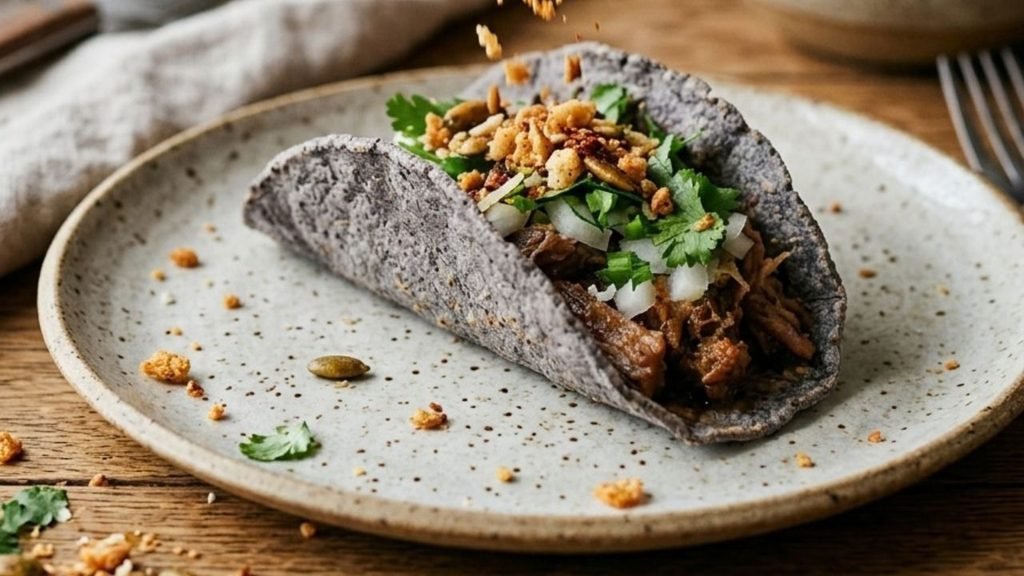
Pineapple is most useful when the taco already has enough savory and spicy character to support sweetness. Its familiar association with al pastor-style tacos makes sense for exactly this reason: the sweetness and acidity provide contrast to strongly seasoned meat.
Quick swaps when your fridge says otherwise
You do not need the exact topping named in the list. Look for another ingredient that performs the same job.
| Instead of | Try | What it adds |
| Pickled red onion | Pickled shallots | Sharp acidity |
| Cotija | Queso fresco | Salty creaminess |
| Radish | Crisp cucumber | Fresh crunch |
| White onion | Scallions | Sharp freshness |
| Salsa verde | Fresh tomato salsa | Acidity and brightness |
| Serrano | Jalapeño | Fresh heat |
| Cabbage | Crisp lettuce | Light crunch |
| Pineapple | Mango | Sweetness and acidity |
Adding too many toppings
More toppings can make the individual flavors harder to recognize. Start with the problem and choose accordingly.
Making a rich taco richer
Cheese, avocado, crema and oily sauces can all be excellent, but combining several of them may leave the taco heavy.
Forgetting texture
If the tortilla and filling are both soft, another soft topping will not solve the problem. Look for radish, cabbage, onion or another crisp element.
Using heat as the answer to everything
A bland taco does not automatically need more chile. It may need lime, salt, salsa or freshness instead.
Adding too much moisture
Very wet toppings can weaken a tortilla and make the taco messy. Freshness is useful, sogginess is not. When preparing fresh toppings such as onions, tomatoes, cabbage or herbs, it is also worth handling them properly and refrigerating cut produce rather than leaving it sitting out. The USDA guidance on washing and handling fresh produce
offers a useful reference for that part of the preparation.
Covering the filling completely
A topping should improve the filling, not make it disappear. Particularly delicate fish, vegetables and lightly seasoned meats can be overwhelmed by aggressive toppings.
FAQ’s
1. What is the best topping for a bland taco?
Start with salsa, lime, onion or fresh chile. Which one works best depends on whether the taco lacks acidity, freshness, salt or heat.
2. What works best on heavy tacos?
Acidic toppings are usually the safest direction. Pickled onions, lime and salsa verde can make rich fillings feel less dense.
3. How do I add crunch?
Radish, cabbage, fresh onion and crisp vegetables are the simplest choices.
4. Can I use several toppings together?
Yes. Two or three contrasting toppings are usually enough. Think about what each one contributes before adding another.
5. What topping works with spicy tacos?
Guacamole, lime and cooling dairy-based toppings can soften strong heat, while something fresh such as cabbage can add contrast without increasing the spice.
The better taco is not always the fuller one
A good topping earns its place by changing something. It might cut richness, add crunch, sharpen a mild filling, bring freshness or introduce just enough heat to make the rest of the taco more noticeable. That is why fixing a boring taco rarely means throwing everything you have onto it.
Taste first, work out what is missing, and choose the topping that fills that gap. Sometimes one squeeze of lime or a small handful of pickled onion does more for a taco than an entire collection of extras.