Pickled onions have become a familiar addition to tacos, burgers, sandwiches, salads, grilled meats, and rice bowls. Often called quick-pickled onions or refrigerator pickles, they are loved for turning an ordinary onion sharper and brighter while keeping some bite. Red onions are especially popular for the vivid pink colour they develop.
Getting pickled onions right can be tricky when they turn too soft, too sharp, or lose their fresh bite. This guide focuses on the small details that help you get a better result.
1. The onion you start with already decides a lot
Not every onion is going to give you the same result. A firm, fresh red onion is usually a dependable starting point because it has a crisp structure and a naturally strong flavour that can stand up to acidity. If the onion is already soft, dried out, bruised, or past its best, there is little chance of getting a particularly lively texture later.
Freshness also matters because pickling does not magically restore an onion’s original quality. It changes the onion; it does not rebuild it. That is an easy detail to overlook when attention is focused entirely on the liquid surrounding it.
If you want onions that still have some snap, start with an onion that already feels crisp and substantial when you cut into it.
2. Your knife is quietly controlling the texture
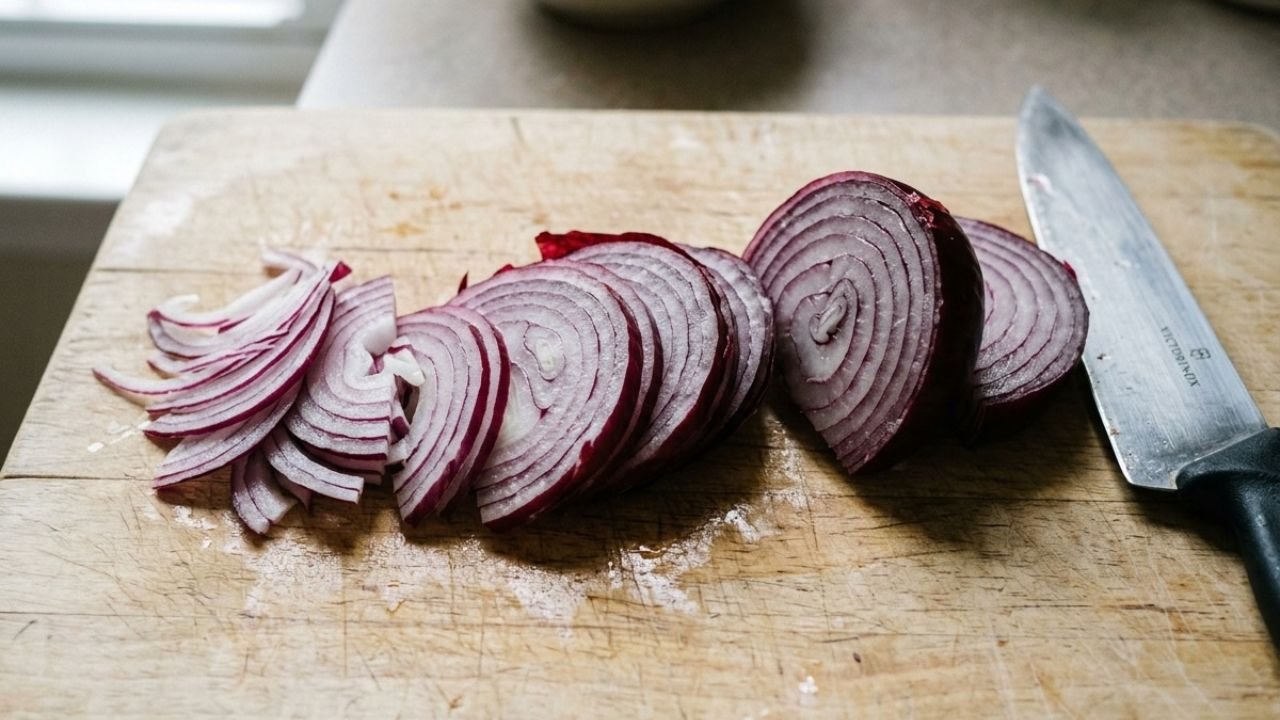
The thickness of the slices has a bigger effect than many people expect. Thin slices become tender and absorb the surrounding flavour quickly. They work well when you want the onions to blend into a dish rather than sit heavily on top of it. Slightly thicker slices retain more structure and give you a more noticeable bite.
There is no single perfect thickness. The useful distinction is between fast, delicate slices and slower, crunchier ones.
Consistency matters just as much. If one part of the onion is sliced almost paper-thin while another is left much thicker, the pieces will change at different rates. You may end up with some that are soft while others still taste strongly raw.
A good rule is simple: decide whether you want the onion to disappear into the food or remain noticeable, then let the thickness support that purpose.
3. The sharpest vinegar is not automatically the best one
Vinegar gives pickled onions their identity, but its job is not simply to make them sour. Different vinegars have different personalities. A clean, straightforward vinegar can make the onion taste bright and direct, while a more rounded vinegar can introduce fruitier or deeper notes.
This becomes particularly noticeable because onions already have their own sweetness and pungency. The vinegar sits directly against those flavours, so a particularly forceful vinegar can dominate the entire jar.
The better approach is to think about the finished onion rather than the vinegar in isolation.
If you want something crisp and assertive for rich foods, a cleaner acidic profile can work well. If the onions are going into a lighter salad or alongside delicate flavours, a softer character may make more sense.
The point is not to find the “best” vinegar. It is to find one that gives the onion enough character without burying it.
4. Sugar should round the flavour, not announce itself
There is a tendency to divide pickled onions into two categories: sweet or sour. In reality, a small amount of sweetness can simply make acidity feel less aggressive. When the balance is right, you should not necessarily taste sugar. You should notice that the sharpness feels more controlled and that the onion has a fuller flavour.
This is particularly useful when the onions are going to accompany strongly flavoured food. Extremely sour onions can compete with everything around them, while a better-balanced version acts almost like seasoning.
The important distinction is between sweetness you notice and sweetness that improves the balance.
If the first thing you taste is sugar, the balance has probably moved too far.
5. Salt has more influence than its small role suggests
Salt is easy to treat as an afterthought because vinegar is the obvious flavour in a pickle. But without enough seasoning, even a properly acidic onion can taste strangely flat. Salt helps bring the onion’s own flavour forward and makes the acidity feel less one-dimensional.
At the same time, more salt does not mean more flavour.
An onion that tastes overwhelmingly salty is difficult to rescue because the salt begins to hide the fresh character that made the onion appealing in the first place.
Think of salt as the element that connects the other flavours rather than the flavour you want to dominate. The goal is for the onion to taste bright, sharp and savoury at the same time.
6. Colour can tell you more than you think
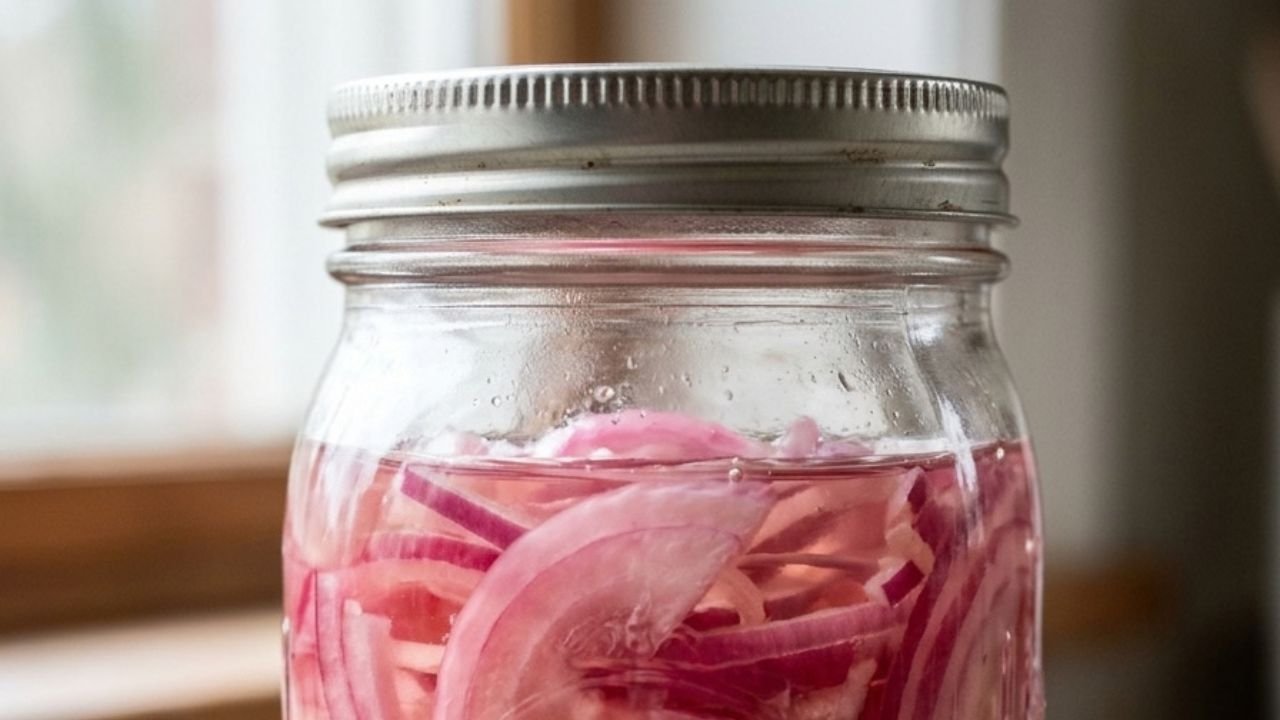
The transformation from dark red or purple onion to vivid pink is one of the most recognizable features of homemade pickled onions. It is also a useful visual reminder that the onion is changing beyond its surface. As the acidic environment moves through the cut layers, the colour shifts and the onion becomes more translucent. The exact appearance will vary depending on the onion itself and the surrounding liquid, so a dramatic pink colour is not necessarily a measure of quality.
Some onions simply colour more intensely than others. Texture and flavour are better indicators. A beautifully pink jar can still contain onions that are limp or overwhelmingly sour. Conversely, a less dramatic-looking batch can have excellent crunch and balance.
The visual transformation is part of the pleasure, but it should not become the standard by which the whole pickle is judged.
7. The best batch is usually the one made for a specific meal
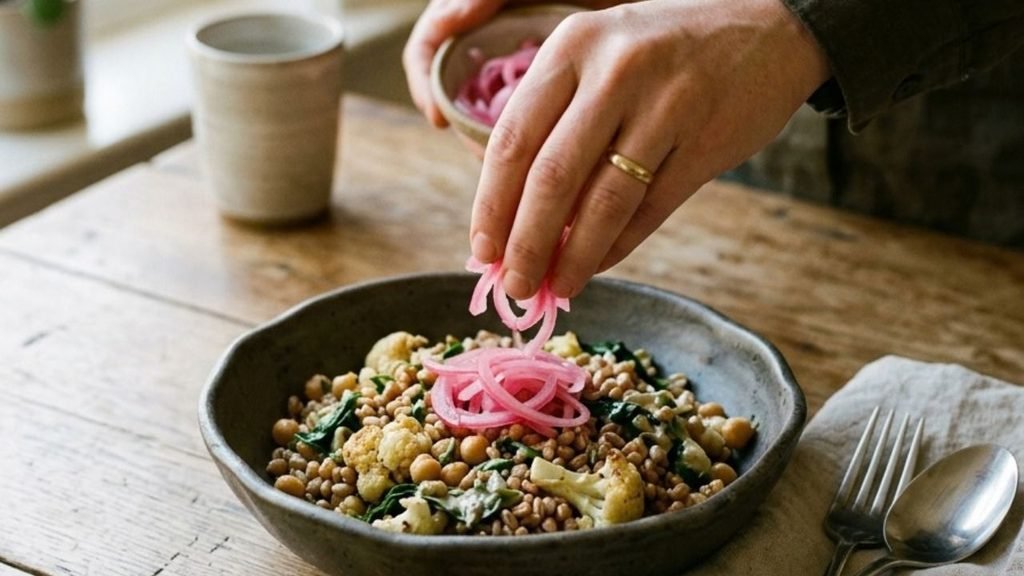
Pickled onions become more useful when you stop treating them as a universal topping. Think about what they are going to sit beside. Rich, fatty foods can handle a brighter and more assertive onion because the acidity cuts through the richness. A delicate salad may benefit from something milder. A sandwich might need thinner slices that spread easily, while grilled meat can work with pieces substantial enough to retain their texture.
This small change in thinking makes the whole process more intentional. Instead of asking whether your onions are “good,” ask whether they are right for what you are eating. That is a much more useful standard.
Small mistakes that make a big difference
A few common problems are easy to diagnose. Too soft The slices may be too thin, the onion may have been lacking freshness, or the onions may simply have gone further than the texture you wanted.
Too sour: The acidic character is overpowering the onion rather than supporting it. A better balance of flavours can make acidity feel considerably less aggressive.
Too bland: Strong acidity alone does not create complexity. Seasoning and the character of the onion still matter. Uneven texture: Inconsistent slicing is often the simplest explanation.
Beautiful colour but disappointing flavour: Colour is not a quality test. Taste and texture matter more.
FAQ’s
1. How long do pickled onions stay good?
Refrigerated quick-pickled onions are generally intended for short-term use rather than indefinite storage. Keep them properly chilled, and for broader guidance on maintaining a safe refrigerator temperature, see the USDA’s refrigeration and food-safety guidance. Use your judgment based on appearance, smell and texture.
2. Why do red onions turn pink?
The acidic environment changes the colour compounds in the onion, producing the familiar pink appearance. The intensity varies between onions.
3. Why are my pickled onions too soft?
Thin slicing, extended exposure and the condition of the original onion can all contribute. If crunch matters to you, start with a firm onion and avoid cutting it excessively thin.
4. Can other onions be pickled?
Yes. Red onions are simply popular because of their colour and strong flavour. Other onions can produce different results, particularly in sweetness, colour and intensity.
5. Should pickled onions taste very sour?
They should have noticeable acidity, but sourness should not erase the onion’s own flavour. A balanced pickle has more going on than vinegar alone.
A better jar starts with better judgment
Making better pickled onions is less about finding one perfect formula and more about paying attention to the onion in front of you. Freshness, slice thickness, acidity, seasoning, colour and intended use all influence what ends up in the jar.
Once those details become familiar, the process becomes much less mysterious. You start noticing why one batch works beautifully with a rich sandwich while another belongs on a lighter salad.
The most successful pickled onion is not necessarily the brightest, sharpest or prettiest one. It is the one that still tastes like an onion, only with its edges rearranged.