Candied salmon, sometimes called salmon candy or smoked salmon candy, is one of those preparations where salmon moves closer to the world of preserved foods without losing its identity as a piece of fish. It has strong roots in Pacific Northwest smoking traditions, where salmon has long been cured, smoked, and preserved. The sweet, glossy version many people know today is especially recognizable for the way
The biggest problem with candied salmon is keeping the inside moist while the outside becomes properly sweet, dark, and sticky. It is easy to overcook the fish while waiting for it to finish. This guide shows how to keep both textures in balance.
a little time makes a difference
| Stage | Time |
| Prep time | 15–20 minutes |
| Cure time | 6–8 hours |
| Drying time | 1–2 hours |
| Cooking time | 1–2 hours |
| Total time | About 9–13 hours |
These are working times rather than promises. Your salmon pieces, refrigerator, oven or smoker, and preferred texture can all change how long the process takes, so use the timing as a guide rather than something you need to follow to the minute.
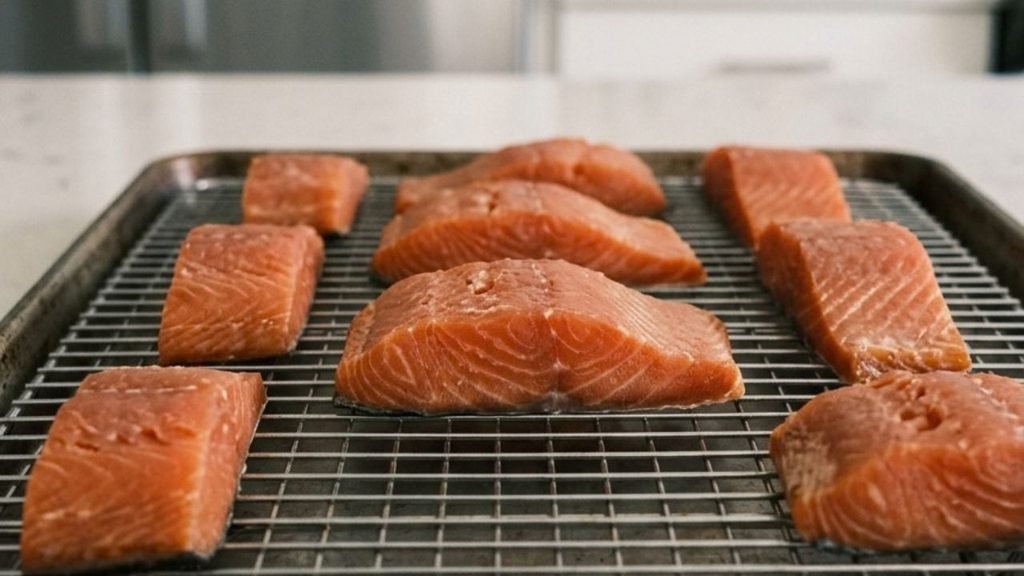
What goes into the cure and glaze
- 1½ pounds salmon fillet, preferably a thick center-cut piece
- ½ cup packed dark brown sugar
- ¼ cup pure maple syrup
- 2 tablespoons kosher salt
- ½ teaspoon coarsely ground black pepper
- ½ cup water
For the finishing glaze
- ¼ cup pure maple syrup
- 1 tablespoon brown sugar
- Pinch of black pepper
- Optional pinch of chili flakes
A few easy swaps when the pantry is missing something
| Ingredient | Possible replacement | What changes |
| Pure maple syrup | Honey | Sweeter, thicker glaze with a slightly different flavor |
| Dark brown sugar | Light brown sugar | A milder molasses note |
| Kosher salt | Fine sea salt | Use a little less by volume because fine salt is denser |
| Chili flakes | Smoked paprika | Adds warmth without the sharper heat |
| Alder or maple smoking wood | Cherry wood | Slightly fruitier smoke character |
The part that protects the texture
Start by combining the brown sugar, maple syrup, kosher salt, pepper, and water until the salt and sugar are mostly dissolved. Place the salmon in the mixture and refrigerate it for about 6–8 hours.
When the cure has done its work, remove the salmon and wipe or rinse away the excess according to your preference, then pat it very dry. Set the pieces on a rack and leave them uncovered in the refrigerator for about 1–2 hours.
This drying stage matters because the outside needs to become slightly tacky rather than remain wet. You are drying the surface, not trying to turn the salmon itself into dried fish.
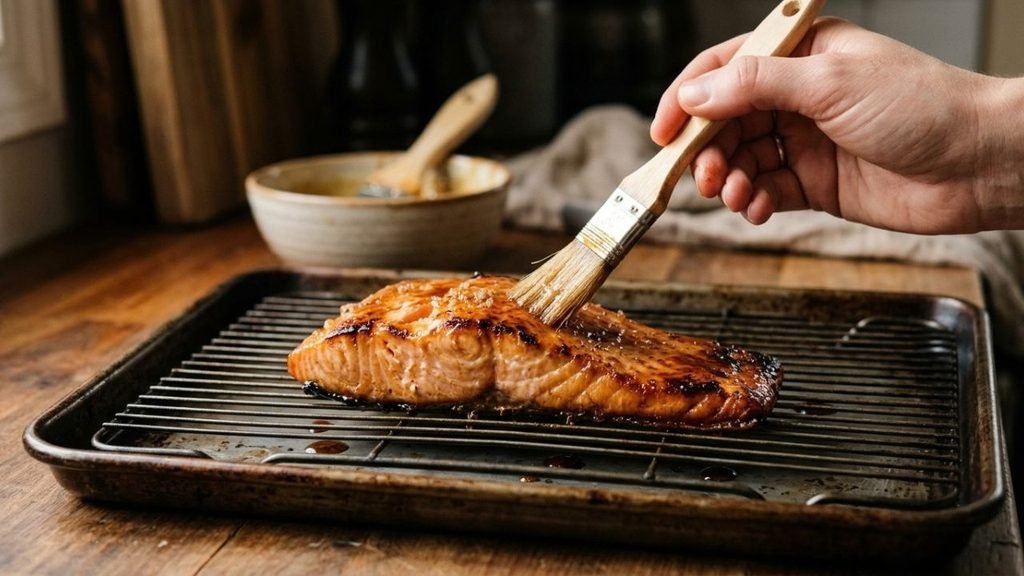
Give the salmon room to cook evenly
Cut the salmon into thick strips or chunks, around 1 to 1½ inches thick. Keeping the pieces substantial gives you more control over the texture because the exterior can darken and take on the glaze while the center remains moist.
For an oven, place the pieces on a lightly oiled wire rack over a rimmed baking tray. If using a smoker, arrange them with enough space between each piece for smoke and heat to circulate.
The glaze goes on later
Mix the maple syrup, brown sugar, pepper, and optional chili flakes.
Do not cover the salmon heavily at the beginning. Start cooking it first, then brush on a thin layer of glaze once the surface has begun to firm. Add another light coating toward the end.
A thin glaze has an important advantage. It can become sticky and caramelized without leaving the salmon covered in a thick layer of wet sugar throughout the cooking process.
When the outside looks ready but the center still matters
For an oven preparation, work around 180°F / 82°C and begin checking the salmon well before assuming it needs a particular number of minutes. For a smoker, around 200–225°F gives you a practical range for a softer style of salmon candy.
The exact cooking time will depend on the thickness of your pieces and the equipment you are using. If you want the fish softer, avoid extending the cooking simply because the exterior could become darker. Once the center reaches the safe temperature you are aiming for, continued cooking is mainly a texture decision.
For a moist result, that distinction is important. Darker does not necessarily mean better.
The moment candied salmon can turn into something else
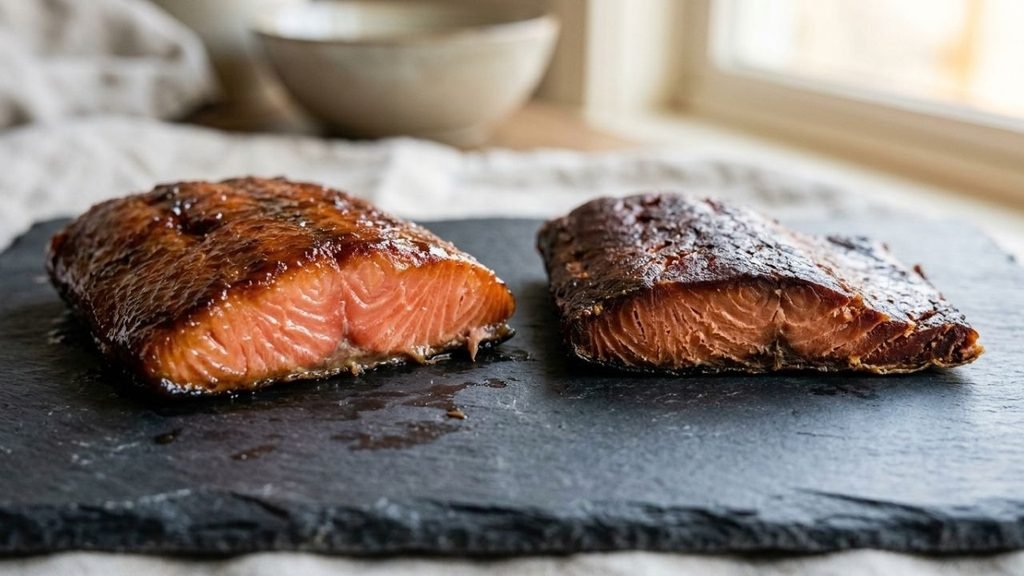
There is nothing wrong with chewy salmon candy. In fact, some versions are intentionally smoked and dried until they become firm and concentrated. But if your aim is the softer style, watch for the signs that the fish is losing too much moisture.
Very hard edges, a uniformly firm center, excessive white albumin, and a texture closer to jerky than flaky salmon are all signs that the fish has stayed in the heat longer than necessary.
The ideal contrast is more interesting, with a sticky, smoky exterior and a center that still breaks into moist flakes.
Serving it beyond the obvious
Candied salmon is rich enough to work as a small portion rather than the main event of a plate. Cut the finished pieces into smaller bites and serve them alongside crackers, cucumber, pickled vegetables, or a sharp mustard.
It also works well where you want a concentrated salty-sweet element: flaked over a simple salad, tucked into a breakfast plate, or served with cream cheese and toasted bread.
Because the salmon already carries smoke, sweetness, and salt, the best accompaniments tend to provide contrast rather than more richness.
Keeping the leftovers in good shape
If you have leftovers, refrigerate them promptly in a covered container rather than leaving them at room temperature while they cool. For a useful reference point, the FDA’s food storage guidance lists 3–4 days for cooked fish when properly refrigerated. Your refrigerator temperature and how quickly the salmon was chilled still matter, so storage time should not be treated as a guarantee of quality or safety.
For reheating, gentle heat is preferable to a long, hot re-cook. The salmon is already cooked, so the aim is simply to take the chill off without pushing the center toward dryness.
Small mistakes that quietly ruin a good batch
Using thin pieces. Thin salmon has very little protection against overcooking.
Leaving the salmon wet after curing. A wet surface makes it harder to develop the tacky exterior that holds the glaze and smoke.
Applying a thick glaze too early. Sugar can darken before the fish has reached the texture you want.
Cooking entirely by appearance. A dark exterior does not tell you whether the center is still moist.
Extending the cooking because you want more color. More time gives you more dehydration as well as more browning.
Treating every salmon variety the same. Richer, fattier salmon gives you more room for error than leaner fish.
Confusing traditional texture with failed texture. Some salmon candy is intentionally firm and chewy. Decide which style you want before judging the result.
Before You Start, Keep These in Mind
1. Can I make candied salmon without a smoker?
Yes. A low oven can produce a similar sweet, concentrated exterior, although it will not have the same depth of wood smoke.
2. Why did my salmon become dry?
The most likely issue is cumulative moisture loss. Check the thickness of the pieces, curing time, drying time, cooking temperature, and how long the salmon stayed in the heat.
3. Can I use honey instead of maple syrup?
Yes. Honey works as a glaze, although it produces a different sweetness and can brown more quickly.
4. Should I use fresh or frozen salmon?
Either can work. If using frozen salmon, thaw it completely and dry it well before curing.
5. Why is there white stuff on my salmon?
That white material is albumin, a protein that becomes more visible as salmon cooks. A small amount is normal, but a large amount can mean the fish has been exposed to more heat than needed for the texture you want.
6. Can I make the salmon less sweet?
Yes. Reduce the finishing glaze rather than drastically changing the cure. The smoke, salt, and natural richness of the salmon should still provide enough character without making sweetness the only noticeable flavor.
The real trick is knowing when to stop
Good candied salmon is built around contrast. The surface should have enough time to become dark, sticky, and concentrated, but the fish underneath should still remind you that you are eating salmon, not jerky. That is why the process rewards restraint. The cure should season rather than overwhelm, the drying stage should prepare the surface rather than dehydrate the flesh, and the final heat should finish the fish rather than simply keep making it darker.
Once you understand that balance, candied salmon becomes much easier to control—and much harder to accidentally dry out.