The Dragon Roll is a familiar sushi favorite, known for its thin avocado scales layered across the top. Unlike traditional Japanese sushi, it belongs to modern American-style sushi, with versions that may feature shrimp tempura, eel, or imitation crab. Its name is widely recognized, but what actually goes inside the roll can vary considerably from one version to another.
The confusing part is knowing which ingredients actually belong in a Dragon Roll, especially when recipes vary from one place to another. This guide clears up those differences and shows what works best when making one at home.
Dragon Roll Prep and Cooking Times
| Stage | Time |
| Prep | 20–25 minutes |
| Cooking | 10–15 minutes |
| Rolling and topping | 10–15 minutes |
| Total | About 40–55 minutes |
These are useful working times rather than fixed rules. Your actual prep and cooking time can be shorter or longer depending on how quickly you work, how familiar you are with rolling sushi, and whether your rice and tempura are already prepared.
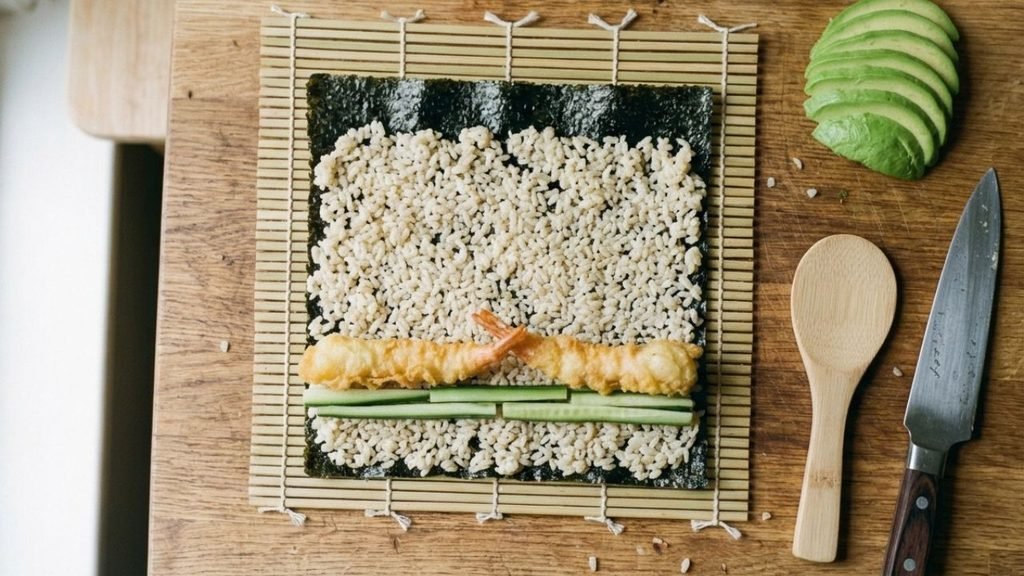
What Goes Into a Dragon Roll
The Essentials for Your Roll
- 2 sheets nori
- 2 cups cooked sushi rice
- 4–6 pieces shrimp tempura
- ½ cucumber, cut into thin strips
- 1 ripe avocado
- 1 tablespoon sesame seeds
- 2 tablespoons tobiko, optional
- 2–3 tablespoons unagi sauce
- 1–2 tablespoons spicy mayonnaise, optional
For the sushi rice
- 2 cups short-grain sushi rice
- ¼ cup rice vinegar
- 1 tablespoon sugar
- ½ teaspoon salt
The exact amount of filling is flexible. The important thing is not to overload the center. A Dragon Roll needs enough room for the rice and avocado to hold their shape around the filling.
A Few Ingredients Have Easy Stand-Ins
Not every kitchen has tobiko or unagi sauce waiting in the cupboard, and some ingredients may not suit your preference. A few substitutions work well, while others change the character of the roll quite noticeably.
| Original ingredient | Possible replacement | What changes |
| Shrimp tempura | Cooked shrimp | Less crunch and a lighter finish |
| Unagi sauce | Teriyaki sauce | Similar sweetness, but a different flavor |
| Tobiko | Sesame seeds | Less salty pop and no roe texture |
| Japanese mayonnaise | Regular mayonnaise | Slightly less rich and savory |
| Cucumber | Carrot strips | More crunch and sweetness |
| Avocado | No direct replacement | Removing it changes the defining look and texture |
| Sushi rice | Short-grain white rice | Works in a pinch, but the texture is less suited to rolling |
If avocado is the ingredient you are missing, the roll will lose some of what makes it recognizable as a Dragon Roll. Here, avocado is more than just another filling. It is part of the roll’s identity.
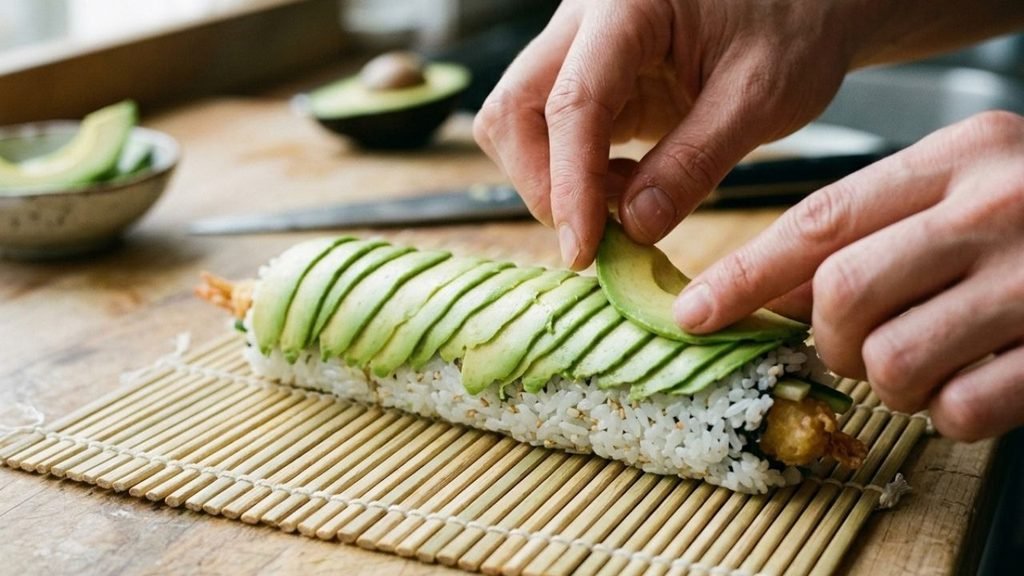
The Part That Needs a Little Patience
Once the rice is prepared and the fillings are ready, the process is fairly straightforward. The part that usually takes practice is not cooking but controlling the amount of filling and keeping the roll tight enough to slice cleanly.
Directions
1. Prepare the sushi rice.
Cook the rice according to its package directions. While it is still warm, gently mix in the rice vinegar, sugar, and salt. Let it cool enough to handle before rolling.
2. Prepare the filling.
Cut the cucumber into thin strips and slice the avocado carefully. Keep the shrimp tempura whole or cut larger pieces in half if needed.
3. Set up the nori.
Place a sheet of nori on a sushi mat. Spread a thin, even layer of rice across it, leaving a small amount of exposed nori at the far edge.
4. Add the filling.
Place the shrimp tempura and cucumber in a narrow line near the lower third of the rice-covered nori. Avoid adding too much.
5. Roll firmly.
Lift the edge of the mat and roll forward, keeping gentle pressure on the filling. Continue until the roll is closed.
6. Add the avocado.
Lay thin avocado slices across the top of the roll, slightly overlapping them so they resemble scales.
7. Finish the surface.
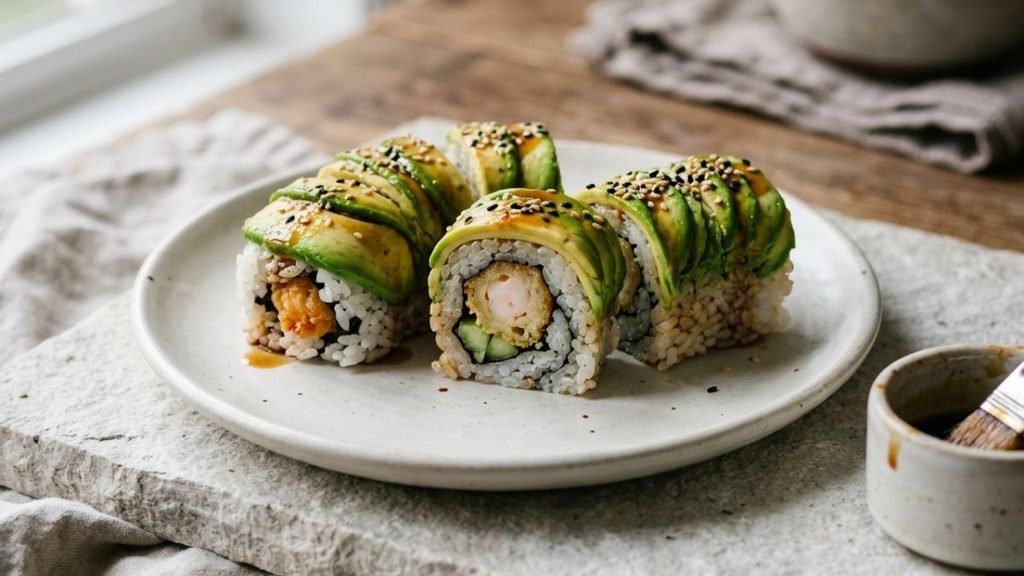
Sprinkle with sesame seeds or tobiko, then drizzle with unagi sauce and, if you like, spicy mayonnaise.
8. Slice.
Use a sharp, slightly damp knife and cut the roll into even pieces. Clean the blade between cuts if rice or avocado begins sticking.
Make the Plate Look Like It Belongs Together
A Dragon Roll is already visually busy, so it does not need much besides it. A little pickled ginger, wasabi and soy sauce are enough for a traditional sushi-style presentation.
If you want something fresher alongside the richness of the avocado, cucumber salad or lightly dressed greens work well. Keep the side dishes restrained. Too many strong flavors can make the sweet sauce and delicate filling disappear.
Can You Store It?
Dragon Rolls are best eaten soon after they are assembled. The rice gradually becomes firmer, the avocado can darken, and the tempura loses the crisp texture that makes it useful in the first place.
If you do have leftovers, refrigerate them promptly in a covered container and follow food-safety guidance for leftovers rather than relying only on appearance or texture. The longer the roll sits, the more its texture changes.
Reheating is generally not a good idea. Warm rice and avocado do not improve the finished roll, while reheating can make the tempura uneven and soft.
The Mistakes That Usually Give It Away
Too much filling.
A generous center sounds appealing, but it makes the roll difficult to close and usually pushes the ingredients out when sliced.
Using warm tempura.
Freshly fried shrimp can make the avocado soften and the rice behave poorly. Let the tempura cool before assembling.
Thick avocado slices.
The avocado needs to bend over the roll. Thick pieces crack, slide, and make the finished roll look uneven.
Packing the rice too heavily.
A thick layer of rice can overwhelm the filling and make the roll feel dense.
Using a dull knife.
Pressing down on the roll instead of cutting through it cleanly will flatten the avocado and expose the filling.
Add sauce too heavily.
Unagi sauce is sweet and concentrated. Too much can cover the flavors underneath instead of tying them together.
Dragon Roll Questions, Answered
1. Is a Dragon Roll traditionally Japanese?
Not in the sense of being a classic Japanese sushi preparation with one established recipe. The Dragon Roll is generally associated with modern American-style sushi, where familiar Japanese ingredients were adapted to local tastes and presentation.
2. Does every Dragon Roll contain eel?
No. Some versions use eel, while others use shrimp tempura, imitation crab, or combinations of these ingredients. The restaurant or recipe determines what is actually inside.
3. Can I make a Dragon Roll without raw fish?
Yes. A version made with cooked shrimp tempura is one of the common approaches. Still, check every ingredient and sauce if you are avoiding raw seafood or particular allergens.
4. Why is it called a Dragon Roll?
The avocado slices arranged across the top are usually responsible for the name. Their overlapping shape resembles scales.
5. What makes a Dragon Roll different from a California Roll?
The two rolls can share ingredients such as avocado and imitation crab, but they are constructed differently. A Dragon Roll is usually distinguished by its avocado-covered exterior and often includes a richer filling or sauce, such as shrimp tempura and unagi sauce.
One Roll, Several Interpretations
The Dragon Roll is a good reminder that a dish’s name does not always tell its whole story. Unlike a tightly defined traditional preparation, this roll has room for restaurants and home cooks to interpret it differently. What remains recognizable is the visual idea of a rice-covered roll, a contrasting center, and avocado layered over the surface like scales.
Once you understand that structure, the recipe becomes easier to adapt without losing what makes it a Dragon Roll in the first place.