Enchilada casserole is the laid-back cousin of traditional enchiladas. Instead of filling and rolling tortillas one by one, the same familiar combination of tortillas, seasoned meat, enchilada sauce, and melted cheese is arranged in layers and baked together. It is often simply called enchilada casserole, although you may also see versions described as layered enchiladas or stacked enchiladas. Leaving out beans makes this version especially straightforward for families who prefer a meat-and-cheese filling or simply do not enjoy beans.
The real challenge is keeping the casserole flavorful and satisfying without letting it become too wet, heavy, or bland. This recipe focuses on getting that balance right while keeping dinner simple enough for a busy evening.
Timing at a Glance
| Step | Time |
| Prep | 15 minutes |
| Cook filling | 10–12 minutes |
| Assemble | 10 minutes |
| Bake | 25–30 minutes |
| Rest | 10 minutes |
| Total | About 60–65 minutes |
These times are a useful guide rather than a rule. Your actual prep or cooking time can be shorter or longer depending on how quickly you work, the ingredients you use, and whether your filling is already cooked.
What Goes Into the Casserole
- 1 pound ground beef
- 1 small onion, finely chopped
- 2 cloves garlic, minced
- 1 teaspoon ground cumin
- 1 teaspoon chili powder
- ½ teaspoon smoked paprika
- ½ teaspoon salt, plus more to taste
- ¼ teaspoon black pepper
- 2½ cups red enchilada sauce
- 10–12 corn tortillas
- 2 cups shredded Monterey Jack, cheddar, or a Mexican-style cheese blend
- 1 tablespoon cooking oil
For serving
- Chopped fresh cilantro
- Sliced green onions
- Diced avocado
- Sour cream
- Lime wedges
- Pickled or fresh jalapeños
A Few Easy Ingredient Swaps
Most of the ingredients are easy to find, but a couple of substitutions can make the recipe more flexible without changing its basic character.
| Ingredient | Easy replacement | What to expect |
| Ground beef | Shredded cooked chicken | Lighter filling with a softer texture |
| Corn tortillas | Flour tortillas | Softer, more tender layers |
| Monterey Jack | Cheddar | Sharper flavor and stronger browning |
| Red enchilada sauce | Green enchilada sauce | Fresher, tangier flavor |
| Smoked paprika | Regular paprika | Less smoky, but still adds color and mild sweetness |
If you use chicken instead of beef, make sure it is already cooked before assembling the casserole. The goal is to change the filling, not add extra cooking time to the recipe.
The Layering Is Where It Comes Together
1. Prepare the filling
Heat the oil in a large skillet over medium heat. Add the chopped onion and cook for a few minutes until softened.
Add the ground beef and cook until browned, breaking it into small pieces as it cooks. Drain excess fat if necessary.
Stir in the garlic, cumin, chili powder, smoked paprika, salt, and black pepper. Cook for another minute so the seasonings become fragrant and coat the meat.
2. Start with a little sauce
Heat the oven to 375°F (190°C).
Spread a thin layer of enchilada sauce across the bottom of a 9-by-13-inch baking dish. It does not need to be thick. Just enough to lightly cover the base helps keep the first tortillas from sticking.
3. Build the layers
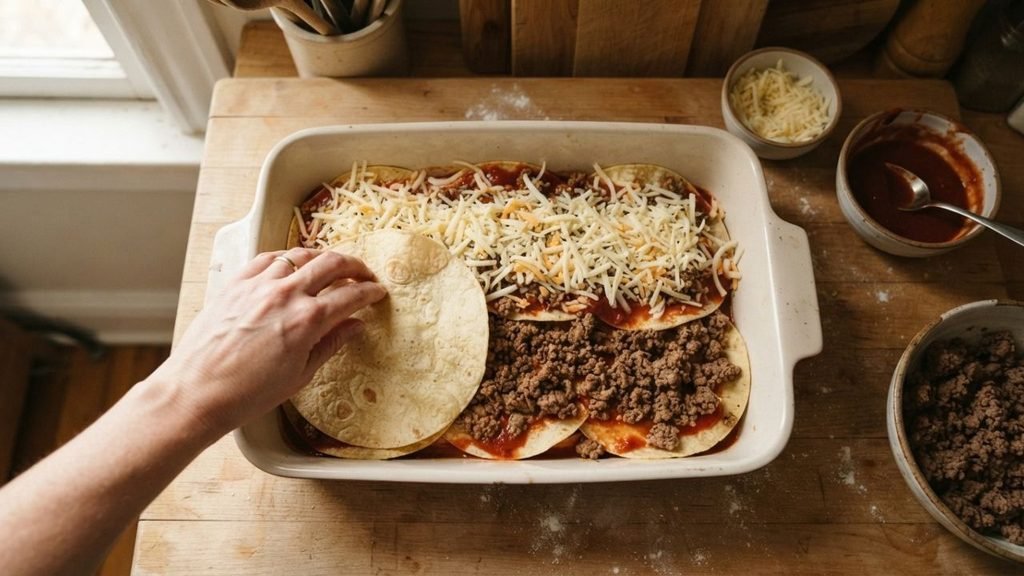
Place a layer of corn tortillas over the sauce, overlapping them slightly where needed.
Add about half of the seasoned beef, followed by some enchilada sauce and a portion of the shredded cheese.
Repeat with another layer of tortillas, beef, sauce, and cheese.
Finish with the remaining tortillas, enough enchilada sauce to cover them, and the rest of the cheese.
Try not to flood the dish with sauce. The tortillas will absorb moisture as the casserole bakes.
4. Bake until bubbling
Cover the dish loosely with foil and bake for about 20 minutes.
Remove the foil and continue baking for another 5–10 minutes, until the cheese is melted and lightly browned around the edges.
Let the casserole rest for about 10 minutes before slicing. This gives the layers time to settle so they are easier to serve.
Give the Richness Somewhere to Go
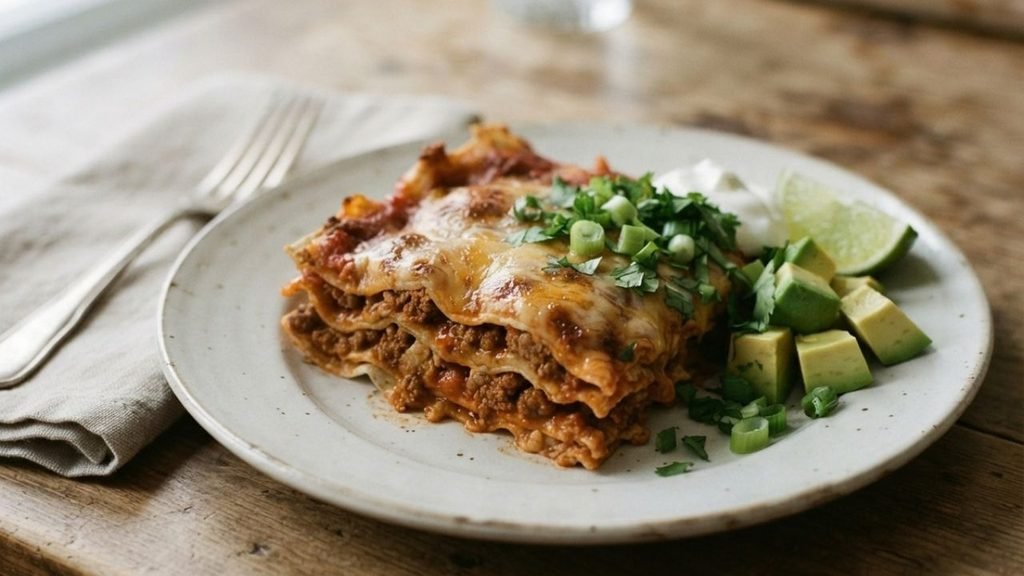
Enchilada casserole is naturally rich, so the best toppings are not necessarily the heaviest ones.
A spoonful of sour cream adds coolness, while lime brings acidity that cuts through the cheese and sauce. Fresh cilantro and green onion add brightness, and avocado gives the dish a softer contrast.
For a family dinner, serve it with a simple green salad, roasted vegetables, or corn. Rice can work too, although you do not really need another substantial starch alongside the tortillas.
Keeping Leftovers in Good Shape
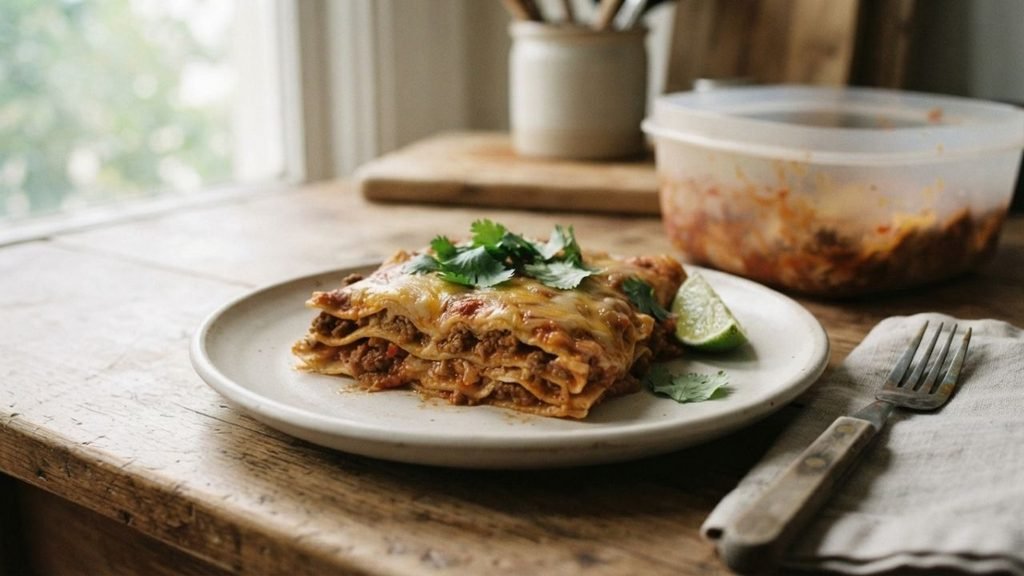
If you have leftovers, refrigerate the casserole promptly after cooking rather than leaving it at room temperature for an extended period. For more detailed USDA guidance on storing and reheating leftovers, the agency recommends using refrigerated cooked leftovers within 3–4 days and reheating them to 165°F (74°C).
Reheat individual portions in the microwave for convenience, or warm a larger portion in a covered oven-safe dish until heated through. The exact reheating time depends on portion size and your appliance, so a food thermometer is more reliable than treating the reheating time as fixed.
The cheese may not be quite as soft and fresh as it was straight from the oven, but a little fresh cilantro, lime, or sour cream can bring the leftovers back to life.
Small Mistakes That Can Throw It Off
Too much sauce
More sauce does not automatically mean a better casserole. Excess liquid can make the tortillas overly soft and cause the layers to collapse when served.
Skipping seasoning in the meat
The enchilada sauce carries a lot of flavor, but it should not have to do all the work. Seasoning the meat separately gives the casserole more depth.
Using dry tortillas without enough sauce
If the tortillas are very dry, they need enough surrounding moisture to soften during baking. A thin but even coating of sauce is better than leaving large dry patches.
Cutting it immediately
A hot casserole is difficult to portion neatly. Give it several minutes to settle before serving.
Adding too many wet toppings before baking
Fresh tomatoes, salsa, or other watery ingredients can introduce extra moisture. Save most fresh toppings for after the casserole comes out of the oven.
FAQ’s
1. Can I make this with chicken?
Yes. Shredded cooked chicken works particularly well and makes the casserole slightly lighter than the beef version.
2. Can I use flour tortillas?
You can. They produce softer, more tender layers than corn tortillas, so the finished casserole will have a different texture.
3. Can I make it spicy?
Yes. Use a hotter enchilada sauce or add chopped jalapeños to the filling. Adjust the heat according to who will be eating it.
4. Why is my casserole watery?
Usually there is too much sauce or another ingredient has released excess moisture. Keep the filling reasonably dry and use the sauce in controlled layers.
5. Can I add vegetables?
Absolutely. Cook vegetables such as peppers, zucchini, or corn first if they contain a lot of moisture. This helps prevent a watery casserole.
6. Can I use leftover taco meat?
Yes, provided it is properly refrigerated and still good to eat. It can turn this casserole into an especially quick dinner.
A Simple Dinner That Knows What to Leave Out
The appeal of this enchilada casserole is not that it tries to imitate a more elaborate dinner. It works because the basic combination already has enough going for it: tender tortillas, seasoned filling, chile-rich sauce, and browned cheese.
Without beans, the layers feel a little more focused, and there is plenty of room to adjust the filling around what your family actually likes. Keep the sauce under control, season the meat properly, and give the finished casserole a few minutes to settle. The result is the kind of dinner that feels generous without requiring a complicated evening in the kitchen.