Ajitama, short for ajitsuke tamago, is a Japanese seasoned egg commonly served with ramen. Often called a ramen egg or soy-marinated egg, it is recognised by its tender white, golden centre and lightly browned exterior. Its flavour and texture vary between ramen shops, but the idea remains simple: an egg that complements the broth rather than competing with it.
The difficulty is getting the yolk creamy without leaving the white undercooked, while giving the egg enough seasoning without making it overly salty. A small difference in cooking or marinating time can change the result.
Timing for Ajitama With a Creamy Centre
| Stage | Estimated time |
| Preparation | 5 minutes |
| Cooking | 7–8 minutes |
| Cooling and peeling | 10–15 minutes |
| Marinade preparation | 5 minutes |
| Refrigerated marinating | 8–12 hours |
| Active preparation | About 20–30 minutes |
These timings are estimates rather than fixed rules. Your actual preparation time depends on your pace, equipment and egg size. Most of the total time is spent cooling and marinating, so plan ahead if you want the eggs ready for dinner.
Ingredients for Four Ramen Eggs
- 4 large eggs
- 60 ml (4 tbsp) Japanese soy sauce
- 60 ml (4 tbsp) mirin
- 60 ml (4 tbsp) sake
- 1 teaspoon sugar
- Cold water and ice, as needed
Simple Replacements for Japanese Pantry Staples
If mirin or sake is difficult to find, a few substitutions can help you make a balanced marinade with ingredients already in your kitchen. Understanding the role of these ingredients can also help you adjust the flavour more confidently; Japan’s Ministry of Agriculture, Forestry and Fisheries explains how traditional seasonings such as soy sauce and mirin contribute to Japanese cooking in its guide to Japanese seasonings and their culinary uses.
| Ingredient | Replacement | Difference in flavour |
| Mirin | Water with a little extra sugar | Less rounded sweetness |
| Sake | Water | A milder, less aromatic marinade |
| Japanese soy sauce | Regular light soy sauce | Saltiness and intensity may vary |
| White sugar | Brown sugar | A slightly deeper, caramel-like note |
These replacements will not produce an identical result, so adjust the seasoning gradually. If your soy sauce is particularly salty, start with a little less and taste the cooled marinade before using it.
Directions
The key is to keep cooking, cooling and marinating as separate stages. Each affects the final egg differently, and small adjustments will help you find the texture and flavour you prefer.
1. Prepare the marinade
Combine the soy sauce, mirin, sake and sugar in a small saucepan. Bring to a gentle boil, stirring until the sugar dissolves, then simmer briefly for about one minute.
Remove from the heat and allow the mixture to cool completely. The marinade should be cool before it touches the peeled eggs.
2. Cook the eggs
Bring a saucepan of water to a boil and carefully lower in the eggs. Cook for around seven minutes for a soft, jammy yolk, or eight minutes for a slightly firmer centre.
Egg size and starting temperature can affect the result, so treat these times as a starting point. For soft-yolk eggs, use pasteurized eggs where available; people at higher risk from foodborne illness should choose fully cooked eggs.
3. Cool and peel gently
Transfer the eggs straight into a bowl of ice water and leave them for 10–15 minutes. This stops residual cooking and helps make peeling easier.
Crack the shells gently all over and peel from the wider end. Take your time, as the whites can tear if the shell sticks.
4. Let the seasoning develop
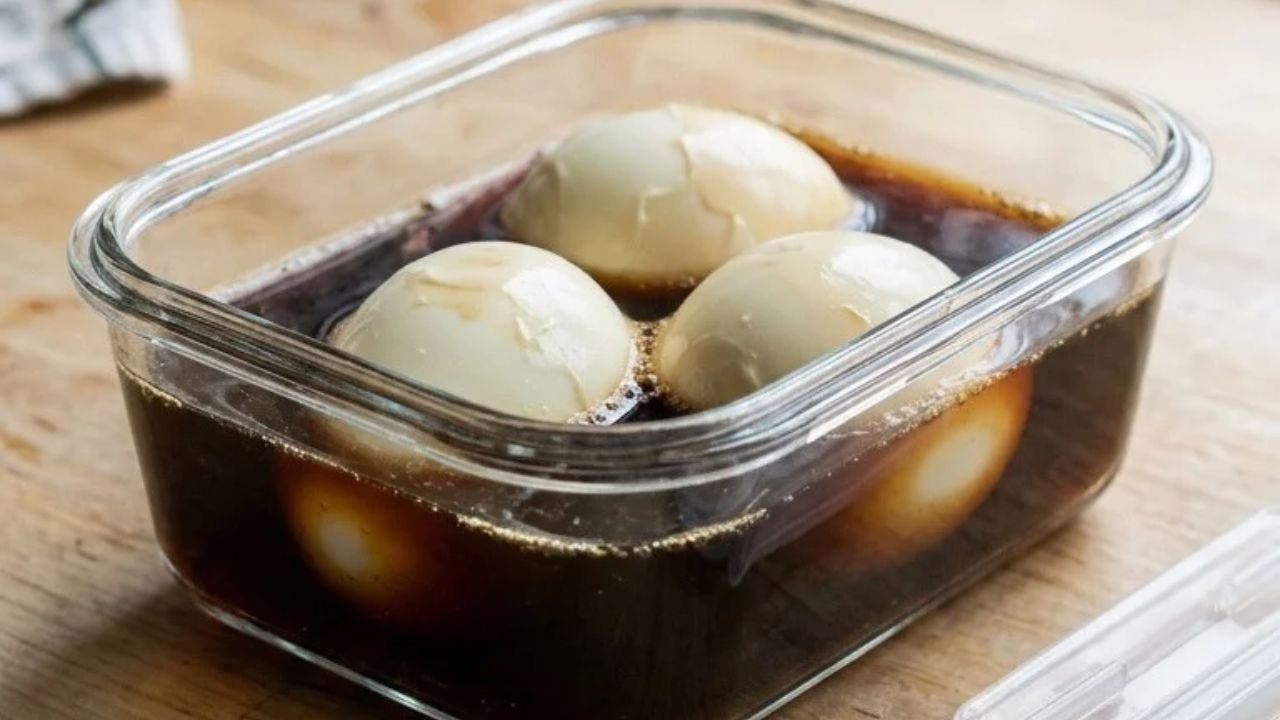
Place the peeled eggs in a clean, food-safe container or sealable bag. Add the cooled marinade, making sure the eggs are fully covered.
Refrigerate for eight to twelve hours. Check them toward the shorter end if you prefer a lighter flavour. Leaving them longer can deepen the seasoning, but it can also make them too salty.
5. Slice and serve
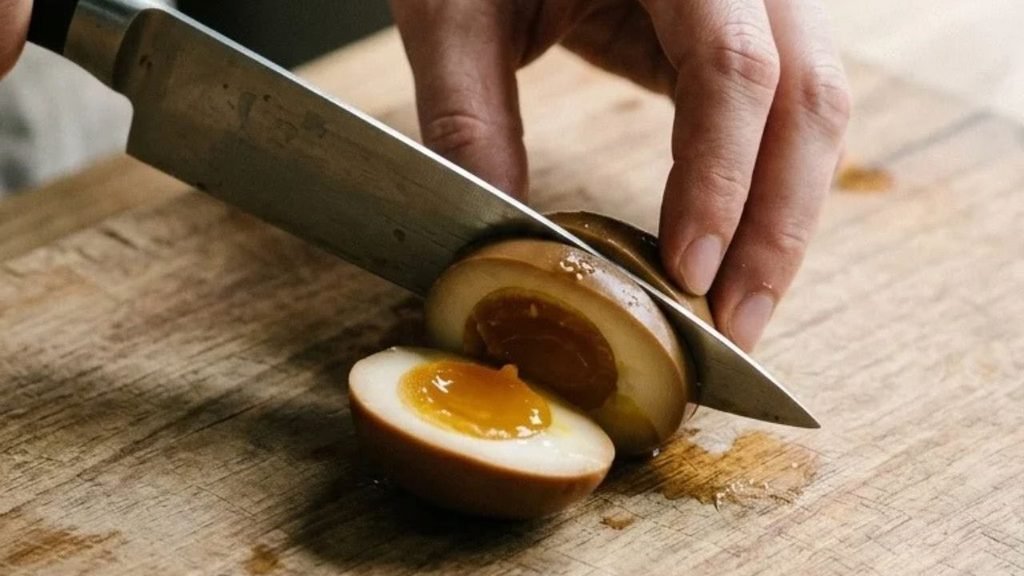
Remove the eggs from the marinade and cut them lengthwise with a sharp knife. Wipe the blade between cuts for a cleaner finish.
The result should be a tender white surrounding a creamy centre, with a savoury exterior that complements your meal.
Serving Ideas That Go Beyond Ramen
Ajitama is often associated with ramen, but its savoury flavour also works with simple everyday dishes.
- Shoyu ramen: Add two egg halves just before serving, allowing the yolk to complement the seasoned broth.
- Steamed rice: Serve over warm rice with sliced spring onions and a little sesame oil.
- Cold noodles: Pair with soba, cucumber and a light dipping sauce.
- Lunch bowls: Add to rice with mushrooms, cooked vegetables or leftover chicken for a more substantial meal.
Since the eggs are already seasoned, taste the rest of the dish before adding more soy sauce or salt.
Keeping Ajitama Fresh Without Losing Its Texture
Ajitama is best prepared ahead and served chilled or gently warmed in a finished dish. There is usually no need to reheat it separately.
Keep the eggs covered in the refrigerator. As a cautious home-cooking approach, aim to use them within two days, especially when the yolks remain soft. Actual storage safety depends on how thoroughly the eggs were cooked, how quickly they were cooled and how consistently they were refrigerated.
Avoid freezing them, as thawing can leave the whites watery or rubbery. When serving with hot ramen, add the egg just before eating rather than boiling it again.
Common Mistakes That Change the Result
- Skipping the ice bath: Residual heat can firm the yolk beyond your preferred texture.
- Adding warm marinade: It can continue cooking the outside of the egg.
- Leaving eggs partly uncovered: Uneven contact with the marinade can lead to patchy seasoning.
- Marinating for too long: A darker egg is not necessarily a better-seasoned egg.
- Adding excessive sugar: Too much sweetness can overpower the savoury character.
- Peeling carelessly: Torn whites affect the appearance and may absorb seasoning unevenly.
FAQ’s
1. What does ajitama mean?
Ajitama is short for ajitsuke tamago, which means seasoned egg in Japanese. It commonly refers to the marinated eggs served with ramen.
2. Can I make ajitama without mirin?
Yes. Water and a small amount of additional sugar can replace mirin, although the flavour will be less rounded.
3. How long should the eggs stay in the marinade?
Eight to twelve hours is a useful starting range. The ideal duration depends on how strong you like the seasoning and how concentrated your marinade is.
4. Why are my ramen eggs too salty?
The eggs may have marinated too long, or the soy sauce may be particularly salty. Try reducing the marinating time before changing the entire recipe.
5. Can I prepare ajitama the day before?
Yes. Making the eggs ahead gives the seasoning time to develop. Keep them refrigerated and use them promptly, especially if the yolks are soft.
6. Can I eat ajitama without ramen?
Absolutely. The eggs work well with rice, noodle bowls, vegetables and simple lunches.
7. Should ajitama be served hot or cold?
It can be served chilled or gently warmed in hot ramen. Avoid prolonged heating if you want to preserve a creamy yolk.
A Small Detail That Makes a Difference
A good ajitama depends on the balance between a tender centre, a properly seasoned exterior and the flavour of the dish it accompanies. Once you understand how cooking and marinating times affect those elements, you can adjust the result to suit your own taste.
Start with the basic proportions, pay attention to your first batch and make small changes rather than adding more ingredients. The aim is an egg that brings depth to ramen or rice without overwhelming everything around it.