Maize starch is a fine white starch made from maize kernels and is commonly called cornstarch in many places. Maize has long been an important food crop and is used in forms such as kernels, meal, flour, and starch. Unlike maize flour, starch is separated from the other parts of the grain.
The part that often causes trouble is the separation. Ground maize may look fine, but that does not mean the starch has been properly separated, which is why the final result can sometimes feel grainy or look darker than expected.
Timing at a Glance
| Part | Approx. Time |
| Soaking | 8–12 hours |
| Blending | 10–15 minutes |
| Straining | 10–20 minutes |
| Settling | 3–6 hours |
| Washing and settling | 2–3 hours |
| Drying | Several hours to 1 day |
| Final grinding and sieving | 10–15 minutes |
These times are only a guide for the preparation; how long it actually takes can depend on your maize, blender, room temperature, humidity, and how thoroughly you want to dry the starch.
What You Need
The ingredient list is deliberately short because the process depends more on separating the starch properly than on adding extra ingredients.
- 500 g dried maize kernels
- Clean water, as needed for soaking, blending and washing
For the equipment, keep a large bowl, blender, fine sieve or clean muslin cloth, another clean bowl for settling, and a clean tray ready for drying.
Simple replacements for less-common equipment
| If you don’t have | You can use |
| Fine-mesh sieve | Clean muslin or cheesecloth |
| Blender | Food processor or strong grinder |
| Large drying tray | Clean shallow plate |
| Cheesecloth | Several layers of clean, thin cotton cloth |
| Airtight storage jar | Clean food-safe container with a tight lid |
The important thing is not the exact equipment but how finely you can strain the maize and how cleanly you can separate the starch from the water.
The Preparation Starts Before the Grinding
Rinse the maize well and remove any damaged kernels, pieces of husk, dust or other unwanted material. Put the cleaned maize into a large bowl and cover it generously with water.
Leave it to soak for 8–12 hours, or overnight. The kernels should become noticeably softer before you continue.
After soaking, drain the water and rinse the maize again with clean water. This gives you a cleaner starting point for the next stage.
Getting the Starch Out
Put the softened maize into a blender and add enough clean water for the blades to move properly. Blend until the maize becomes a smooth, pale slurry.
If your blender is small, work in batches rather than filling it too heavily. The aim here is to break down the softened kernels well enough for the starch to mix into the water. You are not trying to make ordinary dry maize flour.
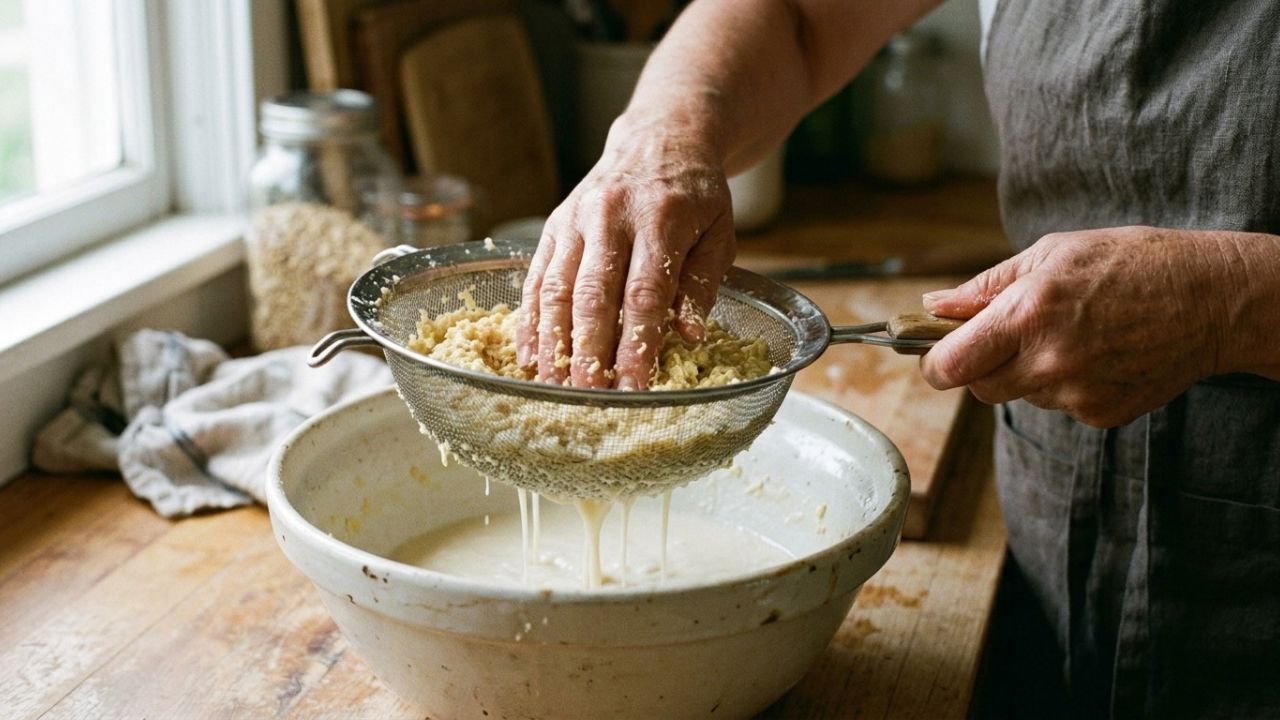
Pour the blended mixture through a fine sieve or clean muslin cloth into a large bowl. Press the mixture gently with a spoon or clean hands to help release the liquid, but do not rush this stage.
The liquid that passes through should look milky or cloudy. The heavier pieces left behind are mainly the parts of the maize that you do not want in the finished starch.
Let the Bowl Do Some of the Work
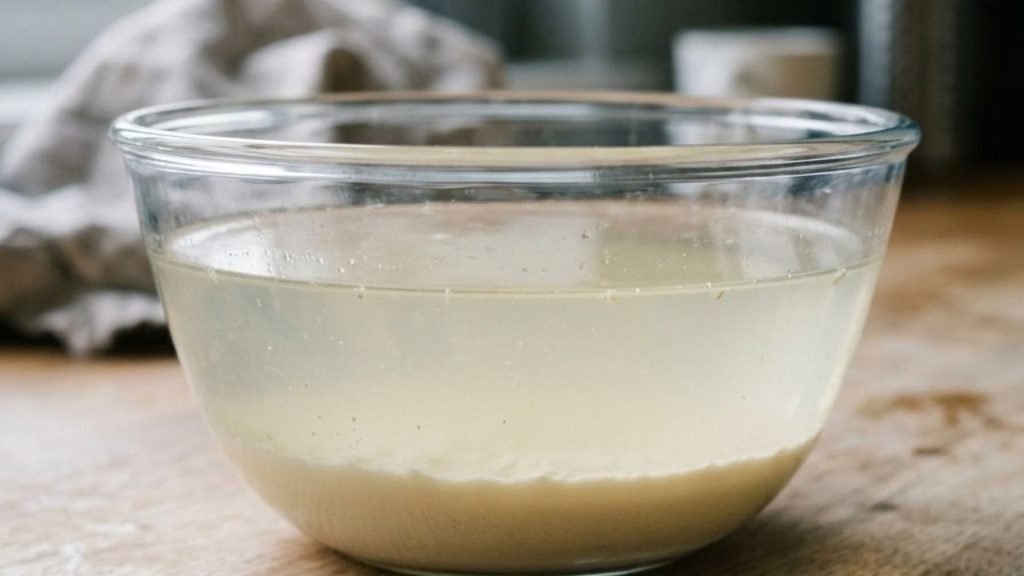
Leave the strained liquid somewhere it will not be disturbed. As it sits, the heavier starch gradually collects at the bottom of the bowl while the clearer water remains above it.
Give it several hours. Once a noticeable white layer has formed at the bottom, slowly pour away the water from the surface.
Be careful here. Pour too quickly and you can disturb the layer you spent all that time collecting.
Add fresh clean water to the starch at the bottom, stir gently, and leave it to settle again. Pour off the water once more.
You can repeat this washing and settling stage until the starch looks cleaner and the water above it becomes less cloudy.
Drying Is Where Patience Pays Off
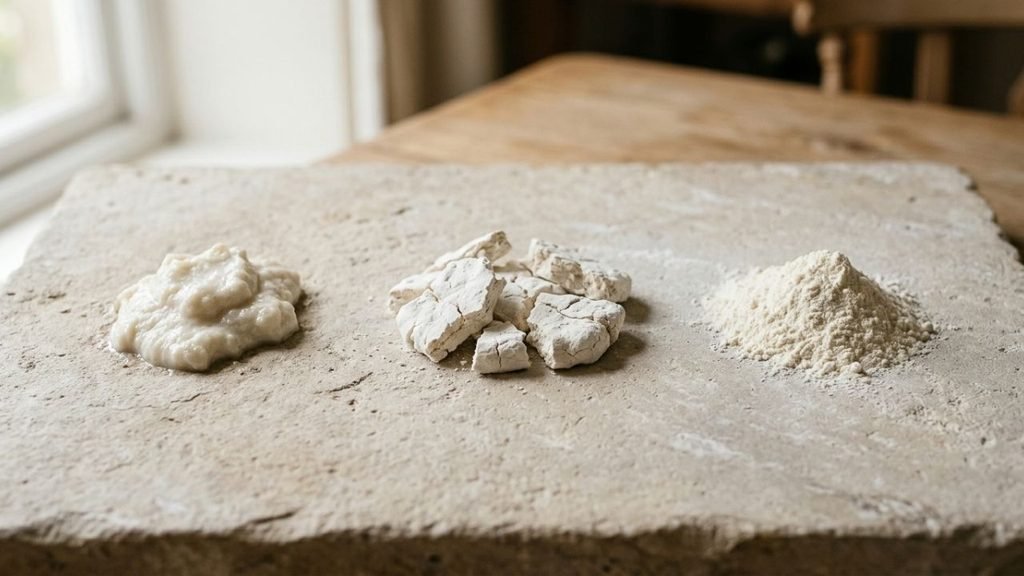
Once you have removed the washing water, transfer the wet starch onto a clean shallow tray. Spread it into as thin a layer as possible.
Leave it to dry completely in a clean, protected place. Avoid leaving it uncovered where dust, insects or other contaminants can reach it.
The drying time will vary considerably. Humidity, airflow, the thickness of the starch layer and the amount of water left behind all make a difference.
When the starch is fully dry, break up any pieces and grind them briefly until you have a fine powder. Pass it through a sieve if you want a more even texture.
The finished starch should be dry, light in colour and powdery rather than damp or pasty.
Ways to Use Your Homemade Maize Starch
Maize starch is most useful when you want a smooth texture or need to thicken a liquid. It can be used in sauces, gravies, soups, puddings and some desserts, and it can also be included in coatings for fried foods.
For a sauce or gravy, mix the starch with a little cool water first to make a smooth slurry. Add that mixture to the hot liquid while stirring.
This small step makes a difference because dry starch can form lumps when it meets hot liquid directly.
For frying, maize starch can also be mixed with other coating ingredients when a lighter, crisp texture is wanted. The exact amount depends on the dish, so it is better to treat the starch as one part of the coating rather than assuming there is one universal ratio.
Keeping the Starch Dry
Homemade maize starch can be kept, but its condition before storage matters more than simply putting it into a jar. Make sure the starch is completely dry before storing it. Place it in a clean, dry, airtight container and keep it away from moisture. For broader guidance on protecting dry foods from dampness during storage, see the USDA’s guidance on storing dry goods.
There is no single storage period that will work for every homemade batch. How long yours remains suitable depends on how thoroughly it was dried, the cleanliness of the container, humidity and storage conditions, so check its smell, appearance and condition before using it.
If you notice moisture, mould, an unusual smell or any other sign of spoilage, discard it rather than trying to dry it again.
Small Mistakes That Change the Result
Using dry maize without soaking
Dry kernels are much harder to break down effectively. Soaking softens them and makes the wet-grinding stage easier.
Treating it like maize flour
Grinding maize into a powder does not automatically produce maize starch. The starch has to be separated from the fibre and other parts of the kernel.
Adding too little water while blending
A blender needs enough liquid to move the softened kernels properly. If the mixture is too thick, some of the maize may remain poorly broken down.
Using a loose or coarse strainer
Large particles can pass through and remain in the starch mixture. A fine sieve or clean cloth gives you better separation.
Pouring off the water too quickly
The starch settles at the bottom, so careless pouring can disturb and remove some of it. Slow movements are worth the extra few seconds.
Drying a thick layer
A thick layer takes longer to dry and can retain moisture underneath. Spreading the starch thinly makes the drying stage easier to manage.
Storing it before it is fully dry
This is one of the easiest ways to create problems later. If the starch still feels damp or forms soft, wet clumps, it needs more drying.
FAQ’s
1. Is maize starch the same as maize flour?
No. Maize flour is made by grinding maize, while maize starch is the starch fraction separated from the grain.
2. Is maize starch also called cornstarch?
Yes. “Cornstarch” is the common term in many places, while “maize starch” is widely used elsewhere.
3. Can yellow maize be used?
Yes. Yellow maize can be used for starch extraction, although the appearance of the finished product can differ depending on the maize and how well the material is separated and washed.
4. Why is my starch not completely white?
Some colour can remain if fine maize material, fibre or other components have not been separated fully. The maize variety can also affect the appearance.
5. Why is my homemade starch lumpy?
If the starch is dried unevenly, it can form hard pieces. Breaking and grinding the completely dry material, followed by sieving, helps produce a finer powder.
The Result Is in the Separation
Making maize starch at home is simple in terms of ingredients, but the quality comes from paying attention to the stages between them. Soaking softens the grain, wet grinding releases the starch, straining removes larger material, and settling allows the starch to separate from the water.
The biggest thing to remember is that maize starch is not simply finely ground maize. Once that distinction is clear, the whole preparation makes much more sense. Give the starch enough time to settle and dry properly, and you have a useful homemade ingredient rather than just another form of maize flour.