swedish pancake recipe, known in Sweden as pannkakor, are thin, delicate pancakes traditionally served with jam and sometimes whipped cream. Unlike the thick, fluffy pancakes familiar in many American kitchens, they have a softer texture, lightly golden surfaces and a gentle flavour that makes them just as welcome at breakfast as they are after a meal.
Getting that familiar texture at home can be a little tricky. The pancakes may turn out too thick, tear when flipped or lose their softness before reaching the table. The difference often comes down to a few small details that are easy to overlook.
Timing and Yield for Your Pancakes
| Preparation | Cooking | Batter resting | Total time | Yield |
| 10 minutes | 20–25 minutes | 30 minutes | About 60–65 minutes | 10–12 pancakes |
These times are estimates for planning your cooking. Your actual time may vary depending on how quickly you prepare the batter, how long you let it rest, the size of your pan and how many pancakes you cook at once.
Ingredients for Soft, Golden Pannkakor
- 1 cup (125 g) all-purpose flour
- 2½ cups (600 ml) whole milk
- 3 large eggs
- 3 tablespoons unsalted butter, melted
- ½ teaspoon salt
- 1–2 teaspoons sugar (optional)
- A little extra butter for cooking
For serving
- Lingonberry, strawberry or raspberry jam
- Fresh berries
- Whipped cream or icing sugar, if desired
Ingredient substitutions that work
Some ingredients can be replaced without changing the character of the pancakes too much. The main thing is to preserve the batter’s thin consistency and avoid adding too much fat or sweetness.
| Original ingredient | Possible replacement | What to expect |
| Whole milk | 2% milk | A slightly less rich result |
| Whole milk | Unsweetened oat milk | A mild change in flavour and browning |
| Unsalted butter | Salted butter | Reduce or omit the added salt |
| Plain flour | All-purpose gluten-free flour blend | Texture may vary; use a blend intended for baking |
| Lingonberry jam | Raspberry or strawberry jam | A sweeter, less tart accompaniment |
Directions
The aim is to make pancakes that spread easily across the pan without becoming fragile. Give the batter time to rest, keep the heat moderate and let the first side set before turning.
1. Bring the batter together
Add the flour and salt to a mixing bowl. Pour in about half the milk and whisk until smooth, working out any lumps before adding the remaining milk. Whisk in the eggs one at a time, followed by the melted butter and optional sugar.
The batter should be thin and easily pourable. If it resembles a thick cake batter, add a little more milk until it flows freely.
2. Give the flour time to settle
Leave the batter to rest for 30 minutes at room temperature. This allows the flour to absorb moisture and helps the mixture become more uniform.
If you’re swedish pancake recipe it ahead, cover the bowl and refrigerate it. Whisk the batter again before cooking because some of the flour may settle at the bottom.
3. Warm the pan without rushing
Place a non-stick or heavy-based frying pan over medium heat. Add a small amount of butter and swirl it around the surface.
The butter should melt and sizzle gently rather than smoke. A pan that’s too hot can brown the pancake before the batter has spread properly, while a pan that’s too cool may leave it pale and difficult to handle.
4. Spread the batter into a thin layer
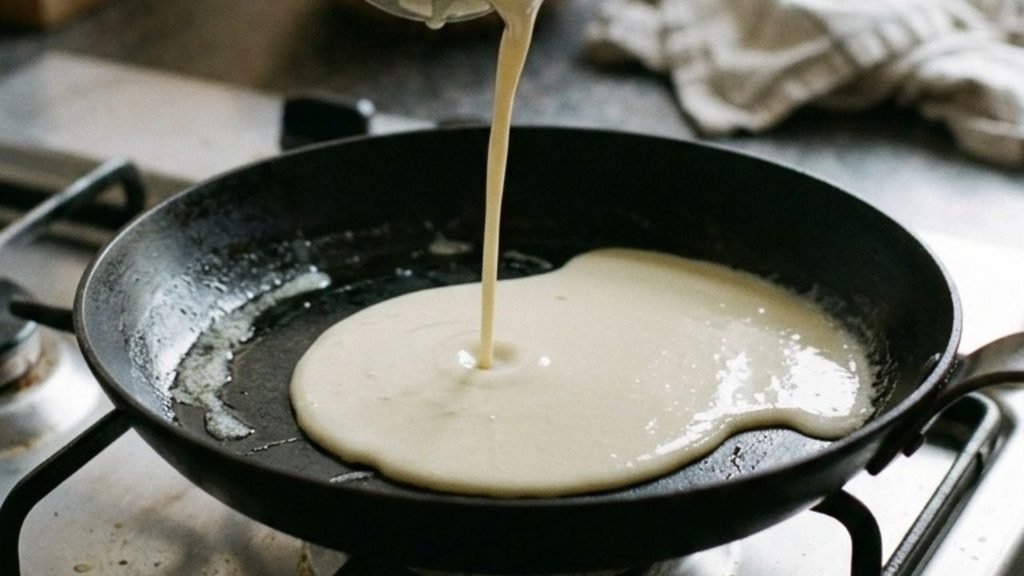
Pour approximately 50–60 ml of batter into a 20–24 cm frying pan. Immediately lift and tilt the pan in a circular motion, allowing the batter to cover the base.
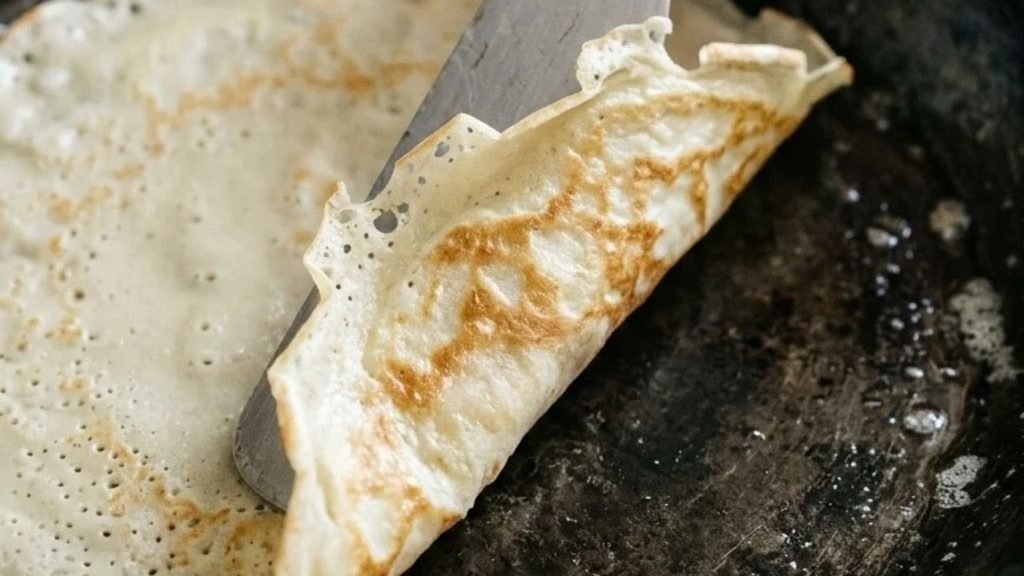
Cook for about 1–2 minutes, until the edges begin to lift and the underside develops golden-brown patches. The upper surface should look mostly set before you attempt to turn it.
5. Turn and finish cooking
Slide a thin spatula beneath the swedish pancake recipe and flip it carefully. Cook the other side for another 30–60 seconds, until lightly coloured.
Transfer it to a plate and repeat with the remaining batter, adding a little butter when needed. If the pancakes brown too quickly, reduce the heat slightly.
6. Adjust after the first pancake
The first pancake is a useful test. If it comes out thick, reduce the amount of batter or loosen the mixture with a little milk. If it tears, allow the next one to cook longer before turning. Small adjustments usually make the remaining batch easier to manage.
Serving Ideas That Suit Their Delicate Texture
Swedish pancakes have a mild flavour, so their accompaniments can change the character of the dish without overwhelming it.
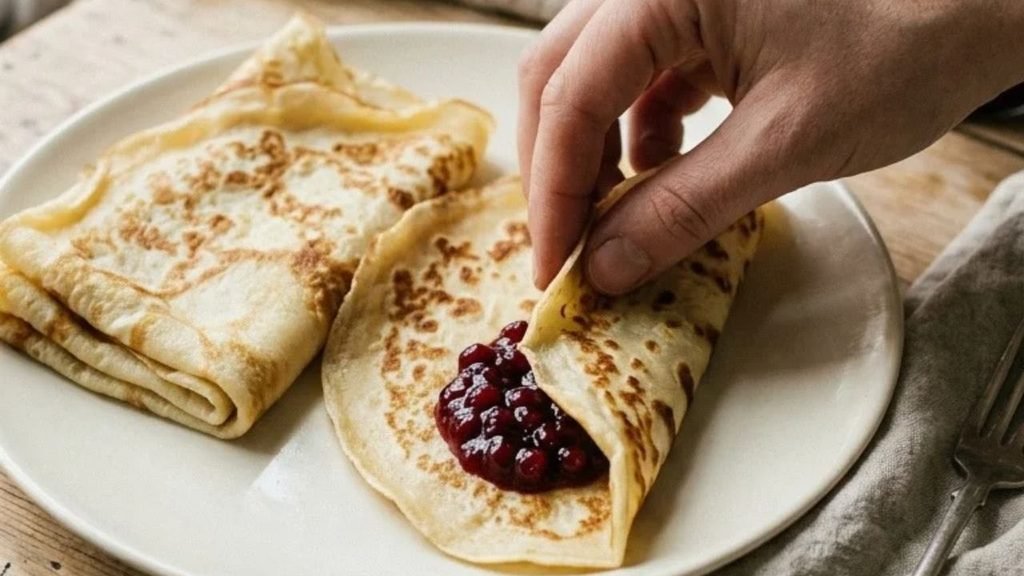
- Lingonberry jam: Its tartness balances the buttery pancake and is a familiar Swedish pairing.
- Strawberry or raspberry jam: A sweeter alternative that’s easy to find.
- Fresh berries and cream: A good choice when serving the pancakes as dessert.
- A little icing sugar: Adds sweetness without making the pancakes feel heavy.
- Sautéed mushrooms or spinach: Useful for a savoury variation, particularly when you want something more substantial.
For a more celebratory presentation, stack the pancakes with layers of jam, berries and whipped cream to make a Swedish-style pancake cake, known as pannkakstårta.
Storing Leftovers Without Losing Their Softness
Cooked swedish pancake recipe can be refrigerated if you have leftovers. Allow them to cool, stack them in an airtight container and place baking parchment between them if you want to separate individual pancakes easily.
As a practical guide, aim to use refrigerated pancakes within 2–3 days, provided they have been cooled and stored promptly. Keep them in an airtight container in a properly chilled refrigerator. For broader guidance on keeping cooked food and leftovers safely, consult the official FoodSafety.gov Cold Food Storage Chart. Actual freshness depends on handling and storage conditions.
To reheat, warm them gently in a covered frying pan over low heat or place them in a low oven until heated through. Avoid prolonged heating, which can dry out their thin edges. A microwave can also work for a quick serving, although the texture may be softer and less evenly warmed.
Common Mistakes That Change the Result
Making the batter too thick
Too much flour makes it harder for the batter to spread before setting. Measure the flour carefully and add milk gradually if the mixture seems unusually thick.
Turning the pancakes too early
A pancake that hasn’t set on its first side is more likely to tear. Look for lifted edges and a surface that’s mostly dry before sliding the spatula underneath.
Cooking over excessive heat
High heat can produce dark patches while leaving the pancake difficult to handle. Medium heat gives you more control, particularly when cooking several pancakes in succession.
Pouring too much batter into the pan
Even a well-made batter can produce a thick pancake if you use too much. Start with a small ladleful and swirl the pan immediately.
Forgetting to adjust the heat between pancakes
The pan often becomes hotter as you continue cooking. If later pancakes brown faster than the first, lower the heat slightly rather than shortening the cooking time so much that the centres remain undercooked.
FAQ’s
1. What makes Swedish pancakes different from American pancakes?
Swedish pancakes are thinner and more flexible, with a batter that spreads easily across the pan. American pancakes are generally thicker and fluffier, often because they contain baking powder or another raising agent.
2. Do traditional Swedish pancakes contain baking powder?
Typically, no. Their thin texture comes from the loose batter and the way it is cooked, rather than from chemical leavening.
3. Can I prepare Swedish pancake batter the night before?
Yes. Cover the batter and refrigerate it overnight. Whisk it thoroughly before cooking and add a small splash of milk if it has thickened more than expected.
4. Why are my Swedish pancakes tearing?
They may be turning before the first side has set, or the batter may be too thick or insufficiently rested. Cook the next pancake a little longer before flipping and check that the batter spreads easily.
5. Can I make Swedish pancakes without a non-stick pan?
Yes. A well-seasoned cast-iron or other suitable frying pan can work. Preheat it properly and use a thin layer of butter to reduce sticking.
The Small Details Make the Difference
swedish pancake recipe are made with familiar ingredients, but their texture depends on how those ingredients behave together. A thin batter, a short rest and a steady pan temperature help create pancakes that are tender enough to fold and golden enough to serve with little more than a spoonful of jam.
Once you’ve cooked the first pancake, pay attention to what it tells you. Adjust the heat, change the amount of batter if necessary and give each pancake enough time to set before turning. With a little practice, pannkakor become a straightforward dish to make at home, whether you’re serving them for a quiet breakfast or bringing a stack to the table after dinner.