Steamed dumplings have been part of Chinese food culture for centuries, with jiaozi among the best-known names, while other forms such as bao and xiaolongbao refer to different styles rather than one catch-all dumpling. Today, steamed dumplings appear in countless shapes and fillings, from the familiar pleated parcels found at Chinese restaurants to regional varieties made for family meals, celebrations, and everyday eating. What connects them is less a single recipe than the idea of a soft wrapper holding a carefully balanced filling.
At home, though, that balance can be surprisingly easy to lose. The wrapper tears, the bottom sticks, or the filling leaves the dumpling wet and heavy—and the problem is often hiding in a small detail.
1. Start With a Wrapper That Can Take a Fold
A good steamed dumpling begins with a wrapper that is flexible enough to bend without splitting. This sounds obvious, but wrappers are often left uncovered while the filling is being prepared or the dumplings are being shaped, and the edges can dry out surprisingly quickly.
For homemade wrappers, the centre can remain a little thicker while the outer edge is rolled thinner. That gives the dumpling enough structure in the middle while making the rim easier to seal. If using packaged wrappers, keeping the unused stack covered is one of the simplest ways to make assembly less frustrating.
The important thing is not to achieve paper-thin dough everywhere. A wrapper that is too thin can break under a generous filling, while one that is too thick can overpower everything inside it.
2. The Filling Should Be Juicy, Not Wet
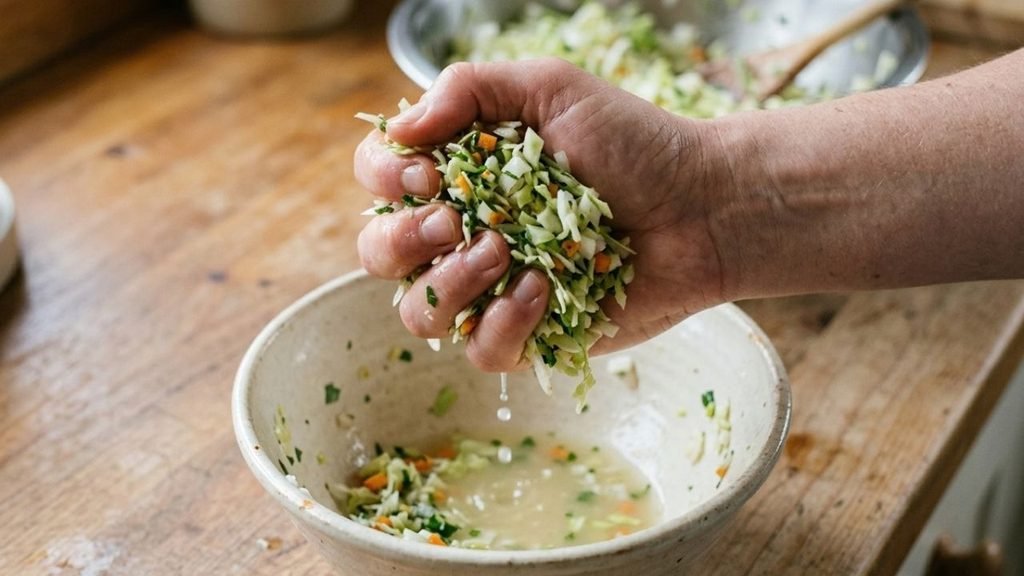
There is a useful difference between a juicy dumpling and a watery one. Ingredients such as cabbage, mushrooms and other vegetables can release liquid after being chopped or salted. If that moisture is left loose inside the filling, the wrapper has to deal with it during steaming. The result can be a soggy base, a weak seam or a dumpling that feels heavier than it should.
The goal is to keep the flavour and moisture that belong in the filling while getting rid of excess liquid that has nowhere to go. This is particularly important with vegetable-heavy fillings, where the problem can be difficult to see until the dumpling is already cooking.
3. Leave the Edge Clean
The small empty border around the filling has a job. When too much filling reaches the edge of the wrapper, there is less clean dough available to create a proper seal. Sauce, oil or moisture on that edge can make the same problem worse.
Keep the filling concentrated in the centre and leave enough exposed wrapper around it to close comfortably. You do not need elaborate pleats. A simple, firmly sealed dumpling will usually perform better than one with beautiful folds that are struggling to stay together.
This is also where portion control matters. If closing the dumpling feels like a wrestling match, there is a good chance the filling is simply too generous.
4. Don’t Chase Restaurant-Perfect Pleats
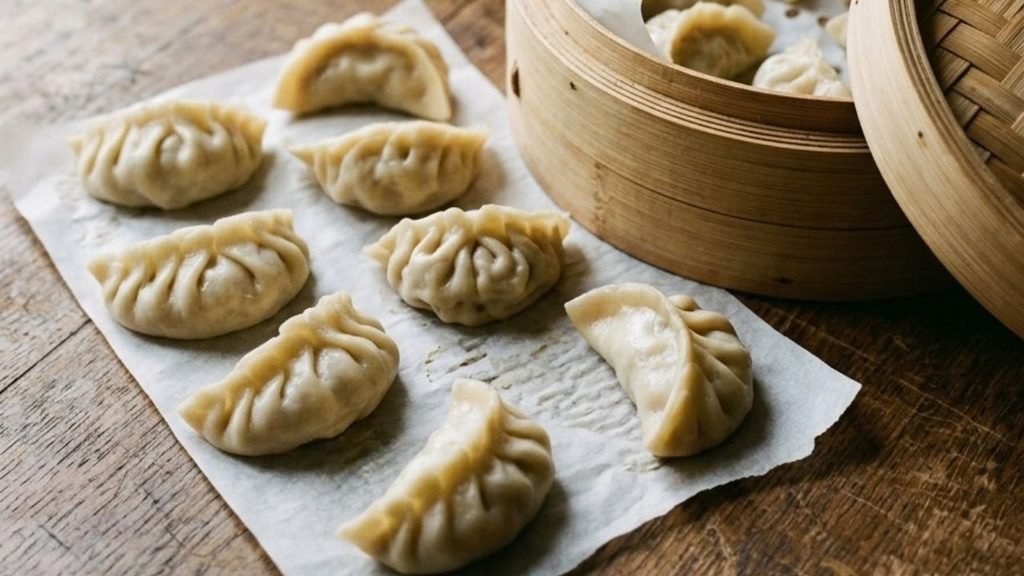
Pleating is one of the most photographed parts of dumpling-making, which can make it seem more important than it really is. There are many ways to fold a dumpling, and the exact pattern can vary by style, region and personal preference. At home, consistency matters more than complexity. If your folds are slightly uneven but the seam is secure, the dumpling can still cook beautifully.
A useful approach is to choose one simple fold and repeat it until your hands become comfortable with the movement. Once the shape becomes familiar, you can experiment with more elaborate pleats without making every dumpling a test of patience.
The best-looking dumpling is not necessarily the best-cooked one.
5. Give the Dumplings a Little Territory
Fresh dumplings need space around them in the steamer. When they are packed tightly together, their soft surfaces can touch and stick. Separating them afterwards can tear the wrapper, particularly when the dumplings are still hot and delicate.
Leave a small gap between each dumpling and use something underneath them that prevents sticking. Cabbage leaves, perforated parchment or a suitable steamer liner can all help.
There is another reason not to overcrowd the basket: steam needs room to circulate. A crowded steamer makes it harder to maintain an even cooking environment across the whole batch.
6. Keep the Steamer Calm and Consistent
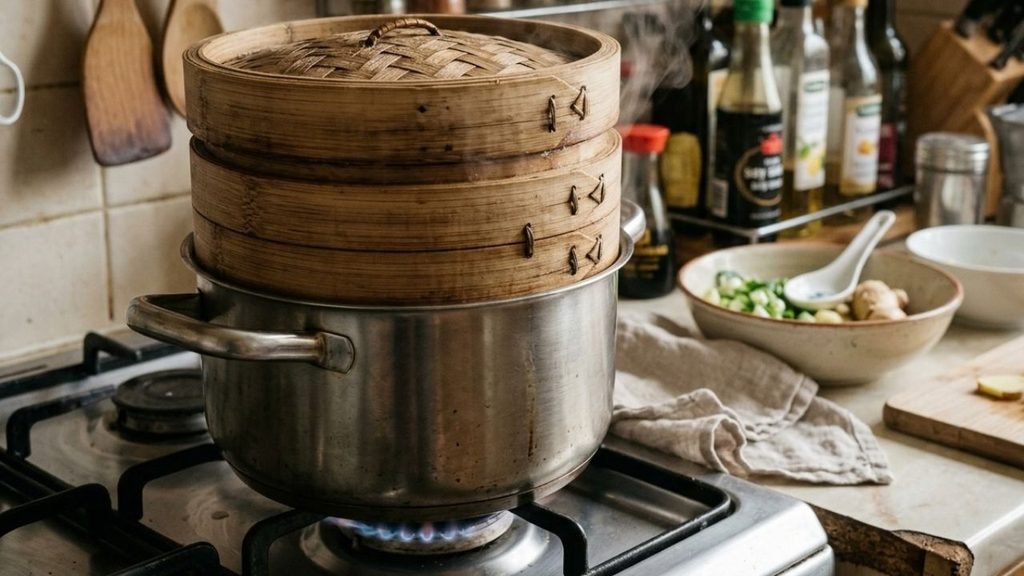
Steaming is gentler than it looks, but consistency still matters. The water below the basket should produce a steady supply of steam without rising into the dumplings. If the water level becomes too low, the steamer can lose heat and may eventually run dry. If the water is excessively aggressive, condensation and splashing can become a problem.
Try not to lift the lid repeatedly. Each opening releases the built-up steam and interrupts the environment the dumplings are relying on.
This is one of those cases where doing less can produce a better result. Once the dumplings are inside, a steady steamer is more useful than constant checking.
7. Let Texture Tell You When They’re Ready
A timer can give you a useful starting point, but dumplings do not all cook at exactly the same speed. Size, wrapper thickness, filling density and whether the dumplings are fresh or frozen can all change the timing. A small dumpling with a thin wrapper is not going to behave exactly like a large, tightly packed one.
Instead of relying on minutes alone, pay attention to the wrapper. It should lose its raw appearance and become properly cooked while still retaining enough structure to hold the filling. The filling itself should be cooked through; when a dumpling contains ground meat, checking the filling with a food thermometer is a more reliable safety measure than appearance alone, and USDA guidance gives the recommended minimum internal temperatures for different types of ground meat.
With a little experience, this becomes easier to recognise. You stop treating the timer as a command and start using it as a reference.
A Few Dumpling Problems, Sorted
1. Why do steamed dumplings split?
An overfilled dumpling, a dry wrapper or an imperfect seal can all contribute. Excess moisture in the filling can also make the wrapper harder to keep intact.
2. Why are the bottoms sticking?
The dumplings may need a better barrier between the wrapper and the steaming surface. A suitable liner or cabbage leaf can make a noticeable difference.
3. Why does the wrapper feel too thick?
The wrapper may simply have been rolled too evenly. For many dumpling styles, thinning the outer portion while retaining more body in the centre creates a better balance.
4. Why are my dumplings soggy underneath?
Look first at moisture. A wet filling, condensation or contact with water can leave the underside much softer than the rest of the wrapper.
5. Why do my pleats keep opening?
The edge may be too dry, too wet or carrying traces of filling. A clean wrapper edge gives the seal a much better chance of holding.
6. Can uneven dumplings still turn out well?
Yes. Shape does not need to be perfectly uniform. Consistent wrapper thickness, sensible filling portions and a secure seal matter more than identical pleats.
7. Why do frozen dumplings need different timing?
The centre begins much colder, so it takes longer to heat through. Treating frozen and freshly made steamed dumplings as though they require exactly the same timing can leave the outside ready before the centre has caught up.
The Difference Is Usually in the Small Things
Better steamed dumplings are rarely about mastering one impressive trick. They come from noticing small details before they become problems: a wrapper that has dried at the edge, vegetables carrying too much water, a filling that is slightly too large, or dumplings crowded together in the basket.
Once those details become familiar, making dumplings at home becomes much less unpredictable. The pleats can stay imperfect. What matters is that the wrapper, filling and steam are working together rather than against each other.