Fresh mint tea is one of those simple drinks that has travelled far beyond the garden where its main ingredient grows. Often called mint infusion or simply mint tea, it has been part of everyday drinking traditions across the Middle East, North Africa, South Asia, and the Mediterranean for generations. Unlike traditional tea made from tea leaves, fresh mint tea is an herbal infusion with a fresh, familiar character.
Getting the right balance can be tricky. Too little mint makes the tea weak, while too much can overpower the cup. This guide shows you how to get it right naturally.
Timing at a glance
| Preparation | Steeping | Total time |
| 5 minutes | 5–7 minutes | About 10–12 minutes |
These are useful starting times, not rules you have to follow exactly. Your preparation may take a little more or less time depending on how quickly you work, how hot your water is, and how strong you like your tea.
What You Need
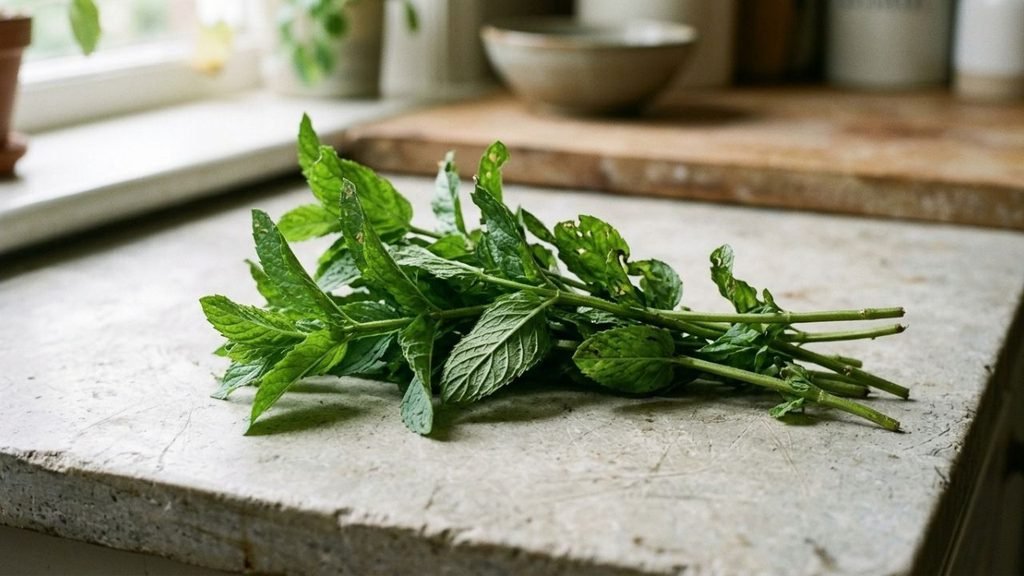
- 10–15 fresh mint leaves, or 2–3 small mint sprigs
- 2 cups water
- 1–2 teaspoons honey or sugar, optional
- 1–2 thin lemon slices, optional
Fresh spearmint works especially well if you prefer a softer, sweeter mint flavor. Peppermint gives the drink a stronger cooling character, so the choice really depends on the taste you want from the cup.
Easy Swaps When You Don’t Have Everything
Most of the ingredients are straightforward, but a few simple substitutions can change the character of the drink without making the recipe complicated.
| If you don’t have | Try instead | What changes |
| Fresh spearmint | Fresh peppermint | Stronger, cooler mint flavor |
| Honey | Sugar | Cleaner, simpler sweetness |
| Lemon | Lime | Sharper, slightly more aromatic acidity |
| Fresh mint | Dried mint | Deeper, less fresh herbal flavor |
If you have fresh mint available, it is worth using it here. Dried mint can work, but the bright aroma that makes fresh mint tea appealing is noticeably different.
Directions
There is not much technique involved, but the small details matter. The aim is to let the mint release its fresh aroma without pushing the flavor too far.
1. Prepare the mint
Rinse the fresh mint gently under cool running water to remove any dirt or debris. For broader guidance on washing fresh produce before preparation, see the FDA’s produce-safety guidance. Pick away any wilted or damaged leaves.
You can leave the leaves attached to their small stems. There is no need to chop them finely.
2. Heat the water
Bring the water to a boil.
Once it has reached a full boil, let it sit for a short moment before pouring it over the mint. You want the water very hot, but there is no need to keep it aggressively boiling while the mint is being infused.
3. Add the mint
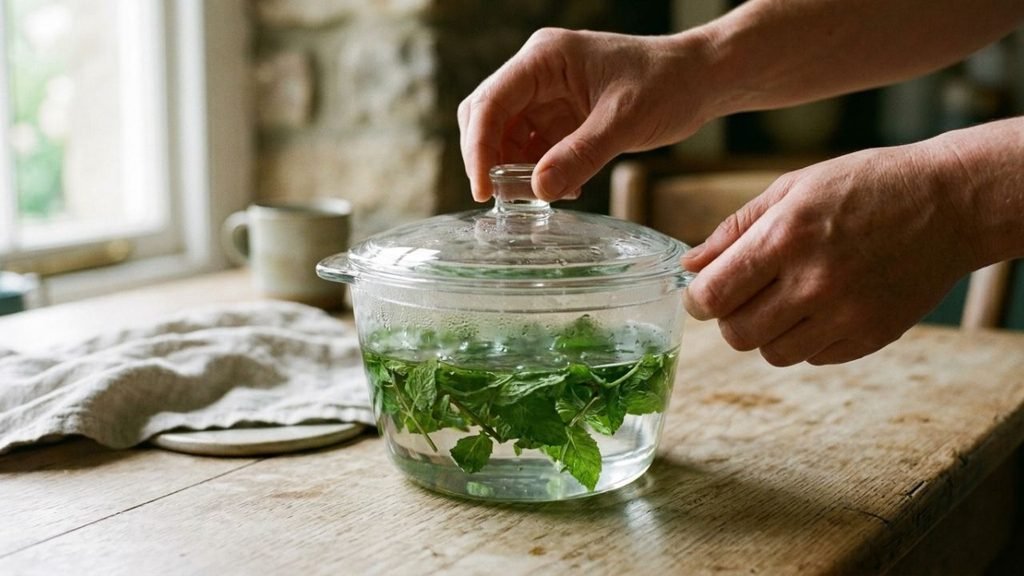
Place the mint into a teapot, heatproof jug, or large mug. Pour the hot water directly over the leaves, making sure they are well covered.
4. Cover and steep
Cover the container and leave the mint to steep for around 5–7 minutes. The covering is a small detail, but it helps keep the fresh mint aroma in the cup rather than allowing it to disappear with the steam.
5. Taste before adjusting
Remove the mint or strain the tea when it tastes right to you. If it seems too light, give it another minute or two. If it is already strongly herbal, there is no reason to keep steeping it simply because a recipe says so.
Add honey, sugar, or lemon afterward if you want them.
Make the Cup Your Own
Fresh mint tea is easy to change without losing its basic character. For a sweeter everyday drink, honey works particularly well because its softer sweetness sits naturally with mint. Sugar gives you a cleaner and more direct sweetness.
A little lemon makes the tea brighter and sharper. Fresh ginger can also be added when you want something warmer and more aromatic.
If you prefer the tea cold, allow the infusion to cool and pour it over ice. A few fresh mint leaves and a thin lemon slice make a simple presentation without turning the drink into something overly decorated.
For a stronger tea, it is usually better to adjust the amount of mint or steeping time gradually rather than adding several extra ingredients at once. That way, you can tell what actually changed the flavor.
Keeping Leftover Mint Tea
Fresh mint tea is best when it is freshly made, but you can keep leftovers if you prefer not to waste them. Let the tea cool, transfer it to a clean covered container, and refrigerate it. Around 2–3 days is a reasonable period to work with for homemade tea, but this is not a fixed promise. How quickly you use it depends on your refrigerator, container, handling, and personal preference.
If the tea develops an unusual smell, appearance, or taste, it is better not to drink it. For reheating, warm only the amount you intend to drink rather than repeatedly heating the entire batch. You can also enjoy the chilled tea over ice.
Small Mistakes That Change the Whole Cup
Using too little mint
A few tiny leaves may look sufficient, but they can disappear into a large amount of water. If the tea tastes like warm water with only a faint herbal note, you probably need more mint.
Steeping without tasting
Longer does not automatically mean better. Mint can become noticeably more vegetal when it is left in hot water for too long. Taste it rather than relying entirely on the clock.
Crushing the leaves too much
There is no need to mash the mint into a paste. Gentle handling is enough. The goal is to release the aroma, not destroy the leaves.
Adding sweetener too early
If you add honey or sugar before tasting the tea, you can easily mistake sweetness for strength. Try the plain infusion first.
Using tired mint
Mint that has been sitting in the refrigerator for too long may still be usable, but it will not necessarily produce the same lively aroma as fresh, firm leaves.
Leaving the tea uncovered
A surprising amount of the experience of mint tea comes from its aroma. Covering the cup while it steeps helps preserve that part of the drink.
FAQ’s
1. Can I use peppermint instead of spearmint?
Yes. Peppermint gives the tea a stronger cooling and menthol-like flavor, while spearmint is generally softer and sweeter.
2. How many mint leaves should I use?
Start with around 10–15 fresh leaves for two cups of water. You can increase or reduce the amount depending on how strong you like your tea.
3. Can I make mint tea without honey?
Absolutely. Honey and sugar are optional. Fresh mint has enough flavor to stand on its own.
4. Why does my mint tea taste bitter?
The mint may have been steeped for too long, or you may have used a particularly strong variety. Try a shorter steeping time or slightly less mint next time.
5. Can I drink fresh mint tea cold?
Yes. Brew it normally, let it cool, refrigerate it, and serve it over ice.
6. Can I add lemon to mint tea?
Yes. Lemon gives the drink a brighter, more acidic flavor. Add it after steeping so you can adjust the amount to your taste.
A Simple Drink That Rewards Paying Attention
Fresh mint tea does not need much from you. That is part of its appeal. The quality of the final cup comes down to noticing a few small things: whether the mint is fresh, how much you use, how long you leave it in the water, and whether the finished tea actually tastes balanced before you start adding extras.
Once you make it a few times, the measurements become less important. You begin to recognize the right amount of mint by sight and the right strength by taste. That is when a very ordinary handful of leaves becomes a dependable cup of tea rather than just hot water with mint floating in it.