silken bean curd, better known as silken tofu, is the softest form of tofu. It has a smooth, custard-like texture and holds plenty of moisture. Its delicate surface can look sturdy, but even slight mishandling can change its texture.
Silken tofu can quickly lose its smooth texture when exposed to too much heat or rough handling. This guide explains the mistakes behind those changes and how to avoid them.
1. The Wrong Tofu Sets the Problem in Motion
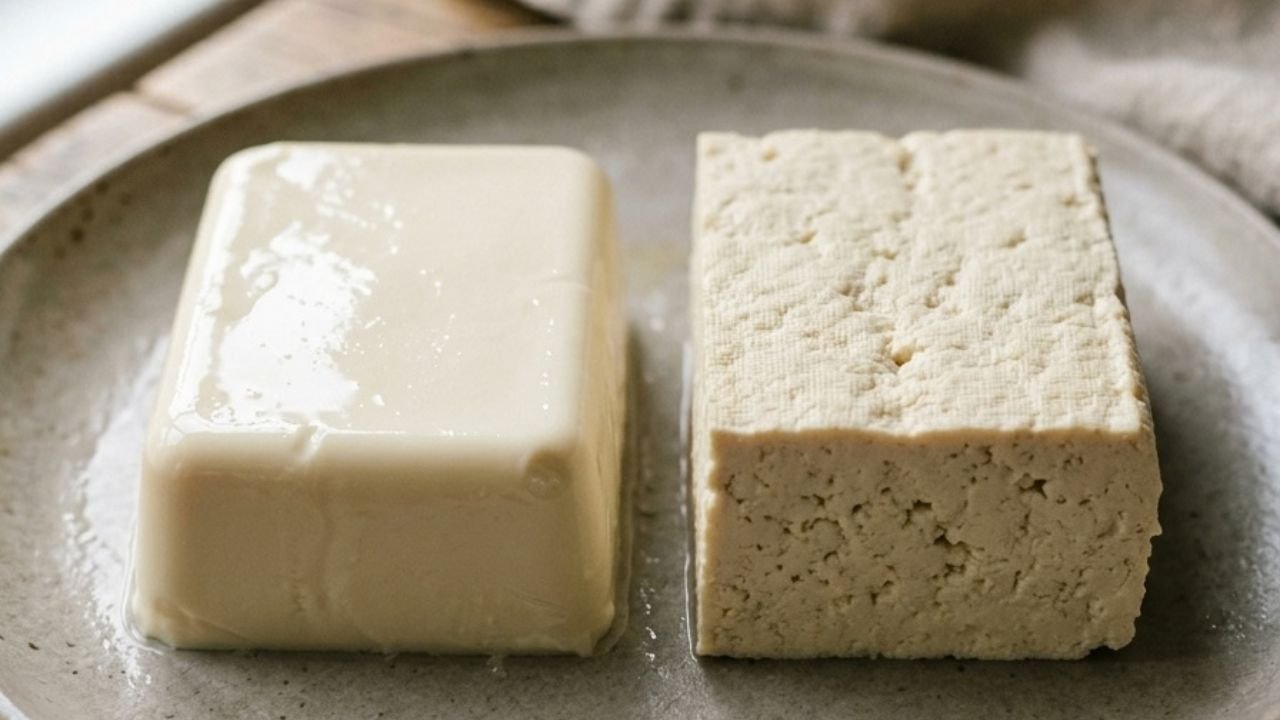
Not every block of tofu is meant to behave the same way. Silken tofu has a much softer structure than firm, extra-firm, or pressed tofu, so techniques that work well with those varieties can be unnecessarily rough on it.
A common mistake is choosing silken tofu for a dish that needs a tofu piece to hold its shape through heavy handling. If the tofu needs to be turned repeatedly, pressed, browned heavily, or tossed around, a firmer variety may be more appropriate.
For dishes where the tofu is supposed to remain soft and delicate, however, silken tofu is exactly the right choice. The important part is recognizing its character before cooking rather than trying to make it behave like something it is not.
A useful texture check
Before using the tofu, look at what the dish actually requires:
- Soft and creamy: silken tofu works well.
- Pieces that need to hold their shape: choose a firmer tofu.
- Crisp outside with a firm centre: silken tofu is generally the wrong starting point.
- A delicate texture that blends easily: silken tofu has an advantage.
The variety of tofu is not a minor detail. It determines how much handling the finished piece can tolerate.
2. Too Much Heat Can Change the Character
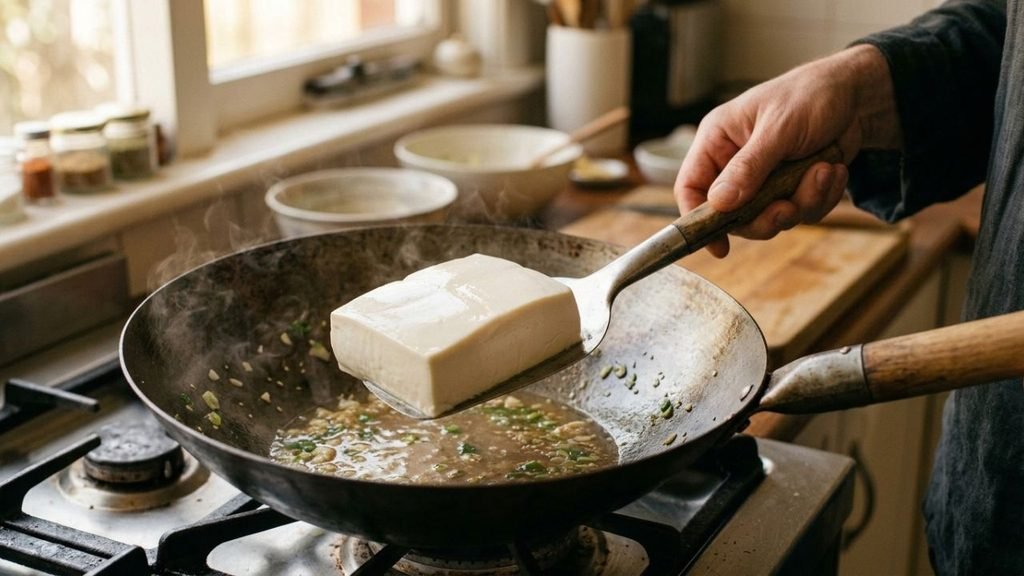
Heat is not automatically the enemy of silken tofu. The problem is excessive heat combined with long cooking or aggressive bubbling. Because silken bean curd tofu contains a great deal of moisture and has a delicate protein structure, intense cooking can make its surface less smooth and increase the chance of pieces breaking apart. What began as a soft, cohesive block can gradually lose the texture that made it appealing in the first place.
This is particularly easy to miss because the tofu may still look perfectly fine at first. The damage often becomes obvious only after it has been moved, served, or bitten into.
The useful distinction is between warming the tofu and aggressively cooking the tofu. They are not the same thing.
If the finished dish is supposed to have recognizable pieces of silken tofu, unnecessary heat is usually something to avoid.
3. The Spoon Can Do More Damage Than You Think
Silken tofu does not need much encouragement to break. A firm block can be stirred, flipped, scooped, and moved around without much concern. Silken tofu can fracture under the same treatment. The more often it is pushed against the side of a pan or turned with a utensil, the more likely its smooth structure is to disappear.
This is one reason a dish can have the right flavour but still feel wrong. The tofu has technically been cooked, yet its texture has changed from smooth and cohesive to broken and uneven.
There is also a difference between moving the surrounding food and moving the tofu itself. Keeping that distinction in mind can prevent a surprising amount of damage.
When you handle silken bean curd tofu, think of it more like a soft set custard than a piece of meat or a firm vegetable. That small change in mindset makes the handling much more deliberate.
4. Trying to Remove Every Drop of Moisture
The instinct to remove excess water makes sense with many types of tofu. It does not always make sense with silken tofu. Its moisture is closely connected to its characteristic softness. If you treat the tofu as though all liquid is unwanted, you can end up working against the texture you actually want.
This does not mean watery tofu is always desirable. A dish can certainly become diluted if too much liquid is introduced. The important distinction is between unwanted water around the tofu and the moisture that belongs inside its structure.
Those are two different things.
silken bean curd tofu is supposed to feel soft and hydrated. A completely dry piece is not necessarily a better piece. In many cases, trying too hard to make it firm before it reaches the plate is exactly what makes the finished texture disappointing.
5. Freezing Turns Silkiness Into Something Else
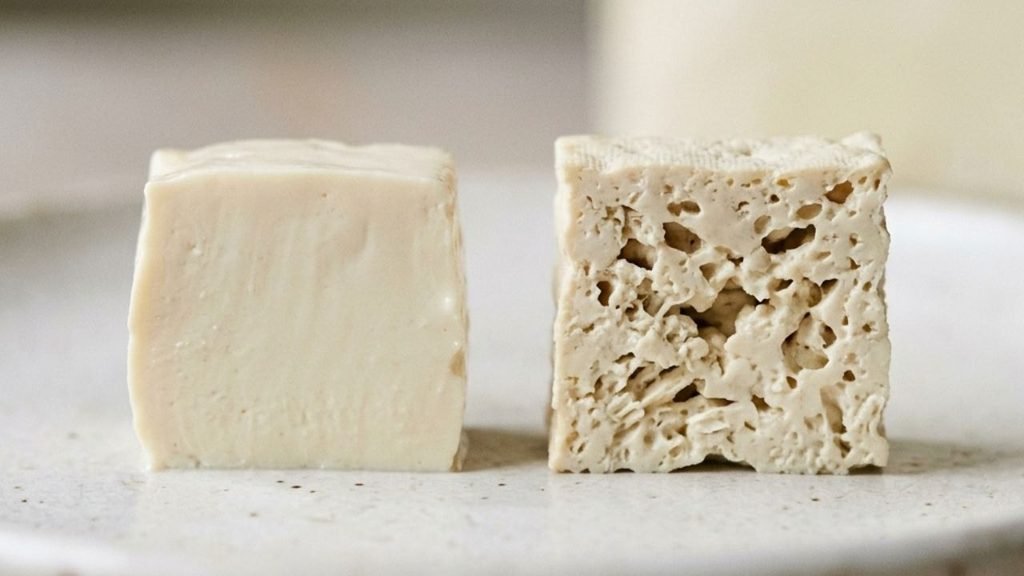
Freezing is useful for changing tofu’s texture, but that is precisely why it can be a problem when silkiness is the goal. Once tofu freezes, ice crystals form inside its structure. After thawing, the interior can become more porous and sponge-like. That texture can be useful with firmer tofu because the new structure can absorb flavours differently.
Silken tofu is another story.
Its appeal is the smooth, delicate texture that makes it feel almost creamy. Freezing can move it away from that quality, even if the tofu still looks recognizable after thawing.
So it helps to think of freezing as a texture change, rather than simply another way of storing tofu. For the broader distinction between food safety and the quality changes that can occur during freezing, see the USDA’s guidance on freezing and food safety. If the final dish depends on that soft, clean, almost custard-like character, preserving the original texture matters more than finding a way to freeze it.
Small Handling Changes Make the Biggest Difference
The five mistakes have something in common none of them requires a complicated explanation. silken bean curd is delicate because it is supposed to be delicate. Problems usually appear when it is handled according to rules developed for firmer tofu.
The most useful habit is therefore to judge the tofu by the texture you want from it. If the dish needs softness, preserve that softness. If it needs a sturdy piece that can take repeated handling, choose a tofu with enough structure to provide it.
That simple distinction can prevent most of the common texture failures before they happen.
A Better Way to Think About Silken Tofu
Rather than asking how to make silken tofu stronger, think about how to protect the texture it already has. Keep handling proportional to its softness. Avoid unnecessary force. Be careful with prolonged intense heat. Do not assume every tofu technique applies equally to every variety. And remember that freezing, pressing, aggressive stirring, and excessive cooking can all change the character of the tofu rather than simply improving it.
Once you understand that, silken tofu becomes much less frustrating. Its softness stops being a weakness to overcome and becomes the quality you are trying to preserve.
FAQ’s
1. Is silken tofu the same as soft tofu?
They are closely related terms, but tofu products can vary in firmness and texture depending on how they are made. “Silken” generally refers to a particularly smooth, delicate style.
2. Why does my silken tofu fall apart?
The most common causes are excessive handling, strong movement, prolonged intense heat, or choosing a tofu that is too soft for the dish.
3. Should silken tofu be pressed?
Not automatically. Pressing is more commonly associated with firmer tofu. With silken tofu, excessive pressing can work against its naturally soft texture.
4. Can silken tofu be frozen?
It can be frozen, but freezing changes its texture. The thawed tofu is generally more porous and less silky than it was originally.
5. Why does my silken tofu become grainy?
Texture can change when the tofu is exposed to unsuitable heat or excessive handling. The exact result also depends on the particular tofu product.
6. Is silken tofu more fragile than firm tofu?
Yes. Its softer structure means it generally cannot tolerate the same amount of pressing, stirring, tossing, or physical handling as firm tofu.
The Texture Is the Point
Silken tofu is easy to misunderstand because it looks like a simple ingredient. Its real character comes from its texture, which is smooth, moist, delicate, and easily disturbed. Once that becomes the starting point, many common mistakes become easier to spot.
The goal is not to force silken tofu into behaving like firmer varieties. It is to understand what makes it different and handle it accordingly.