Squid ink pasta, often called pasta al nero di seppia in Italian, is known for its striking black color and delicate taste of the sea. Traditionally associated with Italian coastal cooking, particularly Venetian and Sicilian cuisine, it takes its color from squid or cuttlefish ink. Paired with shrimp and garlic, the pasta develops a savory character that feels rich without necessarily needing a heavy sauce. The pink shrimp, dark strands and flecks of fresh parsley also give the finished dish a natural contrast that makes it as appealing to look at as it is to eat.
Getting shrimp tender while keeping the garlic fragrant and the sauce rich without feeling greasy can be tricky. This recipe shows you how to get the balance right.
Timing at a glance
| Stage | Estimated time |
| Preparation | 10 minutes |
| Cooking | 15–20 minutes |
| Total time | 25–30 minutes |
| Servings | 2 |
These are working estimates, not fixed limits. Your actual time will depend on how quickly you prepare the shrimp, the pasta brand you use, your stove and how familiar you are with the process.
Ingredients for a well-balanced seafood pasta
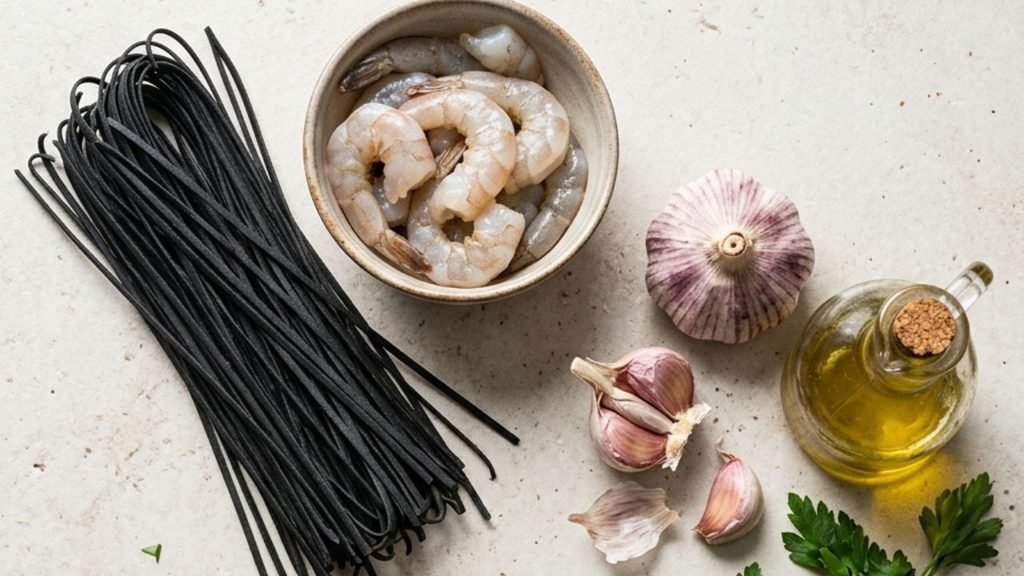
- 200–250 g squid ink linguine or spaghetti
- 250–300 g raw shrimp, peeled and deveined
- 3–4 garlic cloves, thinly sliced
- 3 tablespoons extra-virgin olive oil
- ¼–½ teaspoon chili flakes, according to taste
- ½ lemon, for juice and zest
- 2–3 tablespoons fresh parsley, chopped
- Salt and freshly ground black pepper, as needed
- ½–1 cup reserved pasta water, added gradually
Ingredient swaps that still work
Some ingredients may be difficult to find locally, particularly squid ink pasta. These substitutions help preserve the dish’s character without pretending that every alternative tastes exactly the same.
| Original ingredient | Possible replacement | What changes |
| Squid ink pasta | Regular linguine or spaghetti | The dish loses its black color and some of its marine flavor. |
| Fresh shrimp | Frozen raw shrimp, thawed and dried | The result can be very similar when the shrimp are handled properly. |
| Extra-virgin olive oil | Regular olive oil | The flavor is milder, but it still works for the sauce. |
| Fresh parsley | Fresh coriander in a small amount | The flavor becomes more pronounced and less traditionally Italian. |
| Fresh lemon | Bottled lemon juice | It provides acidity, though it lacks fresh zest and some aromatic character. |
| Chili flakes | A small amount of finely chopped fresh chili | The heat may be sharper and vary with the chili used. |
Directions
The key is to cook the shrimp separately, soften the garlic gently and bring everything together at the end. Keep a little pasta water aside because it helps the oil coat the noodles instead of sitting separately in the pan.
1. Cook the squid ink pasta
Bring a large pot of salted water to a boil. Cook the pasta according to the package instructions, checking it shortly before the recommended finishing time so it retains a slight firmness. Before draining, reserve at least one cup of pasta water. Do not rinse the pasta, as the starch on its surface helps the sauce cling.
2. Sear the shrimp without drying them out
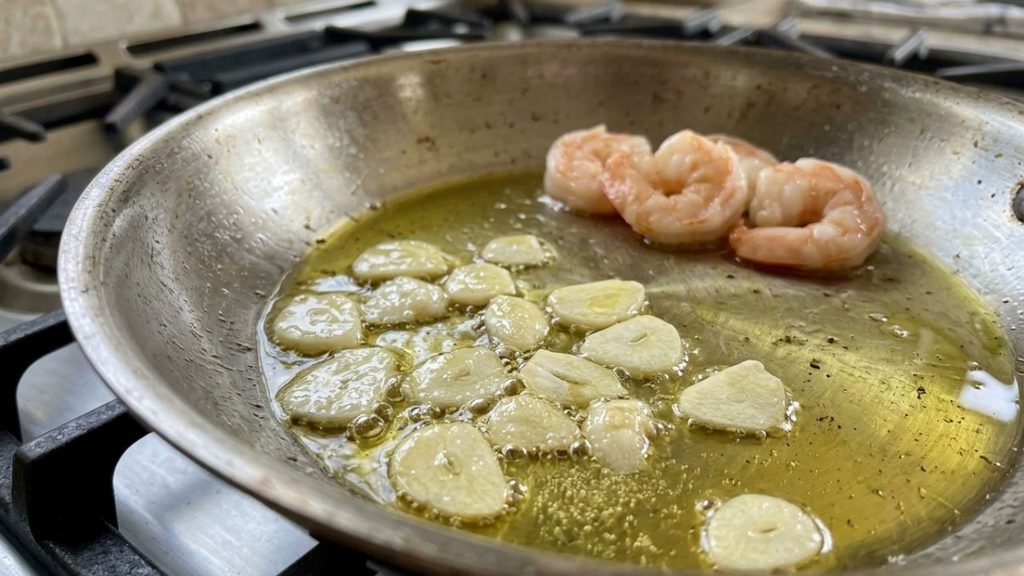
Pat the peeled shrimp dry with kitchen paper. Heat one tablespoon of olive oil in a wide skillet over medium-high heat. Add the shrimp in a single layer, season lightly with salt and pepper, and cook for roughly one to two minutes per side, depending on their size. Once opaque and just cooked through, transfer them to a plate. Avoid leaving them in the hot pan while preparing the rest of the dish.
3. Let the garlic develop its flavor
Reduce the heat to medium-low and add the remaining olive oil. Stir in the sliced garlic and chili flakes. Cook for about 30–60 seconds, watching closely until the garlic becomes fragrant and softens. It should remain pale gold at most. If the slices turn dark brown, they can introduce a bitterness that is difficult to correct.
4. Bring the sauce together
Add a small splash of reserved pasta water to the skillet and scrape up any flavorful residue. Add the drained pasta and toss thoroughly. Gradually add more pasta water while tossing over low heat. The oil and starchy water should form a light, glossy coating around the dark strands. Add liquid only as needed; the pasta should not sit in a pool of water.
5. Finish with shrimp and fresh lemon
Return the shrimp to the pan and toss briefly until warmed through. Remove the skillet from the heat and add the chopped parsley, a little lemon zest and a squeeze of lemon juice. Taste before adding more salt, then finish with black pepper if desired. Serve while the pasta is hot and the sauce remains glossy.
Serving the pasta without overpowering it
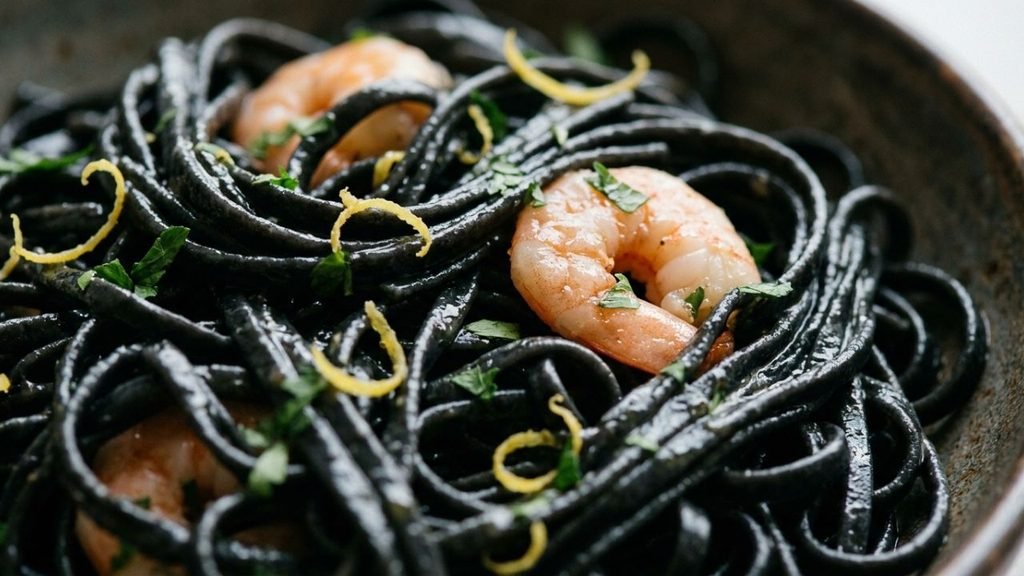
Serve the pasta in warm, shallow bowls so the strands remain easy to lift and the sauce does not cool too quickly. A little extra parsley and finely grated lemon zest provide freshness against the black pasta and pink shrimp.
Crusty bread is a useful accompaniment for any sauce left at the bottom of the bowl. If serving a larger meal, a simple green salad with a light lemon dressing provides contrast without introducing another rich element.
For a more substantial dinner, grilled vegetables such as zucchini or asparagus work well alongside the pasta. Keep additional seasonings modest; the seafood, garlic and ink already provide the dish’s main character.
Storage and reheating without ruining the shrimp
Squid ink pasta with shrimp is best eaten immediately because the noodles continue absorbing moisture as they sit, and reheated shrimp can become firm. If you have leftovers, transfer them to a shallow, airtight container and refrigerate promptly. As a general food-safety guideline, cooked seafood leftovers can usually be kept refrigerated for three to four days at 4°C (40°F) or below, provided they have been handled and stored safely. The USDA’s guidance on storing leftovers safely explains why prompt refrigeration, proper cooling and temperature control matter. Your refrigerator temperature, handling and the time the dish spends at room temperature all affect safety, while the pasta’s texture and the shrimp’s tenderness may deteriorate sooner.
For reheating, place a portion in a skillet over low heat with a small splash of water. Toss gently until thoroughly heated, adding a little more liquid if the pasta looks dry. Avoid prolonged heating or repeatedly reheating the same portion. Discard leftovers that have been held at room temperature for more than two hours, or one hour in temperatures above 32°C.
Small mistakes that change the whole dish
- Browning the garlic too far: Garlic cooks quickly in oil. Lower the heat before adding it, and remove the pan from the burner if it starts coloring too rapidly.
- Crowding the shrimp: Too many shrimp in the pan release moisture and may steam instead of sear. Cook in batches when necessary.
- Adding all the pasta water at once: Start with a small splash and increase gradually until the sauce coats the noodles.
- Pouring in too much lemon juice: Add a little, taste, and adjust. Excessive acidity can overwhelm the delicate seafood flavor.
- Adding cream automatically: Cream is not necessary for a satisfying sauce. It can make the dish heavier and soften the ink’s marine character.
- Forgetting to taste before serving: Pasta water and seafood vary in saltiness. Make the final seasoning adjustment only after everything has been combined.
FAQ’s
1. Does squid ink pasta taste strongly of fish?
Not necessarily. Its flavor is generally mildly briny and savory, although the intensity varies with the pasta and the amount of ink used. It should not automatically taste overwhelmingly fishy.
2. Can regular pasta be used instead?
Yes. Linguine or spaghetti works well with shrimp, garlic and olive oil. The result will lack the distinctive black color and some of the flavor associated with squid ink, but the overall combination remains satisfying.
3. Is fresh or frozen shrimp better?
Both can work. Frozen raw shrimp are a practical option when fresh shrimp are unavailable. Thaw them safely, drain thoroughly and pat them dry before cooking.
4. Can the dish be made without chili?
Yes. Chili is optional and contributes warmth rather than essential flavor. Leaving it out allows the garlic, shrimp and squid ink to come through more clearly.
5. Why does the sauce look oily instead of glossy?
The oil and pasta water may not have combined sufficiently, or too much oil may have been added relative to the liquid. Add a small splash of pasta water and toss the noodles vigorously over low heat until the sauce becomes more cohesive.
A final note on getting the flavor right
Squid ink pasta with shrimp and garlic does not need complicated additions to taste satisfying. The most important details are easy to overlook: shrimp that are cooked only until tender, garlic that remains fragrant rather than bitter, and enough pasta water to bring the olive oil into a smooth coating. Keep the lemon and chili measured, taste before adding extra salt, and serve the dish promptly. These small adjustments allow the ink’s savory character and the shrimp’s natural sweetness to remain distinct, giving the finished pasta its depth without making it unnecessarily heavy.