Cherries have a long place in seasonal eating, from the sweet cherries enjoyed fresh to sour cherries used in traditional preserves, pies and other fruit-based desserts. Their flavour varies by variety, ranging from mild sweetness to a sharper, more concentrated tartness. Berries offer an equally broad range. Strawberries are known for their fragrance, raspberries for their lively acidity, and blackberries for their deeper, sometimes slightly tannic character. Pairing these fruits is less about matching colours than understanding what each one brings to the table.
The difficulty is that two appealing fruits do not always make a better combination. Some pairings become overwhelmingly sweet, others turn too sharp, and some lose their individual character altogether. The difference often comes down to choosing a berry that complements the cherries rather than competes with them.
1. Cherry and blueberry a softer landing for concentrated sweetness
Cherries and blueberries are a good starting point for anyone who prefers a rounded fruit flavour. Sweet cherries provide the more recognisable centre, while blueberries contribute a gentler character that can make the pairing feel fuller without introducing pronounced acidity.
The important distinction is that blueberries are not always particularly tart. Their flavour depends on variety and ripeness, so they may complement sweet cherries without creating much contrast. If both fruits taste mild, the combination can feel pleasant but indistinct.
Best suited to: breakfast bowls, fruit desserts and combinations where a softer flavour is preferable to a sharp finish.
Practical tip: Taste the cherries first. If they are exceptionally sweet, a more acidic berry may create a clearer contrast than blueberries.
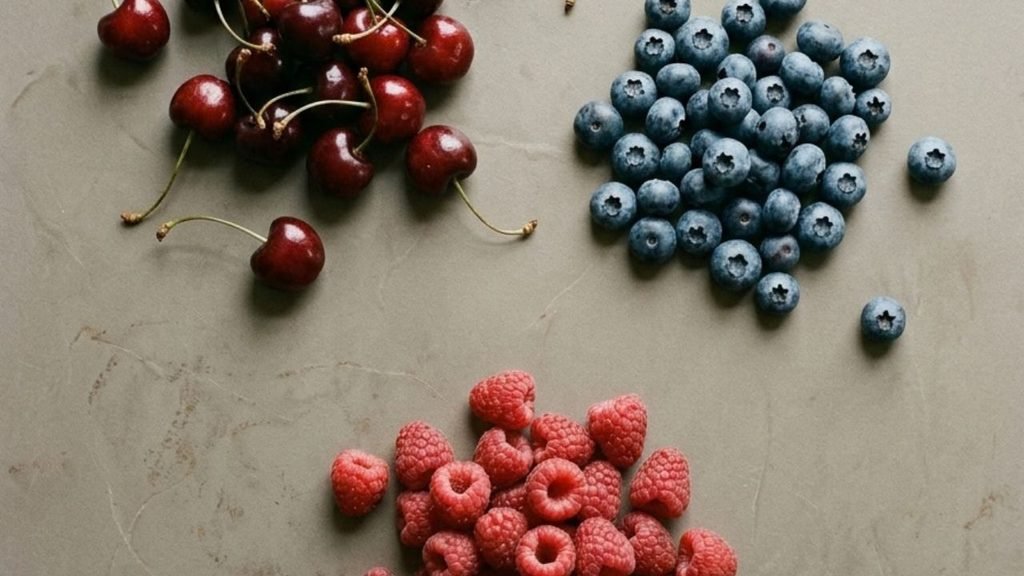
2. Cherry and raspberry when sweetness needs a sharper edge
Raspberries change the character of cherries more noticeably. Their tartness and distinctive aroma interrupt the cherry’s concentrated sweetness, making the pairing feel brighter rather than simply sweeter.
This combination is particularly useful when ripe cherries taste heavy or lack definition. Raspberry brings a sharper note that allows the two fruits to remain recognisable. However, underripe cherries and especially tart raspberries can produce an unnecessarily acidic result.
Best suited to: fruit tarts, chilled desserts and fruit combinations that need a more pronounced contrast.
Practical tip: Look for ripe cherries before adding raspberries. Starting with better-balanced fruit is more effective than trying to correct excessive tartness afterwards.
3. Cherry and strawberry familiar, but not interchangeable
Strawberries and cherries share a broad appeal, yet their individual strengths differ. Strawberries often contribute a recognisable fragrance and juicy texture, while cherries have a firmer bite and a more concentrated flavour.
The pairing works when those differences remain noticeable. If both fruits are very sweet and mild, their flavours can blur together. The combination may look appealing without delivering much variety on the palate.
Best suited to: fruit bowls, summer desserts and dishes where aroma matters as much as sweetness.
Practical tip: Choose fragrant, ripe strawberries rather than judging them by colour alone. A brightly coloured strawberry can still have a weak flavour, particularly when picked before it has fully developed its aroma.
4. Cherry and blackberry a deeper flavour with more presence
Blackberries offer something different from the softer berries. Depending on the variety and ripeness, they can have a more pronounced tartness and a slightly astringent finish. Beside cherries, they create a fuller combination that can stand up to richer desserts.
The challenge is ripeness. An underripe blackberry can taste harsh, and the sweetness of cherries will not necessarily disguise that problem. Ripe blackberries, on the other hand, provide depth without requiring the pairing to become excessively sweet.
Best suited to: baked fruit desserts, rich cakes and combinations where a delicate berry might disappear.
Practical tip: Check the blackberries individually. If they are consistently sour or firm, choose a milder berry rather than assuming the cherries will balance everything.
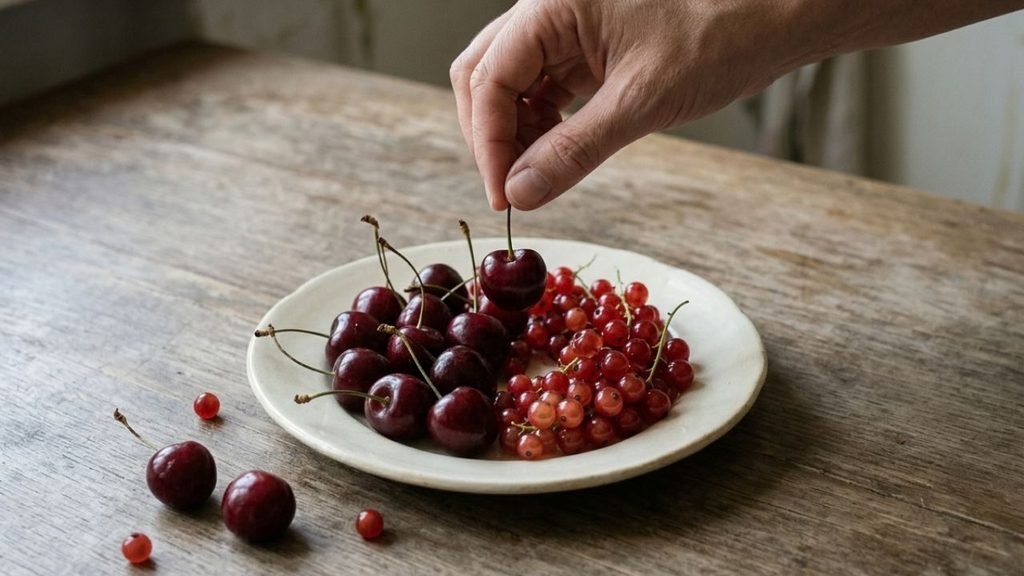
5. Cherry and red currant a little acidity goes a long way
Red currants are small, but their tartness can significantly change a fruit combination. Unlike blueberries, which may soften the overall impression, red currants introduce a distinctly sharp finish.
That makes them useful when cherries taste too sweet or when a dessert needs a more defined fruit flavour. The relationship is deliberately uneven: cherries provide the fuller sweetness, while currants supply the acidity.
Best suited to: fruit toppings, layered desserts and pairings intended to balance rich or creamy flavours.
Practical tip: Use red currants as a supporting fruit rather than assuming equal quantities will produce the best balance. Their acidity can easily become dominant.
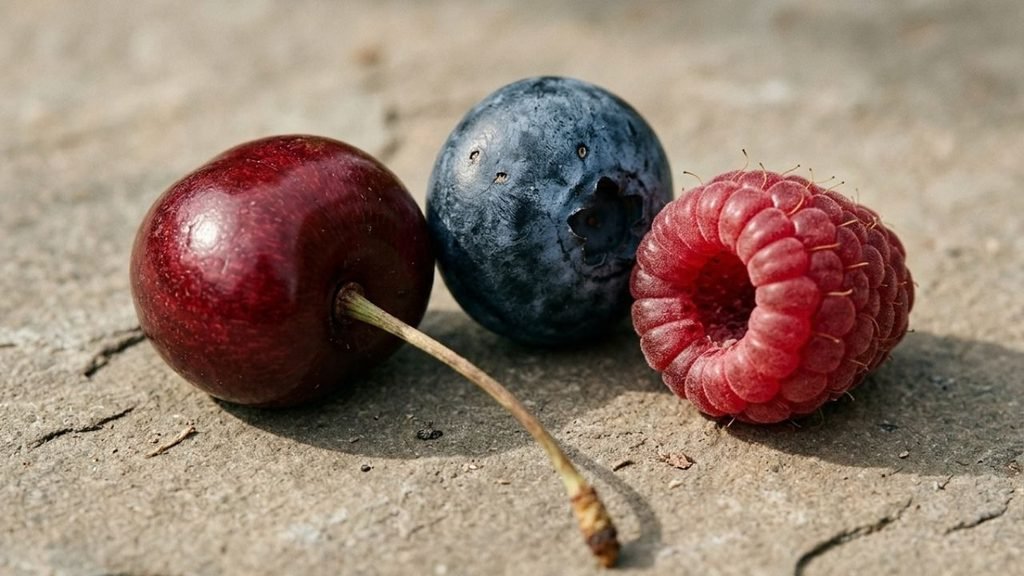
6. Cherry and mulberry a quieter alternative to sharper berries
Mulberries are less frequently included in familiar berry combinations, partly because their availability and flavour vary considerably. Ripe mulberries can be mild and mellow, although some varieties develop a more concentrated sweetness.
With cherries, they create a softer pairing that relies less on tartness. This is useful when raspberries or currants would make the overall flavour too sharp.
Their delicate texture deserves attention, particularly when the fruit is very ripe. Damaged or overripe mulberries can become excessively soft, reducing the contrast between the two fruits.
Best suited to: seasonal fruit bowls, preserves and lightly sweetened desserts.
Practical tip: Choose mulberries that are sound and appropriately ripe. If both fruits are very sweet, a small amount of a more acidic fruit may create a better-balanced combination.
7. Cherry and cranberry a more deliberate sweet-tart contrast
Cranberries bring a sharper flavour than many sweet berries, making them a useful partner for cherries when contrast is the priority. Their acidity prevents the combination from becoming uniformly sweet, while cherries contribute a fuller fruit character.
This pairing works particularly well in seasonal desserts and fruit preparations where a sharper finish is welcome. It is less forgiving than cherry and blueberry, however, because the cranberry can easily dominate when the cherries are mild or insufficiently ripe.
Best suited to: fruit desserts, preserves and combinations intended to retain a pronounced tartness.
Practical tip: Begin with a smaller proportion of cranberries and adjust according to taste. The right balance depends on the sweetness of the cherries as well as the intensity of the cranberries.
A simple way to choose the right pairing
Instead of memorising a list of combinations, assess the cherries before deciding which berry to add. Three characteristics make the choice easier.
- Sweetness: Very sweet cherries often benefit from raspberries, red currants or cranberries, which introduce a sharper contrast.
- Acidity: Tart cherries generally pair more comfortably with milder blueberries or ripe mulberries.
- Texture: Firm cherries can provide contrast to softer berries, but that distinction disappears when all the fruit is bruised or overripe.
These are starting points rather than fixed rules. Different varieties can produce different results, and a combination that works well with fresh fruit may behave differently when the fruit is frozen or cooked.
The useful skill is recognising what a particular pairing lacks. More sweetness is not always the answer, and adding another fruit can make a combination less distinctive rather than more interesting.
FAQ’s
1. Which berries pair most easily with cherries?
Blueberries and strawberries are accessible starting points for a relatively mild combination. Raspberries are a better option when more acidity and contrast are needed.
2. Which pairing tastes the most tart?
Cherry and cranberry generally create a pronounced sweet-tart contrast. Cherry and red currant can also be sharply acidic, depending on the ripeness of the fruit.
3. Can sour cherries be paired with sweet berries?
Yes. Sweet berries can soften the overall impression of sour cherries, although the result depends on the acidity of both fruits. Blueberries and ripe strawberries are useful starting points.
4. Why do some cherry and berry combinations taste bland?
When both fruits have similar sweetness and relatively mild acidity, their flavours can become difficult to distinguish. Choosing a berry with a contrasting flavour often produces a more defined result.
5. Are frozen berries suitable for these combinations?
Yes, especially when the fruit will be used in desserts or other preparations where maintaining its original shape is not essential. Thawed berries can release more liquid and become softer than fresh fruit, a change explained in the National Center for Home Food Preservation’s guidance on why frozen fruit sometimes becomes soft after thawing.
The difference is in the balance
Cherries and berries offer more possibilities than a simple mixture of sweet fruit. Blueberries can soften the overall flavour, raspberries bring brightness, blackberries add depth, and cranberries create a sharper contrast. Strawberries and mulberries offer gentler alternatives, while red currants can provide acidity in a relatively small quantity.
There is no single combination that works best in every situation. The more useful approach is to understand the character of each fruit and choose accordingly. Once you recognise the difference between sweetness, acidity, intensity and texture, pairing cherries and berries becomes a more considered choice rather than a matter of putting familiar fruits together.