split pea soup recipe has been around for generations, usually known simply as split pea soup or pea soup, with versions appearing in different parts of Europe and later becoming a familiar comfort food in North America. The vegetarian version keeps the character people love about it: soft green peas, sweet vegetables, a thick texture, and the slow-cooked feeling of something made at home rather than assembled in a hurry.
The tricky part is getting that deep, satisfying flavor without relying on ham or meat. This recipe solves that by building enough savory, smoky, and fresh flavor around the peas so the soup feels complete on its own.
timing
The times below are useful estimates rather than rules. Your vegetables, cookware, heat level, and preferred texture can all change how long the soup takes, so use the clock as a guide rather than something you have to follow exactly.
| Stage | Estimated time |
| Prep | 10–15 minutes |
| Cooking | 60–75 minutes |
| Total time | 70–90 minutes |
| Servings | 5–6 |
What you’ll need
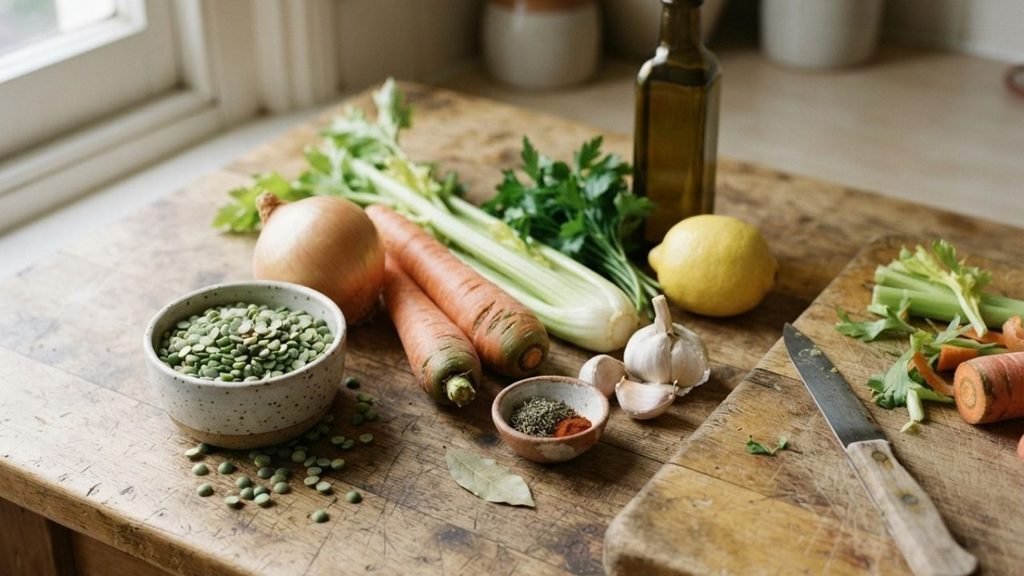
- 2 cups dried green split peas, rinsed
- 1 tablespoon olive oil
- 1 large yellow onion, finely chopped
- 2 medium carrots, diced
- 2 celery stalks, diced
- 3 garlic cloves, minced
- 1 teaspoon smoked paprika
- 1 teaspoon dried thyme
- 1 bay leaf
- 6 cups vegetable broth
- 1 cup water, plus more if needed
- 1 teaspoon salt, then more to taste
- ½ teaspoon black pepper
- 1–2 teaspoons lemon juice or apple cider vinegar
- 2 tablespoons chopped fresh parsley, optional
A few ingredients have easy stand-ins
You don’t need to make a special shopping trip for every ingredient. Some substitutions work particularly well here, while others simply change the character of the soup.
| Ingredient | Good replacement | What changes |
| Smoked paprika | Regular paprika + a pinch of cumin | Less smoky, slightly warmer |
| Dried thyme | 1 tablespoon fresh thyme | Fresher herbal flavor |
| Vegetable broth | Water + extra seasoning | Lighter, less savory broth |
| Yellow onion | White onion | Slightly sharper flavor |
| Lemon juice | Apple cider vinegar | A little deeper, more rounded acidity |
Directions
The important thing here is patience rather than complicated technique. The split pea soup recipe enough time to soften and release their starch, while the vegetables need a little attention at the beginning so the finished soup doesn’t taste flat.
1. Start with the vegetables
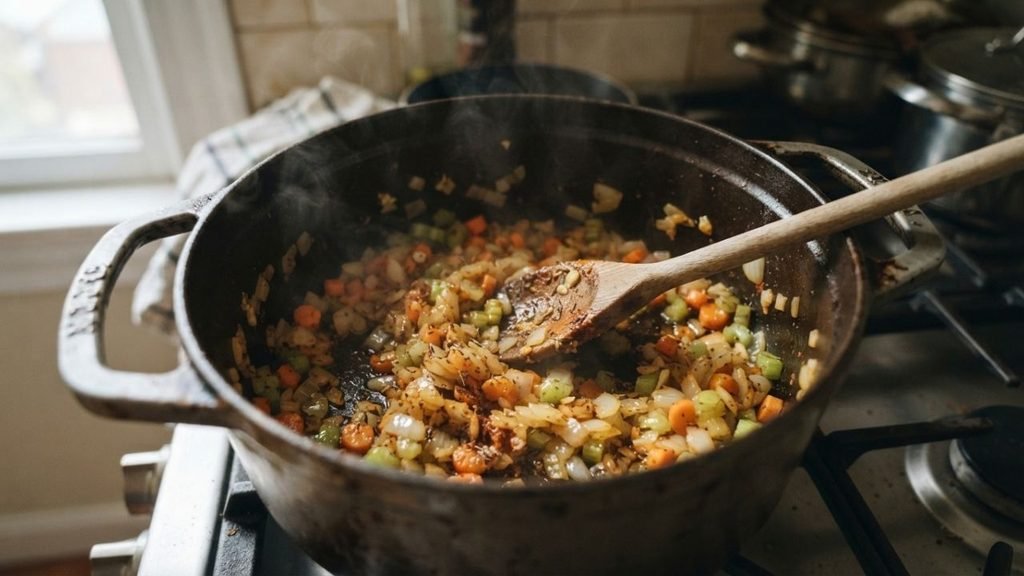
Warm the olive oil in a large, heavy-bottomed pot over medium heat. Add the onion, carrots, and celery with a small pinch of salt. Cook for about 8–10 minutes, stirring occasionally, until the vegetables soften and the onion becomes translucent.
Add the garlic, smoked paprika, and thyme. Stir for about 30–60 seconds, just until the garlic smells fragrant.
2. Give the peas room to soften
Add the rinsed split peas, bay leaf, vegetable broth, and water. Bring the pot to a boil, then reduce the heat to a gentle simmer. Leave the lid slightly ajar and cook for about 60–75 minutes, stirring every so often.
The exact time depends on the peas and your heat level, so don’t worry if yours needs a little longer. You are looking for peas that have become very tender and are beginning to disappear into the broth.
If the soup becomes too thick before the peas are ready, add a little more water or broth.
3. Finish when the texture feels right
Remove the bay leaf and taste the split pea soup recipe. Add the salt and black pepper gradually. When the soup tastes good but slightly heavy or flat, stir in the lemon juice or cider vinegar.
That small amount of acidity helps wake up the earthy peas and sweet vegetables without making the soup taste sour.
If you prefer a smoother texture, mash a portion of the soup with the back of a spoon. You don’t need to blend the entire pot.
The bowl matters more than you might think
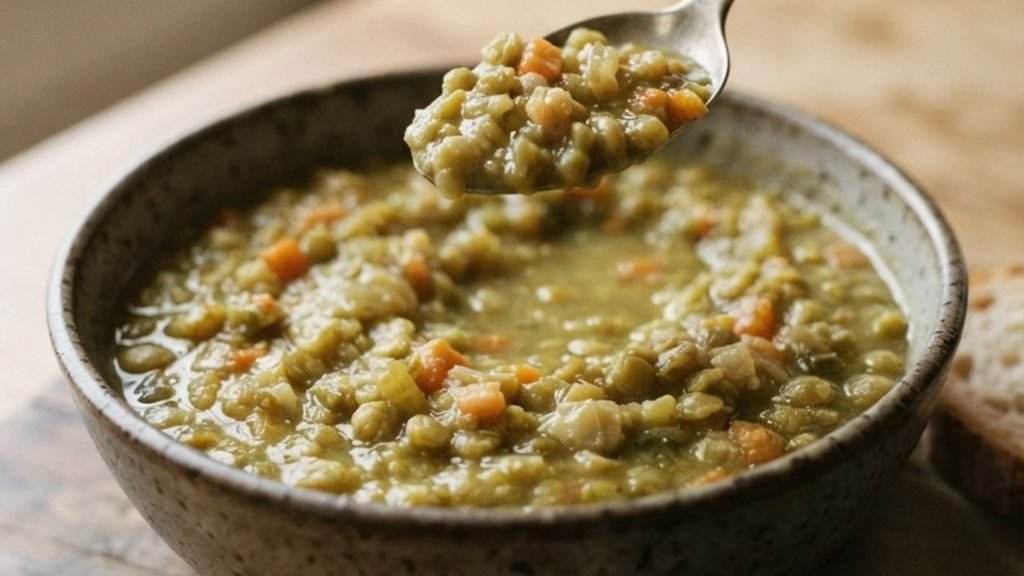
Serve the split pea soup recipe hot with chopped parsley and a little freshly cracked black pepper. A small drizzle of olive oil works well too, particularly if the soup feels very thick.
For something more substantial, put toasted sourdough, crusty bread, or a simple grilled cheese alongside it. The contrast is useful: the soup is soft and creamy, so something crisp or chewy gives the meal more texture.
A squeeze of lemon at the table is also worth keeping nearby. Some batches simply need a little more acidity once they’re served.
It gets better after sitting
Split pea soup is one of those dishes that can change noticeably after a night in the refrigerator. The peas continue to absorb liquid, so leftovers often become considerably thicker.
You can store cooled soup in an airtight container in the refrigerator and use it within a few days, following USDA guidance on storing leftovers. When reheating, add a splash of water or broth and warm it gently, stirring until the original texture returns.
It can also be frozen if you want to make a larger batch. Leave some room in the container because the soup expands as it freezes.
The mistakes that make a good soup fall flat
Adding everything at once
The soup will still cook, but the vegetables won’t develop the same rounded flavor. Giving the onion, carrot, and celery a few minutes in the oil first makes a noticeable difference.
Using too much smoked paprika
Smoked paprika is there to suggest depth, not dominate the bowl. Too much can make the soup taste strangely artificial or overwhelmingly smoky.
Keeping the soup too thin
Remember that split peas release starch as they cook. Start with a reasonable amount of liquid and add more later rather than flooding the pot from the beginning.
Forgetting the final acidity
If the soup tastes dull despite enough salt, it may not need more seasoning. A little lemon juice or vinegar can make the existing flavors much clearer.
Cooking only by the clock
Sixty minutes is an estimate, not a finish line. Some peas soften faster than others. Judge the soup by the peas and texture rather than forcing it to follow an exact number.
Salting heavily at the beginning
Vegetable broth can already contain quite a bit of salt. Season gradually and taste near the end so you have better control.
FAQ’s
1. Do split peas need to be soaked first?
No. Unlike many dried beans, split peas generally cook without soaking. Rinse them well before adding them to the pot.
2. Can I make this soup without celery?
Yes. You can leave it out if you don’t have any. The soup will still work, although celery adds a useful savory background note.
3. Why is my split pea soup too thick?
The peas continue absorbing liquid as the soup sits. Add warm water or vegetable broth a little at a time until it reaches the consistency you want.
4. Why does my soup taste bland?
Check the salt first, then try a small amount of lemon juice or vinegar. The problem may be lack of acidity rather than lack of seasoning.
5. Can I make it completely vegan?
Yes. The recipe as written is vegan as long as your vegetable broth contains no animal-derived ingredients.
6. Can I use yellow split peas?
Yes. They will work, although the color and flavor will be somewhat different from green split peas.
A quiet kind of comfort
The appeal of vegetarian split pea soup recipe is that it doesn’t need much help to feel substantial. The peas provide the body, the vegetables bring sweetness and depth, and a small amount of smoke and acidity keeps the whole thing from becoming heavy.
That is what makes this recipe worth keeping around. It isn’t trying to turn humble ingredients into something extravagant. It simply gives them enough time and attention to become the kind of meal that feels familiar long before the first spoonful is finished.