Bratwurst is one of the first foods many people associate with German sausage. Often called “brat” in American cookouts, it refers to a family of sausages rather than one style. Regional versions differ in size and seasoning, but their appeal is simple. They are hearty, familiar, and easy to pair with other foods.
The trouble starts when every good topping is used at once. Bratwurst can quickly become heavy, overly soft or strangely sharp, even when every individual choice seems right.
Let the bratwurst set the direction
The sausage should be the first thing considered, not the last. A mild bratwurst has more room for a noticeable mustard or stronger side dish. A heavily seasoned or deeply browned sausage may need something quieter. The point is not to identify one perfect combination that works every time, but to notice what the sausage already brings to the plate.
Richness is usually the biggest factor. Bratwurst has enough savory weight that the meal benefits from something capable of breaking it up. That might be acidity, freshness, crunch or even a little sweetness.
Once you start thinking in those terms, choosing toppings becomes less about tradition and more about balance.
Mustard does more work than its size suggests
Mustard may be the smallest thing on the plate, but it can completely change the character of a bratwurst. A smooth mustard gives a clean, sharp finish. Whole-grain mustard adds texture and a more rustic flavor. Sweeter German-style mustard takes the sausage in a softer direction, while a stronger mustard gives a mild bratwurst more presence.
There is no need to use the strongest mustard simply because the sausage can handle it.
If the bratwurst is already intensely seasoned, a more restrained mustard can make the flavors easier to distinguish. If the sausage is mild, a stronger mustard can give the meal some definition.
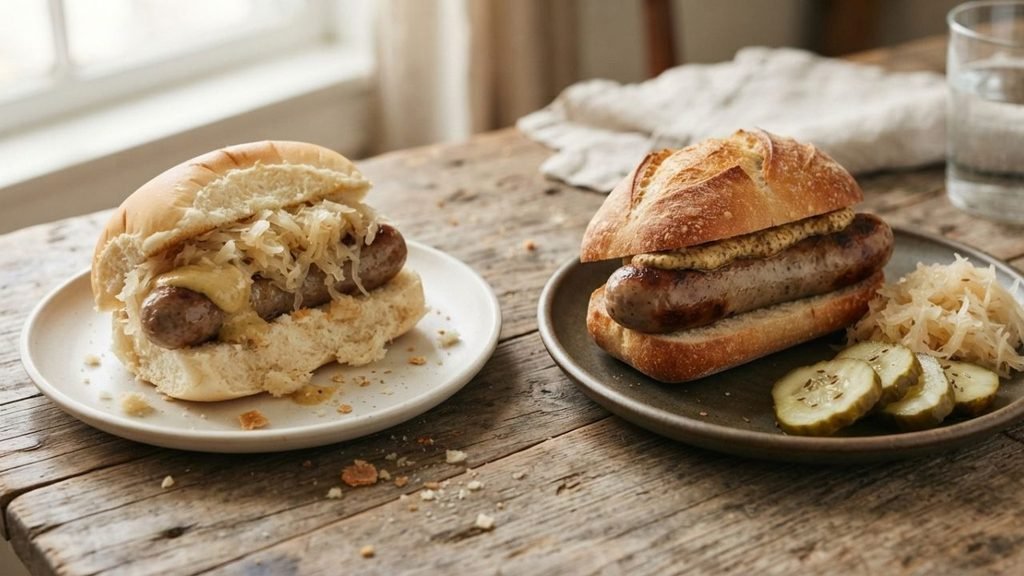
Sauerkraut is there to cut through the richness
Sauerkraut has remained closely associated with sausage for a reason beyond tradition. Its sourness gives fatty, savory meat a much-needed lift. Because sauerkraut is produced through the fermentation of shredded cabbage with salt, its acidity is part of what gives it such a distinctive role on the plate. FDA’s guidance on sauerkraut and fermentation The fermented cabbage also introduces a texture that is different from both the sausage and the bread, which keeps the bite from becoming monotonous.
The important part is proportion.
Too little sauerkraut can disappear. Too much can dominate the sausage and make the bun wet and difficult to manage. It works best when you can still taste the bratwurst clearly underneath it.
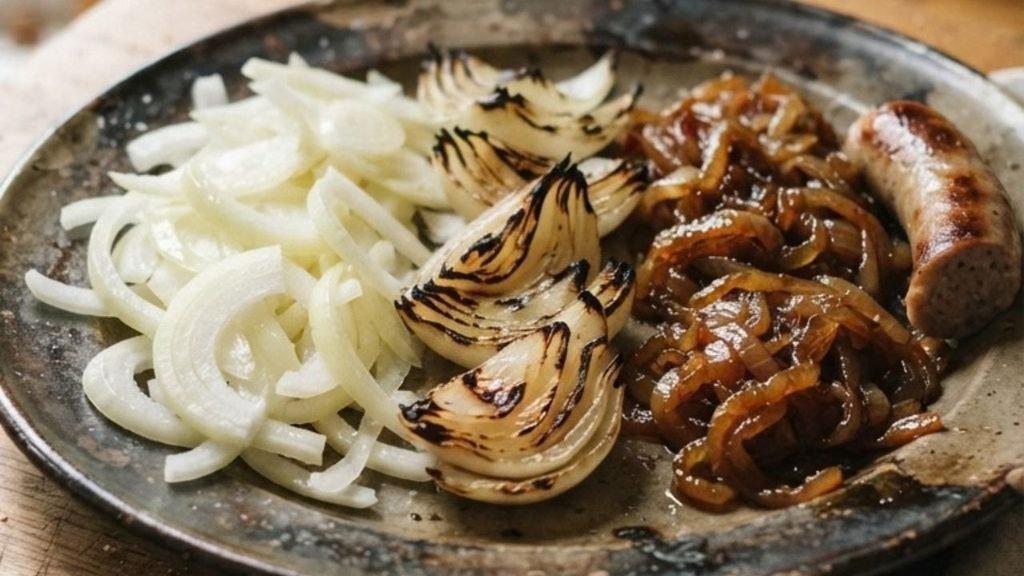
Onions are really three different toppings
Calling onions a single topping hides how much they can change. Raw onion gives a clean bite and noticeable crunch. Grilled onion adds char and a gentle sweetness. Slowly softened onion creates a much richer, sweeter effect.
Choose according to what the rest of the meal needs.
A soft bun and sauerkraut may benefit from raw onion. A smoky grilled bratwurst can handle the sweetness of browned onion. If the meal already contains several sweet elements, adding even more caramelized onion may push it too far.
The onion is not just there for flavor. Its texture changes the whole experience of eating the sausage.
Give the pickle a bigger role
Pickles are easy to overlook, but they can make a real difference beside bratwurst. A crisp dill pickle brings acidity, freshness and crunch, giving the rich sausage a lighter contrast. It works especially well when the plate already includes potatoes, bread or other hearty toppings, keeping each bite from feeling too heavy.
Serving it alongside the sausage gives you a clean, sharp bite between richer mouthfuls. It is a small addition, but it can stop an otherwise heavy meal from becoming tiring.
Potatoes should add substance, not more weight
Bratwurst and potatoes naturally belong together, but the type of potato side makes a difference. A sharp mustard-and-vinegar potato salad works because the potatoes provide substance while the dressing keeps them lively. Crispy roasted potatoes create a different effect, giving the plate a browned, crunchy element.
A creamy potato salad is perfectly reasonable for a cookout, but it moves the meal toward richness. If you choose it, the rest of the plate benefits from something acidic or fresh.
Cucumber can rescue a heavy plate
Cucumber is not the first ingredient most people associate with bratwurst, but that is precisely why it deserves attention. Its cool, crisp texture creates immediate contrast with a hot, rich sausage. A slightly acidic dressing adds another layer without making the meal feel heavier.
A fresh cucumber side does not need to make the meal feel “healthy.” Its real purpose is balance. It gives the palate a different experience between bites.
Red cabbage takes the meal somewhere warmer
Red cabbage gives bratwurst a warmer, richer character than sauerkraut. Its deep color and gentle sweetness work well with a browned sausage, while its firm texture pairs naturally with potatoes or bread. It is a good choice when you want the meal to feel more like a proper dinner than a sausage served in a roll.
Do not underestimate the bread
The bun is often treated as a neutral container, but it changes the balance of the entire meal. A very soft roll makes the sausage feel softer. A crustier roll introduces more chew and structure. A darker or grainier bread can make mustard and pickles seem more pronounced.
If the bread is delicate, filling it with large amounts of sauerkraut, onions and sauce can make everything collapse into one soft bite. Keeping some accompaniments on the side is often the better choice.
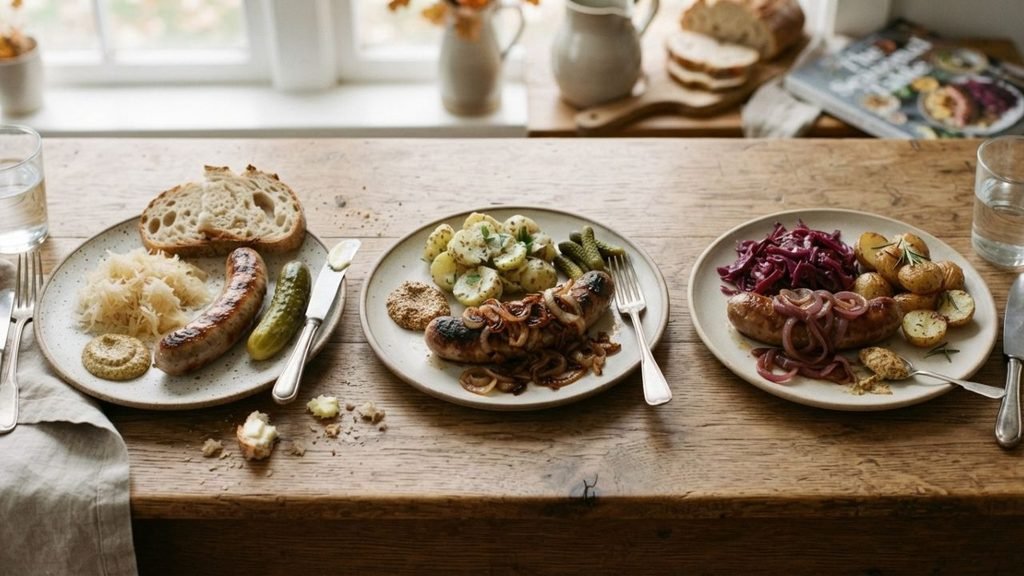
Three combinations that actually make sense
The clean classic
Bratwurst, sharp mustard, sauerkraut, a crisp pickle and good bread. This works because every addition has a clear purpose. The mustard cuts through the richness, the sauerkraut brings acidity and the pickle adds crunch.
The generous cookout
Grilled bratwurst, browned onions, whole-grain mustard, potato salad and pickles. This is richer and more filling, but the pickles and mustard keep the combination from becoming one long, heavy flavor.
The colder-weather plate
Bratwurst, sweet onions, red cabbage, roasted potatoes and a sharper mustard. Here the sweetness is more pronounced, so the mustard provides the necessary edge and keeps the plate from becoming too soft in character.
Build the plate around four things
There is a simple way to avoid overthinking bratwurst pairings. Start with richness. The sausage already provides it. Then look for acidity. Mustard, sauerkraut, pickles or a sharp salad can supply that.
One ingredient can perform more than one role. Pickles provide both acidity and crunch. Mustard adds sharpness without making the meal substantially heavier. Crispy potatoes contribute both texture and substance.
That is why a shorter list of well-chosen accompaniments often works better than a crowded plate.
Small additions with a noticeable effect
A few ingredients can change the direction of the meal without taking it over. Apple brings gentle sweetness and works naturally with cabbage and pork. Dill adds freshness to cucumber, pickles and mustard. Caraway gives cabbage and sausage combinations a deeper aromatic character.
Horseradish brings a sharper heat than ordinary mustard and can give a mild bratwurst more personality.
Where bratwurst pairings usually go wrong
The first mistake is thinking more toppings make a better bratwurst. Cheese, creamy potato salad, sweet onions and sauces can quickly make the meal feel heavy. Going too far with sharp flavors can also throw it off. Sauerkraut, pickles and strong mustard may become sour together. Keeping some toppings on the side gives each flavor room to stand out.
The best pairing is not necessarily the most traditional or the most elaborate. It is the one where every part has a reason to be there.
FAQ’s
1. What is the most classic bratwurst topping?
Mustard is probably the safest classic choice, with sauerkraut close behind. Regional traditions vary, so there is no single universal combination.
2. Is ketchup good with bratwurst?
Yes, particularly if you enjoy a sweeter flavor. Use it lightly if the sausage itself is mild.
3. Which vegetables work best?
Cabbage, onions, cucumber and peppers are versatile because they provide different forms of freshness, sweetness, acidity and crunch.
4. What is the best potato side?
A mustard- or vinegar-based potato salad is a strong all-round choice. Crispy potatoes are better when texture is the priority.
5. Should sauerkraut go inside the bun?
It can, but serving some on the side gives you more control and keeps the bread from becoming overly wet.
The better bratwurst meal is not the busiest one
Bratwurst already has plenty going on. It brings richness, salt, seasoning and a satisfying texture, so the best toppings and side dishes are usually the ones that supply what is missing rather than repeating what is already there.
A little mustard, something acidic, one contrasting texture and a sensible side can be enough. Once you start choosing accompaniments that way, the familiar bratwurst becomes much easier to build into a meal that feels complete without feeling overloaded.