The Manhattan is one of those drinks that became bigger than its glass. Linked closely with old New York cocktail culture, it takes its name from Manhattan recipe and has appeared in cocktail books since the late 19th century. Its dark, polished character remains familiar, yet every bar seems to give it a slightly different personality.
The problem at home is rarely knowing what Manhattan is. It is knowing why one tastes balanced while another tastes flat, too sweet, too sharp, or simply forgettable. The six tips below focus on those small decisions that make the difference.
1. Start with the Manhattan you actually want to drink
One of the easiest mistakes is treating Manhattan as if there is only one acceptable personality. There is a traditional reference point, but your choice of whiskey changes the character of the finished drink considerably. Rye tends to give the cocktail a drier, spicier edge, while bourbon can make it feel rounder and sweeter.
That distinction matters because the whiskey is not working alone. The vermouth changes the balance, too. A richer vermouth paired with a soft bourbon can push the drink toward sweetness, while a more assertive rye can keep the same general structure feeling sharper.
For a first attempt, start with a classic-style ratio rather than immediately changing several things at once. Then make small adjustments based on what you actually taste.
That approach is more useful than searching for a supposedly perfect Manhattan recipe.
2. Your vermouth may be the part you are overlooking
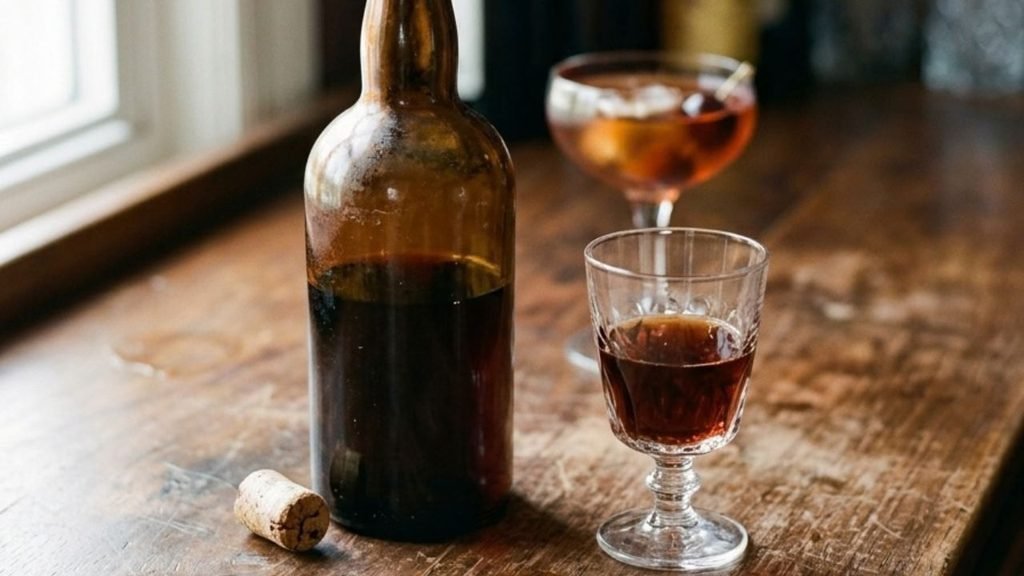
People often spend time choosing whiskey and treat the vermouth almost like an accessory. That is a mistake. In Manhattan, vermouth has enough presence to change the drink substantially. It brings sweetness, herbs, spice and acidity into the glass, so its condition and style matter.
The easiest test is also the most revealing: taste the vermouth by itself.
If it tastes tired or strangely flat, the finished Manhattan is unlikely to feel lively. An opened bottle should generally be kept refrigerated rather than left sitting in a warm kitchen cabinet.
This is one of those unglamorous details that can make more difference than buying a much more expensive whiskey.
3. Think about balance before chasing stronger flavors
A Manhattan can become surprisingly heavy when every component is pushed in the same direction. A sweeter whiskey, a rich vermouth and an especially generous pour can produce a drink that feels dense rather than complex. On the other hand, an aggressively spicy whiskey combined with too little vermouth can make the cocktail feel hot and unintegrated.
Think in terms of contrast.
If your whiskey is already sweet and soft, a more herbal or drier vermouth may create better definition. If the whiskey has a lot of spice, a richer vermouth can provide some useful roundness.
You do not need to change everything. Often one small adjustment is enough.
4. The glass can tell you when something is missing
A Manhattan is usually served in a small cocktail glass, but the important part is not simply recreating a familiar photograph. Look at the drink before tasting it. A clear, properly chilled cocktail should have a clean appearance rather than looking cloudy or overly diluted. That clarity is not only visual the science behind why stirred cocktails remain clear helps explain why the way you mix the drink can change what you see in the glass. The surface should feel calm and polished, and the garnish should look intentional rather than crowded.
That visual restraint suits the character of the drink. Manhattan does not need a collection of decorations to announce itself.
The garnish can also shift the impression. A cherry gives it a darker, sweeter visual association, while a citrus twist introduces a fresher aromatic note.
These are small details, but small details are exactly where a simple cocktail becomes recognizable.
5. Stop changing three things at once
This is probably the most useful habit for anyone trying to improve a Manhattan at home. Make one version. Taste it carefully. Decide what is actually wrong. If it is too sweet, do not immediately change the whiskey, vermouth, bitters and garnish together. You will have no idea which change helped.
Instead, alter one variable and make another.
For example, if the drink feels too sweet, try a different whiskey while keeping everything else consistent. If the whiskey feels too dominant, adjust the amount of vermouth. If the whole drink seems harsh, pay attention to temperature and dilution before assuming the recipe itself is wrong.
You are essentially calibrating the drink.
That makes the process much less frustrating and gives you a better understanding of your own preference.
6. Build a Manhattan around your bottle shelf
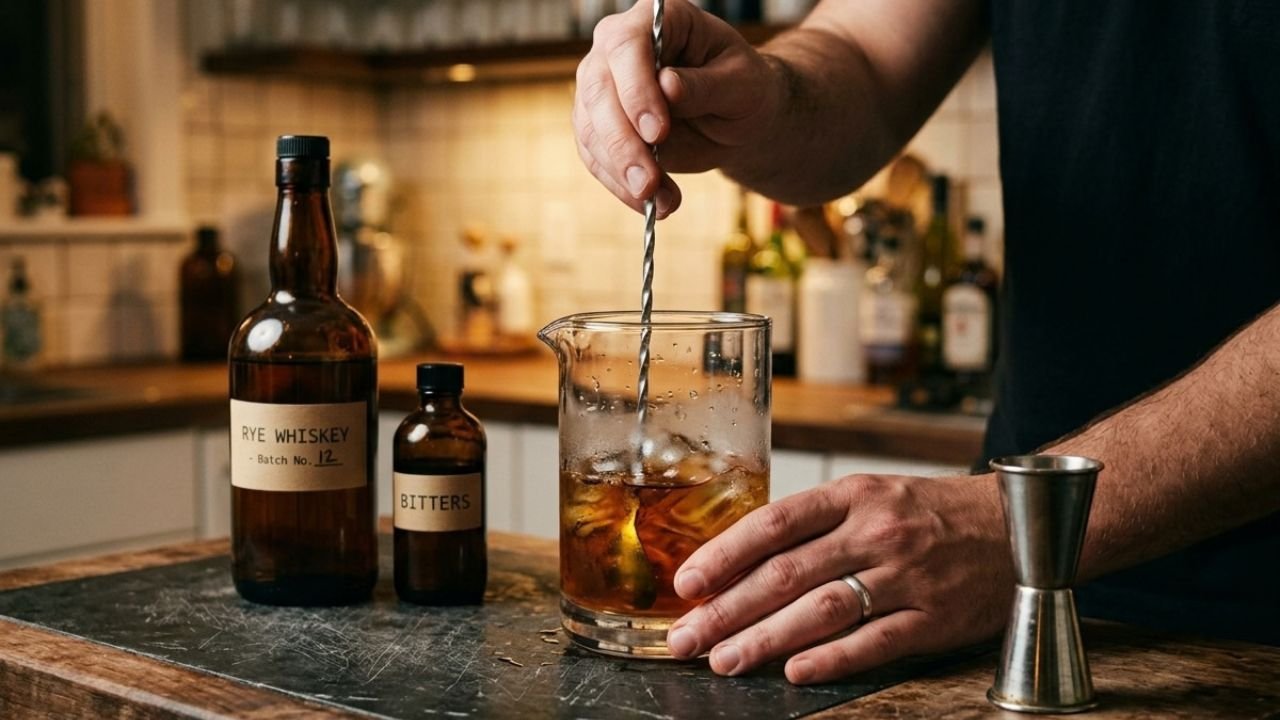
There is no reason your home Manhattan recipe has to imitate the one you ordered at a cocktail bar. In fact, the bottles already on your shelf can tell you where to begin. A spicy rye and a lighter vermouth may produce something leaner and more aromatic. A softer bourbon and richer vermouth will move in another direction.
Neither needs to be treated as a mistake simply because it differs from another version. This is where Manhattan becomes more interesting than a fixed recipe.
Once you understand what each part contributes, you can make decisions instead of blindly following instructions. You can also remember what worked. Write down the whiskey, vermouth and approximate proportions when you find a combination you like.
That tiny record can save you from starting over every time.
The small details are where the drink changes
manhattan recipe does not need complicated equipment or a long list of ingredients to become better at home. What it needs is attention to the relationship between its parts. Fresh vermouth, a whiskey with enough character for the drink, sensible proportions and controlled dilution will take you much further than collecting obscure bottles simply because someone online recommended them.
More importantly, learn to diagnose the glass in front of you.
Too sweet is different from too rich. Too strong is different from under-diluted. A dull drink is not necessarily a bad recipe: sometimes one ingredient has simply lost its freshness.
Once you start thinking in those terms, making a Manhattan becomes less about reproducing a bar drink and more about understanding why the drink works.
FAQ’s
1. Is Manhattan always made with rye?
No. Rye is strongly associated with the classic Manhattan, but bourbon is also widely used. The choice changes the character of the drink rather than determining whether it is a Manhattan at all.
2. Why does my Manhattan taste too sweet?
The sweetness can come from several places, including the whiskey, vermouth and overall balance. Check the vermouth first, then consider whether your whiskey is particularly soft or sweet before making larger changes.
3. Does vermouth need to be refrigerated?
Once opened, refrigeration helps slow oxidation and preserve its flavor. This matters more than many home bartenders expect because vermouth has a substantial role in the drink.
4. Can bourbon be used instead of rye?
Yes. Bourbon generally gives the Manhattan a softer, sweeter character, while rye tends to bring more spice and dryness.
5. Why does my Manhattan taste harsh?
Temperature and dilution can affect how alcoholic a stirred cocktail feels. A Manhattan recipe that tastes aggressive straight away may need better chilling and dilution rather than a completely different recipe.

A Manhattan worth remembering
The appeal of Manhattan has never really depended on complexity. Its character comes from how clearly its few components can be felt, which also explains why careless choices become so obvious. At home, the goal is not to make the drink more elaborate.
It is to understand what is already there. Once you know where sweetness, spice, richness, freshness and dilution are coming from, you can make a Manhattan that suits your taste without losing the character that made the drink worth returning to in the first place.